
7 Days in the Swiss Alps by Train
The ideal first-timer's loop through the Swiss Alps without ever touching a steering wheel. Two mountain bases, one lakeside city, and the country's most beautiful train rides stitched between them.

Length
7 days
Style
Scenic rail
Getting around
Train
Pace
Balanced
Best season
Late June to September
Budget
$$$$
The route at a glance
View route on Google MapsBest for
First-time visitors who want the icons, the scenic trains, and zero driving stress.
Your bases
2 days based here
2 days based here
3 days based here
Day by day
- Day1
Land soft in Lucerne
LucerneFly into Zurich and ride the train to Lucerne in under an hour, with frequent direct connections straight from the airport station. Spend the afternoon walking the wooden Chapel Bridge and the Water Tower, then loop the medieval old town and the painted facades around the Weinmarkt. Let the jet lag soften by the lake with a slow apero on the waterfront, and resist the urge to chase mountains on day one. Buy or activate a Swiss Travel Pass now if you have one; it covers nearly everything that follows and saves fumbling for tickets all week.
- Day2
Lake and mountain on-ramp
LucerneThe classic Mount Rigi golden round trip is your gentle on-ramp to the high country: a paddle steamer across Lake Lucerne, then Europe's oldest mountain cogwheel railway up to the Rigi Kulm. From the summit the view opens over a sea of lakes and a long arc of snow peaks, an easy way to gauge how you feel at altitude before you commit to it. Do the loop as a round trip so you ascend one way and descend the other, and time the boat leg for the morning light on the water. Pack a layer; the summit can be cool and breezy even when Lucerne is warm.
- Day3
Into the Jungfrau region
GrindelwaldTake the scenic rail south through Interlaken and up into the Jungfrau region, swapping lake light for the wall of the Eiger, Monch, and Jungfrau. Drop your bags in Grindelwald, then ride the gondola up to First for the cliffside walkway cantilevered over the drop. From the top station, walk out to the Bachalpsee, a mirror-still tarn that doubles the peaks at golden hour, then ride down before the last lift. Save the high mountain excursion for tomorrow's forecast; today is for settling in and a first easy taste of the trails.
- Day4
Top of Europe
GrindelwaldOn a clear morning, ride the Eiger Express gondola and the railway up to the Jungfraujoch, the Top of Europe, for the Aletsch Glacier, the ice palace, and the snow plateau at over 3,400m. It is the headline excursion, so go early and check the summit webcams before you buy your ticket; in cloud it is worth holding the day. If you would rather stay on the trails, the Mannlichen to Kleine Scheidegg ridge walk is one of the great easy hikes in the Alps, gently downhill and face to face with the north wall the whole way. Either way, dress for winter at the top even in July.
- Day5
The long scenic transfer
ZermattThis is one of the trip's best rides: down out of the Bernese Oberland, along the Rhone valley, and up the side valley to Zermatt, with a couple of easy changes along the way. Zermatt is car-free, so you leave any vehicle at Tasch and finish the last stretch on the shuttle train into the village. Settle in, then claim a terrace for an evening apero as the Matterhorn catches the last light at the head of the valley. Build in a little buffer on the connections so the transfer stays a pleasure rather than a scramble.
- Day6
Matterhorn morning
ZermattCatch one of the first Gornergrat cogwheel trains and climb to the ridge for sunrise on the Matterhorn and a panorama of more than twenty peaks above 4,000m, with the Gorner Glacier sprawled below. From there, walk a stretch of the Five Lakes trail, where on a still morning the Stellisee delivers the classic upside-down Matterhorn reflection. Start at dawn for the calmest water and the emptiest viewpoints, and carry water and sun protection, the high traverse is exposed. This is the day most people remember most, so give it the whole morning and don't rush back down.
- Day7
Slow exit
ZermattTake a final mountain breakfast with the Matterhorn in the window, then the shuttle out to Tasch and the long, scenic ride back toward Zurich or Geneva for your flight. The route runs through the Rhone valley and past lake country, so grab a window seat and treat the journey as the last act rather than dead time. Swiss trains are famously punctual, but build in real buffer before check-in; a single missed connection on a travel day is no fun. If you have an early flight, consider an overnight near the airport so you are not racing the clock.
Where you’d sleep on this route
One field-verified pick per base, matched to this route’s pace. Each town’s full lodging guide has picks at every budget.
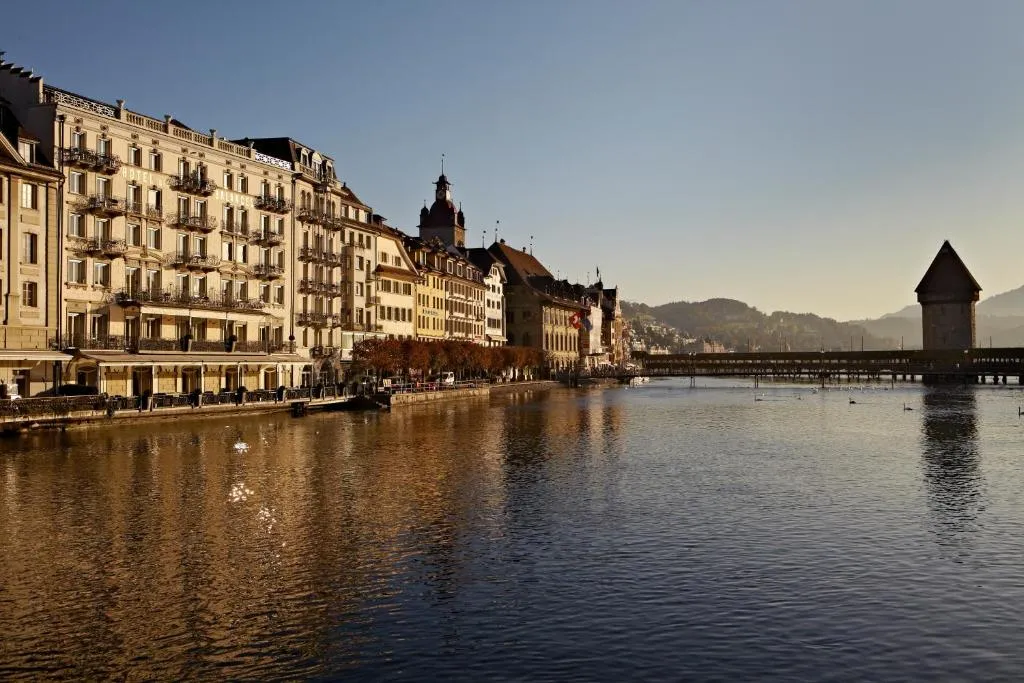
Days 1–2 · Lucerne
A former guild hall on the Reuss; river-view rooms take in the Chapel Bridge with polished four-star service.
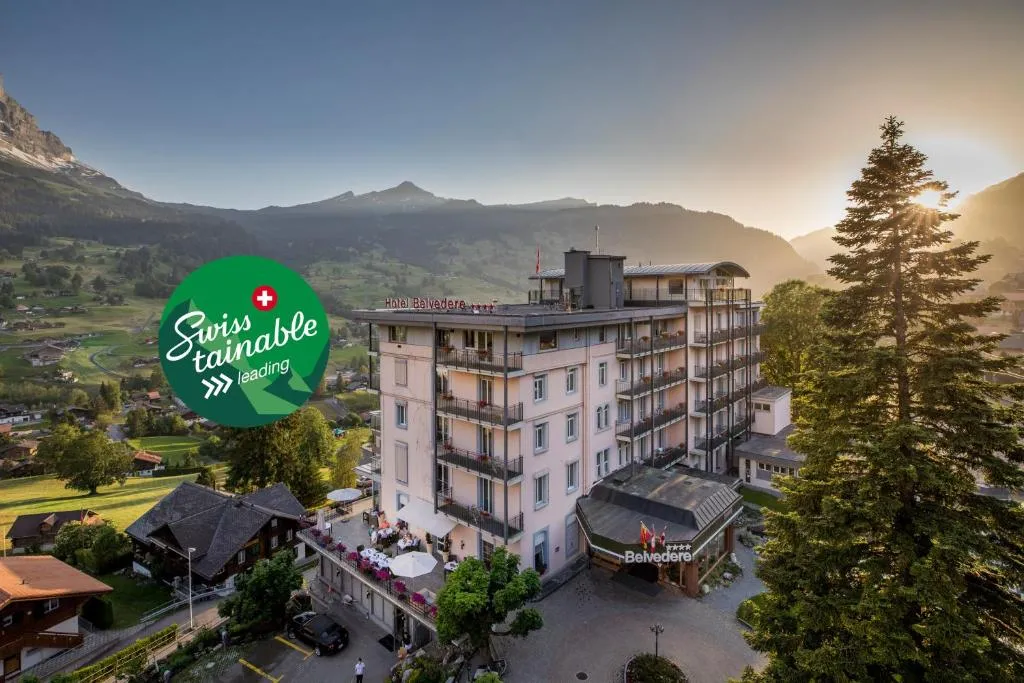
Days 3–4 · Grindelwald
Family-run four-star superior with genuine Eiger-view rooms, a pool, and an outdoor saltwater hot tub.
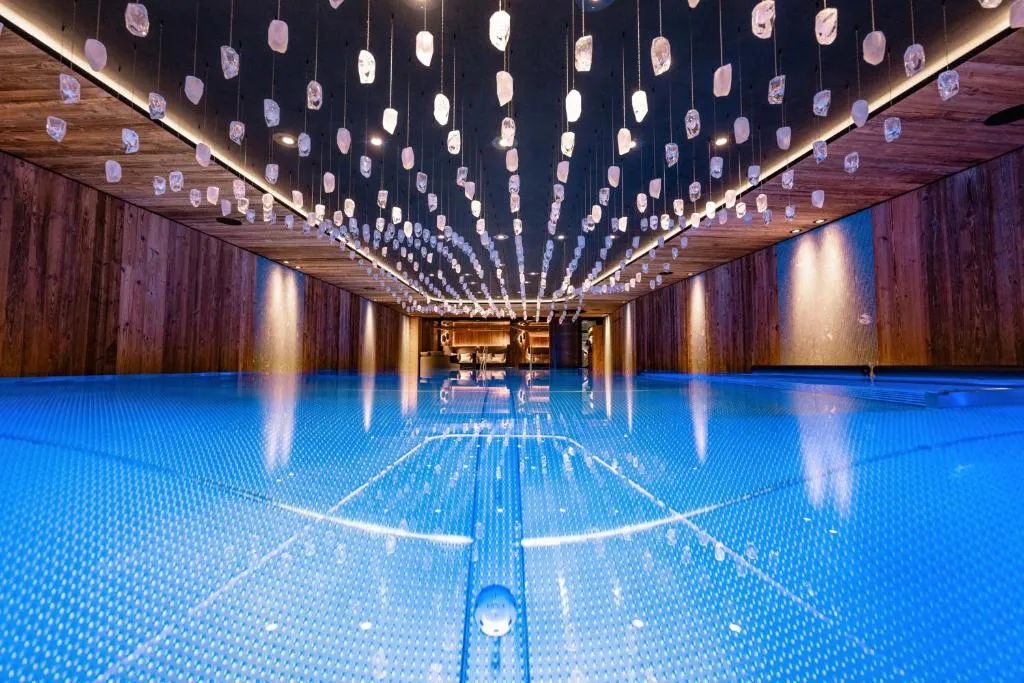
Days 5–7 · Zermatt
The Julen family's warm chalet classic with a three-floor spa and true Matterhorn-view rooms.
Experiences along the route
One bookable highlight per base, the specific tickets we’d reserve, verified like everything else on this site.
Grindelwald
Grindelwald Gondola Ride to Mount First★ 4.7 · 856 reviews
The gondola to First opens the cliff walk and the best easy high trails.
Zermatt
Zermatt: Matterhorn Glacier Paradise Cable Car Ticket★ 4.8 · 1,295 reviews
The highest cable-car station in Europe; buy the ticket before you go up.
Some links on this page are affiliate links. If you book through them we may earn a small commission, at no extra cost to you. It helps keep our guides free. We only recommend what we’d book ourselves.
Frequently asked questions
- Can you really see the Swiss Alps in 7 days without a car?
- Yes, and it is the better way. This loop uses Lucerne, Grindelwald, and Zermatt, all rail hubs, linked by some of the most scenic train rides in the world. Zermatt is car-free by law, so a rental would be a liability rather than a help. You never need to drive.
- Is the Swiss Travel Pass worth it for this itinerary?
- For a moving, train-based trip like this one, almost always yes. It covers the intercity trains and lake boats, discounts many mountain railways, and saves you buying point-to-point tickets. Check your exact route against our Swiss Travel Pass guide, but for this loop it usually pays for itself.
- When should you do this trip?
- Late June to September, when the high mountain railways like Gornergrat and Jungfraujoch and the trails are fully open and the weather is most settled. July and August are busiest; early September often brings the best mix of open infrastructure and thinner crowds.
- Where do you fly in and out for this itinerary?
- Zurich is the natural gateway, with a fast, direct train into Lucerne where the loop begins. Geneva works as an alternative, especially if you want to add the French Alps, but Zurich keeps the rail connections tightest. The loop returns you toward Lucerne, so you can fly home from Zurich either way.
- How should you split the nights across the three bases?
- We would weight it toward the mountains: two nights in Lucerne to ease in and ride the lake, two or three in the Grindelwald area for the Jungfrau region, and two in Zermatt for the Matterhorn and Gornergrat. Zermatt earns its nights, since the morning light on the Matterhorn is the reason you came.
- Can you shorten this trip or extend it?
- Both work. To trim it to five days, drop one base, usually Lucerne, and run a tighter Grindelwald-to-Zermatt line. To extend it, add a night in the Jungfrau region for more trail time, or fold in Montreux and Lake Geneva on the way to or from Zermatt for a gentler finish.

Researched & written by
Jon Miksis
Jon Miksis is the founder of Alps by Design and an award-winning travel writer whose work has been featured in Forbes, HuffPost, Yahoo Travel, and The Boston Globe. He travels to all six Alpine countries at least twice a year and has been trusted by national tourism boards across Europe.
More about Alps by Design →More trips you might like
Other itineraries through the same countries, longer, shorter, or a different angle.

Read before you go
 Best Bases
Best Ski-in Ski-out Hotels in the Swiss Alps
The Swiss Alps' genuinely ski-in ski-out hotels, resort by resort: W Verbier, Chetzeron above Crans-Montana, Riffelalp at 2,222 m in Zermatt, the Kempinski in St. Moritz, and The Chedi Andermatt.
8 min read
Best BasesBest Spa and Wellness Hotels in Switzerland
The best spa and wellness hotels in Switzerland, by type: real thermal water at Vals, the grand Bürgenstock spa, the highest pool in the Alps, design calm, and more.
9 min read
 Experiences
Is Mount Pilatus Worth It? An Honest Look (2026)
Is Mount Pilatus worth it? An honest verdict on the world's steepest cogwheel railway, the Golden Round Trip from Lucerne, what it costs in 2026, and when to skip it.
8 min read
Want this trip done for you?
The Swiss Alps Starter Kit turns this exact route into a complete, bookable plan: bases, hotels, trains, and timing. It launches soon, and the waitlist gets launch pricing first.
Or get the free 7-day starter route: