

The best Christmas markets in the Alps are Austria's grand historic markets, Salzburg and Vienna, together with Germany's world-famous Nuremberg Christkindlesmarkt, and they run from roughly the third week of November through Christmas Eve, with a few carrying on into early January. If you do one thing this winter, make it a string of these by train.
We love the Alps in summer. But there's a strong case that the region is at its most magical in December, when the old towns fill with timber stalls, the air smells of cinnamon and roasting chestnuts, and a mug of glühwein costs about the price of a coffee. This is a low-effort, high-reward trip: the markets are walkable, the trains are frequent, and the whole thing more or less plans itself. Here's where we'd go, what makes each one special, and how we'd string them together. We've walked these markets ourselves, and the photos of Salzburg, Munich, Bolzano, Brixen, Sterzing, and Berchtesgaden below are our own.
The markets at a glance
- When
- Late Nov–24 Dec
- Best window
- Early–mid December
- Busiest
- Pre-Christmas weekends
- Top pick
- Salzburg
| Market | Country | What makes it special | Rough dates |
|---|---|---|---|
| Salzburg Christkindlmarkt | Austria | UNESCO old town + floodlit fortress; our overall pick | Late Nov – 26 Dec |
| Vienna (Rathausplatz) | Austria | The grandest and biggest; city-hall spectacle | Mid Nov – 26 Dec |
| Innsbruck Altstadt | Austria | Markets under the Golden Roof, real peaks behind | Mid Nov – early Jan |
| Nuremberg Christkindlesmarkt | Germany | The world's most famous market; deeply traditional | Late Nov – 24 Dec |
| Munich Marienplatz | Germany | Big, central, the easiest gateway to the rest | Late Nov – 24 Dec |
| Berchtesgaden (Advent) | Germany | Small Bavarian-alpine market ringed by peaks | Advent weekends, late Nov – Dec |
| Basel | Switzerland | Switzerland's largest; two squares, very polished | Late Nov – 23 Dec |
| Zurich | Switzerland | Indoor station market + a Swarovski tree | Late Nov – 24 Dec |
| Montreux Noël | Switzerland | Lakeside on Lake Geneva, mountains across the water | Late Nov – 24 Dec |
| Ljubljana | Slovenia | Lit-up riverbanks, intimate and walkable | Late Nov – early Jan |
| Bolzano (Bozen) | Italy / South Tyrol | The alpine-Italian one; Tyrolean food, Italian flair | Late Nov – early Jan |
| Merano (Meran) | Italy / South Tyrol | Riverside promenade lights, spa-town calm | Late Nov – early Jan |
| Brixen (Bressanone) | Italy / South Tyrol | Baroque cathedral square, one of the original five | Late Nov – early Jan |
| Sterzing (Vipiteno) | Italy / South Tyrol | Storybook medieval old town, one of the original five | Late Nov – early Jan |
Dates move every year, many close on 24 December, some run on. Always check the official date for your year before booking.
Austria, grand, historic, and the heart of it
If the Christmas market is, in your mind, a thing with a particular smell and a particular glow, you're picturing Austria.
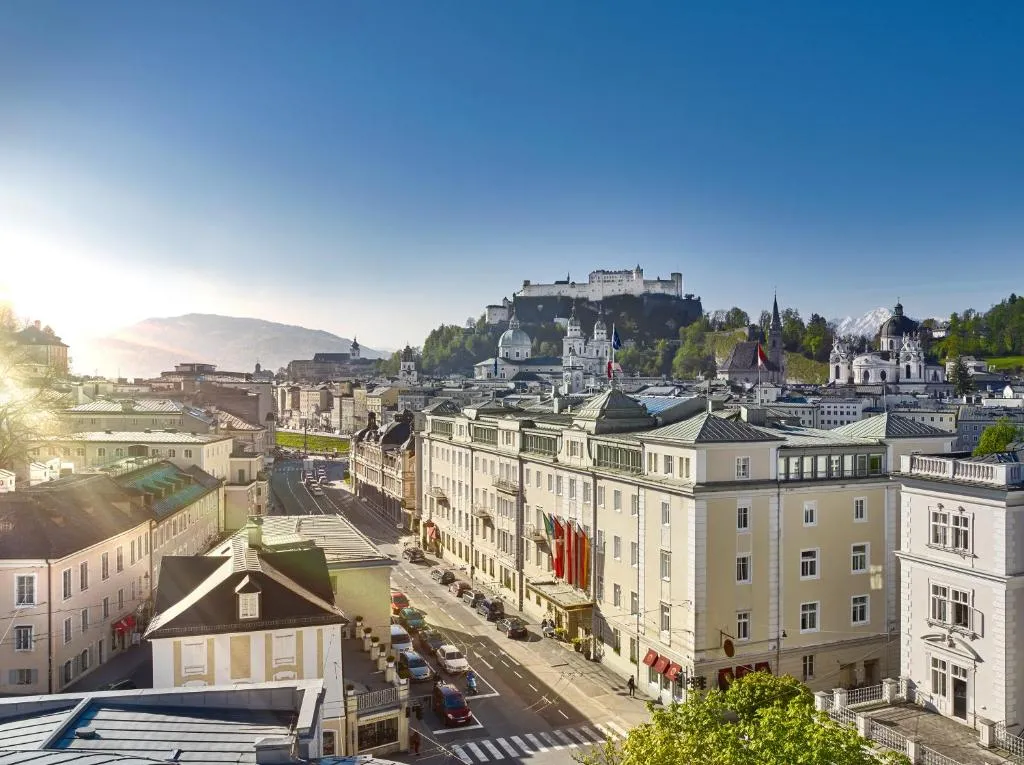
Salzburg is our favorite. The old town is already a UNESCO showpiece, and in December it becomes almost absurdly pretty: stalls cluster in front of the cathedral and across Residenzplatz, with the floodlit Hohensalzburg fortress hanging over everything from its hill. It's grand without being overwhelming, and it's compact enough to do on foot in an evening. Read up on Salzburg and, crucially, sort where to stay in Salzburg early, this is a market that fills hotels. Torn between the two big-city bases for a market trip? Our Munich vs Salzburg guide settles which to fly into and sleep in.

 Found on Booking.comFrom €500/night
Salzburg, Austria
Hotel Sacher Salzburg
Salzburg's most famous hotel sits right on the Salzach, a five-minute walk from the Christkindlmarkt stalls and the floodlit fortress above. Rooms lean traditional rather than trendy, all dark wood and river views, and the terrace café is a Salzburg institution in its own right (order the torte, obviously). It's a splurge, and the rooms facing the river cost more, but for a once-a-year market trip this is the address that makes the whole evening feel like an occasion. Book the moment your dates are set.
- Guest rating
- 9.5 / 10
- From
- €500/night
- Best for
- Christmas-market romance, old-town splurge
Vienna is the big one, genuinely several markets, the headline being the spectacle on Rathausplatz in front of the neo-Gothic city hall, with its skating paths and tree-lit park. It's the grandest and most theatrical of the lot, and it pairs perfectly with the city's cafés and concert halls when your hands need warming.
Innsbruck is the alpine wild card: markets tucked beneath the medieval Golden Roof in the old town, with the Nordkette range rising directly behind the rooftops, the same range you can ride to the Top of Innsbruck by cable car. No other major market gives you serious peaks this close. It's smaller and more intimate than Salzburg or Vienna, and all the better for it. See Innsbruck and where to stay in Innsbruck, and browse the wider Austrian Alps if you want to fold in some mountain time.
St. Wolfgang is the storybook wild card. This tiny Salzkammergut village stages its Advent am Wolfgangsee right along the lakeshore, with a market that partly floats on the water and lantern-lit boats gliding between villages at dusk. It is smaller, quieter, and more purely magical than the city markets, and it makes a genuinely peaceful base; see St. Wolfgang.

Bavaria & Germany, Nuremberg is the icon
Cross into Bavaria and you reach the market that started the legend.
Nuremberg's Christkindlesmarkt is the most famous Christmas market on earth, and it earns it. It's the traditional one, no plastic, no neon, a strictly old-fashioned aesthetic of red-and-white striped stalls, hand-made ornaments, gingerbread (Lebkuchen), and the city's signature little grilled sausages. It opens with a ceremonial prologue read by the "Christkind" and feels like stepping into the original. If you want the platonic ideal of a Christmas market, this is it.
Munich is your gateway. The Marienplatz market sits beneath the town hall in the dead center of the city, big and easy and atmospheric, and Munich's train station makes it the natural hub for the entire trip, Salzburg, Nuremberg, Innsbruck, and South Tyrol all radiate out from here. Start with Munich, sort where to stay in Munich, and see the broader Bavarian Alps if you'll add castles or mountains.

Berchtesgaden is the Bavarian-alpine wild card, and an easy half-day from Salzburg (about 30 minutes across the border). The Berchtesgadener Advent fills the pastel old town on Advent weekends, with mountain air, a genuinely local feel, and the peaks of the Berchtesgaden Alps closing in on every side. It's small and traditional rather than grand, which is exactly its charm; pair it with Berchtesgaden and the Königssee for a mountain day alongside the market.

Switzerland, polished, scenic, and a little pricier
Switzerland does Christmas markets the Swiss way: immaculate, beautifully lit, and not cheap.
- Basel runs Switzerland's largest, spread across two squares with a famously high standard of craft stalls, it's the one Swiss locals will point you to first.
- Zurich is the practical favorite, partly for the big indoor market right inside the main station (a warm, dry option when the weather turns) crowned by a tree dripping with Swarovski crystals, partly for the lights strung along Bahnhofstrasse.
- Montreux Noël is the romantic one, a sprawling market along the shore of Lake Geneva, with the mountains rising across the water and a "flying Santa" gliding overhead. It's the most scenic setting of any market on this list.
Budget accordingly, a Swiss glühwein costs what a meal might elsewhere, but the production values are unmatched.
Slovenia, Ljubljana, the underrated jewel
If you want the most charming market for the least crowd and cost, go to Ljubljana. Slovenia's little capital strings lights the length of its riverbanks and across its dragon-guarded bridges, turning the whole compact old town into one continuous, glowing promenade. It's intimate, walkable, and genuinely festive in a way the big-name markets sometimes aren't, you're among locals as much as tourists, mulled wine in hand, the castle lit up on the hill. It typically runs later than most, often into early January. Start with Ljubljana; it's an easy add-on to an Austrian or Italian leg.
Italy & South Tyrol, the alpine-Italian markets
Here's the surprise of the trip: some of the most distinctive markets are in Italy, specifically German-speaking South Tyrol, where Tyrolean tradition meets Italian flair. Five towns run the historic Original South Tyrolean Christmas Markets, Bolzano, Merano, Brixen, Bruneck, and Sterzing, and they run later than most, often well into early January.
Bolzano (Bozen) hosts Italy's most celebrated Christmas market, and it's a delight precisely because it's a hybrid: speck and strudel and mulled wine alongside excellent coffee and Italian warmth, all set against a backdrop of Dolomite foothills. It feels alpine and Mediterranean at once.

Brixen (Bressanone) stages one of the loveliest of the five, its stalls clustered on the cathedral square beneath the Baroque twin towers, with a life-size nativity and light installations that make timing the blue hour worthwhile. It's more intimate than Bolzano and, for our money, one of the prettiest settings of the lot.

Sterzing (Vipiteno), the northernmost of the five, threads its market through a storybook medieval old town of stepped gables and painted facades below the landmark Zwölferturm tower. It's small, warm, and genuinely fairytale after dark.

Merano (Meran) is the genteel sibling, a spa town whose riverside Passer promenade is strung with lights, gentler and more relaxed than Bolzano, and a lovely place to slow down. (Bruneck / Brunico, over in the Puster Valley, completes the five.) Together they make a superb finale to a market trip that started up in Bavaria.
Turning the market trip into a ski trip? December pairs both beautifully; see where to ski in the Alps for the resort half of the equation.
Why we'd do it all by train
This is, above almost any trip we plan, the one to do by rail. The markets sit on fast, frequent lines and trains deliver you to the center of each town, no winter driving, no parking, no designated driver standing between you and the glühwein. Munich to Salzburg is well under two hours; Salzburg to Vienna a little over two; Munich connects cleanly to Nuremberg one way and down toward Innsbruck and Bolzano the other. A rail pass usually pays off across this many hops, see Eurail vs Interrail for the Alps for a multi-country loop, and our full guide to the Alps by rail.
What we'd do
Here's the trip we'd actually book, a roughly week-long, train-only loop in early-to-mid December, before the pre-Christmas crowds peak and well before the 24th closures:
- Open in Munich for two nights, Marienplatz, plus a day trip to Nuremberg for the world-famous Christkindlesmarkt.
- Train to Salzburg for two nights, our favorite market, and the most beautiful old-town setting of the lot.
- Push on to Vienna for two nights, the grand finale, Rathausplatz and the café culture to thaw out in.
- If you have more time, swap or extend with Innsbruck (peaks behind the stalls), Berchtesgaden (a half-day mountain market from Salzburg), the South Tyrol five around Bolzano, Brixen, and Sterzing (the alpine-Italian leg), or Ljubljana (the lit-up riverside jewel that runs latest).
Get the timing right and the rest is just deciding how many mugs of glühwein is too many.
Building the markets into a wider winter trip? Our seasonal guides cover what else is open: the best time to visit the Austrian Alps, the Bavarian Alps, and the Dolomites all have a winter ski-and-spa side that pairs beautifully with a market leg.


