

The Bavarian Alps aren't one trip across the year, they're at least three, and the month you pick decides which one you get. A July visitor swims in the Tegernsee, photographs Neuschwanstein framed in green forest, and lingers in beer gardens until dusk. A January visitor skis above Garmisch-Partenkirchen, wanders snow-lit Christmas markets in Munich, and sees the same castle dusted white. Both are wonderful. Both are completely different holidays. Here's how to choose with confidence.
The seasons at a glance
- Peak season
- Jun–Aug
- Best month
- September
- Quietest
- May / October
- Ski season
- Dec–Mar
| Season | Weather | Lakes to swim? | High lifts & huts | Crowds | Best for |
|---|---|---|---|---|---|
| Summer (Jun–Aug) | Warm, ~22–28°C | Yes (late Jun–Aug) | Open | High (esp. Neuschwanstein) | Lakes, castles, beer gardens |
| September | Stable, golden | Early Sept, yes | Open | Moderate (+ Oktoberfest) | The all-round sweet spot |
| May / October | Mild below, patchy above | No | Opening late / closing early | Low | Castles + lake valleys, base low |
| Winter (Dec–Mar) | Cold, snowy | No | Ski lifts open | Low (busy at resorts/markets) | Skiing, spas, Christmas markets |
Now the detail, month by month.
Summer (June – August): warm, lush, and busiest
This is the full Bavarian postcard. By late June the lakes have warmed enough to swim, the Tegernsee and nearby Schliersee are genuinely swimmable through August, with lidos, sailboats, and lakeside cafés in full swing. The high trails are open, the wildflower meadows are out, and the beer gardens hit their stride in the long evening light. The fairy-tale castles near Füssen, Neuschwanstein and Hohenschwangau, are at their leafy, green-framed best.
The cost is exactly what you'd expect of peak season. Neuschwanstein in particular is heaving from July onward, with timed tickets selling out days ahead. (Our guide to visiting Neuschwanstein and Bavaria's castles walks through the timing.)
If you want the version where nothing is closed and the water is warm, summer is the right call, you'll just be sharing it.
September: the sweet spot
(The cross-Alps case for the month, all six countries, lives in the Alps in September.)
If we could travel only one month, it would be September. The weather is often the most stable of the whole year, the summer crush thins out after the first week, and the light turns golden across the valleys and lakes. Crucially, everything is still open, lifts run, mountain huts serve lunch, and Neuschwanstein is noticeably calmer than in August. The early-month lakes are still pleasant for a swim, too.
There's a bonus that catches a lot of people out, in the best way: Oktoberfest pairs neatly with a September base trip. See Munich as a base for the Bavarian Alps for how to combine the two.
For couples, photographers, and hikers who want the mountains without the August queues, September is the one we'd quietly steer most people toward.
Shoulder season (May, October): reliable below, patchy above
Travel in May or October and you'll trade a little access for quiet and lower prices, a fair deal, if you go in with the right expectations. The castles near Füssen and the lower lake towns are reliable in both months; they don't depend on the high season. The catch is altitude. In May the upper mountain is still shaking off winter, the highest cable cars and some alpine huts haven't opened, and the Zugspitze can be cloud-wrapped and snowy. October is the mirror image, with high-country infrastructure winding down, though the valleys and villages around Garmisch turn gold, part of the wider fall foliage season in the Alps.
The move is to weight these between-seasons toward the castles, the lake valleys, and the towns, and to check lift and hut opening dates before you commit to anything high. The Berchtesgaden and Königssee corner and the lake valleys are good low-altitude bets (the Eagle's Nest itself, though, runs mid-May to late October only). Base low and you'll rarely be disappointed.
Winter (December – March): snow, slopes, and sparkle
Winter isn't a lesser version of summer, it's its own thing entirely, and a brilliant one. This is when the Bavarian Alps become a serious ski destination: the pistes above Garmisch-Partenkirchen, home of Germany's highest peak, and the long, snow-sure runs around Oberstdorf at the far southern tip. Munich's Christmas markets fill the old town with mulled wine and lights through December, and Neuschwanstein dusted with snow is the image the fairy tale was made for. (For the best of them, see the best Christmas markets in the Alps.)
Two winter caveats. The Marienbrücke, the footbridge that gives you the classic head-on castle photo, can close in icy or unsafe conditions, so don't bank that exact shot. And when the slopes have worn you out, a spa day on the Tegernsee is the perfect thaw. Just know the hiking-and-swimming trip you saw online is a summer trip; winter is for snow, markets, and steam.
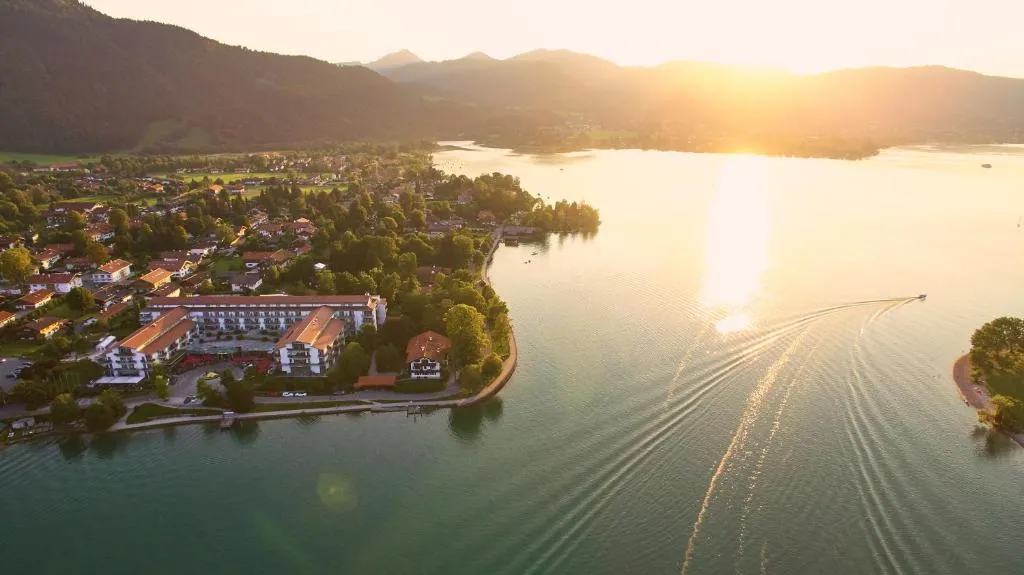 Found on Booking.comFrom €450/night
Tegernsee, Germany
Althoff Seehotel Überfahrt
This is the hotel the 'spa day on the lake' sentence is quietly pointing at. Right on the Tegernsee shoreline, the spa spans pools, saunas, and treatment rooms looking straight over the water to the mountains beyond, exactly what aching ski legs want after a day above Garmisch-Partenkirchen. Rooms lean contemporary Bavarian rather than fussy, and the lakeside restaurant is worth lingering over. It is a genuine splurge, not a casual overnight, so treat it as the one indulgent night of a winter trip rather than the whole week.
- Guest rating
- 9.2 / 10
- From
- €450/night
- Best for
- Post-ski lakeside spa recovery
What to pack, by season
Layer year-round. In summer, pack swimwear and sun protection alongside a fleece and a light rain shell, alpine afternoons can turn quickly. In September, add a warmer layer for cool evenings. In shoulder season, bring proper waterproofs and don't count on the high lifts. In winter, it's full cold-weather kit, and if you're driving the mountain roads, expect winter-tire rules and possible chains.
Who each season is for
- Families and lake lovers: July to mid-August, when the water is warm and every lift is spinning.
- Couples, photographers, and hikers: September, hands down, open, golden, and calmer at the castles.
- Beer and festival fans: late September, to fold Oktoberfest into a mountain base.
- Budget and quiet seekers: May or October, accepting that you'll base low and skip the highest lifts.
- Skiers and spa-goers: December to March, with December adding Christmas-market magic.
The biggest seasonal mistake
The classic error is booking the Bavarian Alps in May expecting summer, picturing warm swimming lakes and a guaranteed-clear Zugspitze panorama, then arriving to icy snowmelt water and a peak wrapped in cloud. The other version is forgetting that Oktoberfest sells out: the big tents and nearby Munich hotels book up months ahead, so a spontaneous September visit can mean no table and no bed. Match your expectations to the calendar, and reserve the time-sensitive things early.
What we'd do
For a first Bavarian Alps trip with the broadest appeal, we'd go the second or third week of September. You get the most dependable weather of the year, post-summer space and prices, golden light on the lakes and castles, a full network of open lifts and huts, and, if you time it right, an easy day at Oktoberfest from a Munich base. It maps neatly onto our 7-day Bavarian Alps itinerary; for a shorter trip, the castles-and-lakes 5-day route is the highlight reel. If your dream specifically involves swimming, shift to mid-July; if it involves skiing and snow-dusted castles, that's a different trip, built around December through March across Germany.
Once you've settled on your month, decide where to sleep with where to stay in the Bavarian Alps, then find your perfect Alps base, the right Bavarian town genuinely changes with the season, and we'll factor that in.


