

Here's the question almost every first-timer asks: can I just stay in Munich and see the Bavarian Alps from there? The honest answer is yes, but only partly, and the gap between what's possible and what's pleasant is exactly where trips go wrong.
Munich is one of the great gateway cities in the Alps. The train connections are excellent, the airport is well-served, and the city is genuinely worth two or three days on its own.
 Found on Booking.comFrom €220/night
Munich, Germany
Platzl Hotel
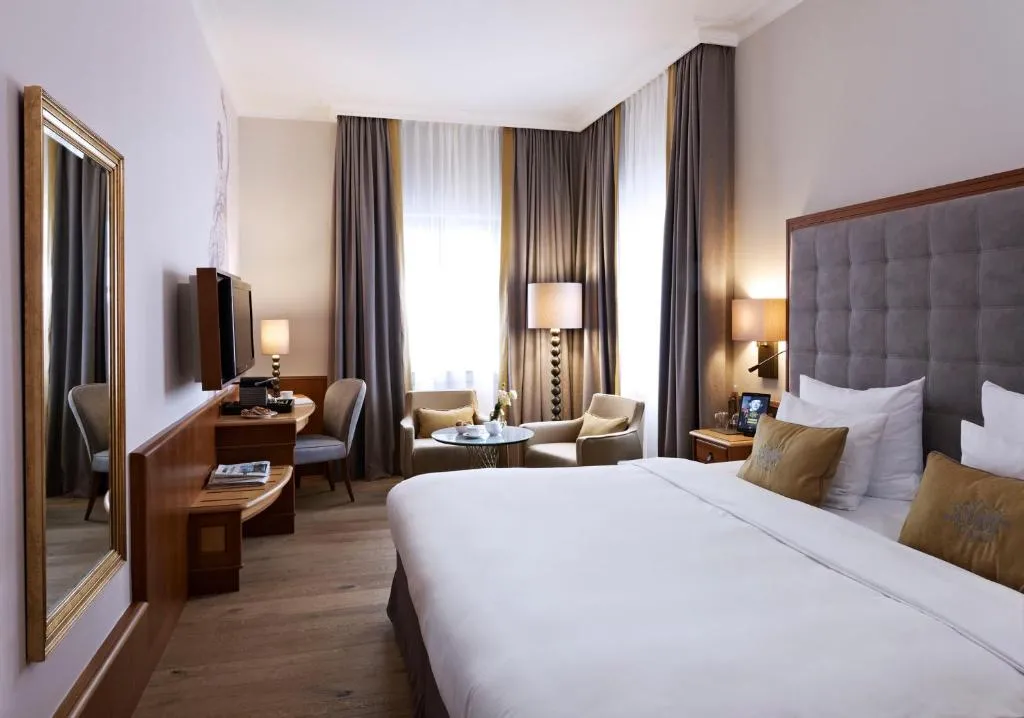
Platzl Hotel sits right in Munich's old town, a few minutes' walk from Marienplatz and the Hofbräuhaus, which matters when your nights here are bookended by early trains to Garmisch or Füssen. It's comfortable and well run, with a Bavarian warmth that beats parking near the station. One trade-off: the old-town spot gets lively with beer-hall noise on summer evenings, so light sleepers should pack earplugs. Otherwise it earns its keep, close to the Hauptbahnhof but worth the stay itself, not just somewhere to pass through.
- Guest rating
- 8.9 / 10
- From
- €220/night
- Best for
- A proper Munich home base
But Munich is not in the mountains. It sits on a flat plain about an hour north of the first real foothills. So the real planning question isn't "Munich or the Alps". It's "how much of the Alps can I reasonably reach from a Munich bed, and where does that stop making sense?"
Let's draw that line clearly.
Can you see the Alps from Munich?
Yes, on clear days, and gloriously so during Föhn conditions, the warm, dry wind that scrubs the air so clean the whole chain seems to leap fifty kilometers closer. Locals treat a Föhn day the way beach towns treat a heat wave: everyone suddenly remembers a reason to be outside. The best in-city vantage points are the Olympiaturm, the climbable tower of St. Peter's beside Marienplatz, and the Monopteros hill in the English Garden; on the right morning, even certain south-running streets end in mountains. It's a genuine Munich pleasure, and also the daily reminder of this article's whole point: the Alps are visible from Munich, but they are not in it.
Day trips from Munich at a glance
- Region
- Bavarian Alps
- Getting there
- Train from Munich
- Car needed
- No
- Ideal stay
- Split with mountains
| Day trip | By train (one way) | Verdict |
|---|---|---|
| Garmisch + Zugspitze | ~80–90 min direct | The best day trip; don't skip it |
| Füssen + Neuschwanstein | ~2 hrs + short bus | Long but very rewarding |
| Oberammergau + Linderhof | ~1.5–2 hrs + short bus | A quieter castle day |
| Chiemsee + Herrenchiemsee | ~1 hr + lake boat | Easy lake-and-palace day |
| Tegernsee / Schliersee | ~1 hr | Easy half- to full-day |
| Glentleiten + Kochelsee | ~1 hr + short bus | The culture-and-lake sleeper |
| Mittenwald | ~1 hr 50 min direct | The painted village, no crowds |
| Salzburg (Austria) | ~90 min | A superb day out |
| Berchtesgaden + Königssee | ~2.5+ hrs w/ changes | Too far, stay overnight |
The rule of thumb: anything within roughly two hours one-way works. Push much past that and the day becomes commuting.

What you CAN day-trip from Munich
Several of Bavaria's headline sights are genuinely doable in a day, mostly by train:
- Füssen and Neuschwanstein, about two hours by train, then a short bus to the castle. It's a long but very rewarding day, and the most popular Munich day trip there is. (Our guide to visiting Neuschwanstein and Bavaria's castles covers the tickets and timing.)
- Garmisch-Partenkirchen and the Zugspitze, roughly 80–90 minutes by direct train. From Garmisch you can ride the cog railway and cable car to the summit of Germany's highest peak. This is the single best "feel the high Alps in a day" trip from Munich. With time to spare, add the turquoise Eibsee lake sitting just below the Zugspitze, or the dramatic Partnachklamm (Partnach Gorge) cut into the mountainside right at the edge of town.
- Oberammergau and Linderhof, roughly 1.5 to 2 hours by train to the fresco-painted village, then a short bus link to Ludwig II's jewel-box Linderhof palace nearby. It's the quieter, lovelier alternative to the Neuschwanstein crush, the same mad-king story without the queues.
- Chiemsee and Herrenchiemsee, about an hour by train to Prien am Chiemsee, then a lake boat across to the Herreninsel for Ludwig II's vast, Versailles-inspired Herrenchiemsee palace. An easy, family-friendly lake-and-palace day.
- The Tegernsee and Schliersee lakes, about an hour out. Tegernsee is the polished, postcard one; Schliersee is quieter. Easy half-day-to-full-day escapes with lake walks, swimming in summer, and good food.
- Glentleiten and the Kochelsee, the day trip in-the-know families make. The Glentleiten open-air museum above Großweil is southern Bavaria's largest, dozens of centuries-old farmhouses, mills, and workshops rebuilt on a hillside with the Alps behind them, genuinely absorbing rather than dutiful. Reach it via train to Murnau and a short regional bus, about an hour all told, and pair it with a swim or lakeside lunch at the Kochelsee below. One catch: it closes for the winter season, so check the calendar from November to March.
- Mittenwald, about 1 hour 50 minutes on the same direct line past Garmisch. Bavaria's painted violin-making village is the frescoed-facade fantasy Oberammergau's crowds are looking for, with the Karwendel cable car rising straight off the village edge. It pairs naturally with Garmisch on a long day, or makes a lovely overnight if the pace suits you.
- Salzburg, okay, it's across the border in Austria, but it's only about 90 minutes by train and makes a superb day out. If you're torn on basing there instead, we compared the two directly in Munich vs Salzburg, and if you're weighing the Austrian side more broadly, see the Bavarian Alps vs the Austrian Alps.
Some links on this page are affiliate links. If you book through them we may earn a small commission, at no extra cost to you. It helps keep our guides free. We only recommend what we’d book ourselves.
What you should NOT try to day-trip
Two things, and we feel strongly about both:
Berchtesgaden and the Königssee. This corner is the most dramatic in the Bavarian Alps, the fjord-like Königssee, the Eagle's Nest, the salt mines. But it's tucked into the far southeast, two-plus hours each way by train with connections. Doing it as a Munich day trip means four-plus hours of travel for a few rushed hours on the ground. Don't. Give it at least one overnight and you'll see twice as much at half the stress, our Berchtesgaden and the Königssee guide explains why it deserves its own base.
Trying to "see the Alps" only from the city. This is the quieter mistake. You can stack three day trips and technically tick off mountains, but you'll spend your evenings back on the Munich plain, never waking up to a peak outside the window. The Alps reward staying in them: the early light, the after-dinner walk, the cable car you catch before the day-trippers arrive.
The honest verdict
Munich is a fantastic gateway and worth building a trip around, just not the whole trip. Our recommendation for most people:
- Base in Munich for two to three nights, use it for the city and one or two day trips (Garmisch and the Zugspitze is the one we'd never skip).
- Then move your base into the mountains for at least a few nights, Garmisch-Partenkirchen, a lake town like Tegernsee, or Berchtesgaden if the southeast corner is calling. Our where to stay in the Bavarian Alps guide walks through the choice, and Füssen vs Garmisch-Partenkirchen weighs the castles against the high peaks.
That split gives you the city, the convenience, and the actual feeling of being in the Alps. Picking one to the exclusion of the other is the false choice almost everyone falls for.
A transit and tickets note
Bavaria makes this easy. Munich's Hauptbahnhof is a hub, and most of the day trips above run on regional trains where the Bayern-Ticket shines, a single regional day pass valid across Bavaria's regional rail and most local transit, with a low base price for one traveler and small add-ons for each extra person (up to five). For a group of two to five doing a lake day or a Garmisch run, it's often the cheapest way to travel and removes all the per-leg ticket fiddling.
Two caveats worth knowing: the Bayern-Ticket isn't valid on fast long-distance ICE/EC trains, and on weekdays it doesn't kick in until 9 a.m. For an early-start Zugspitze day, check the first regional departures so you don't get caught. (For the bigger transport picture, see the Bavarian Alps by train or car.)
The biggest mistake
Treating Munich as your only base for a week and trying to day-trip everything. You'll burn hours on trains, miss the mornings and evenings that make the mountains magic, and almost certainly over-reach toward Berchtesgaden on a day that doesn't have the hours for it. The Alps aren't a checklist you tick from a city hotel. They're a place you stay in.
What we'd do
Three nights in Munich (city, plus the Zugspitze and Neuschwanstein day trips), then three or four nights based in the mountains. We'd lean toward Garmisch-Partenkirchen for the high-peak access, or split between a lake town and Berchtesgaden if we wanted the full sweep of the Bavarian Alps. All of it by train, mostly on regional lines, with a Bayern-Ticket on the day-trip days. It's essentially our 7 Days in the Bavarian Alps itinerary with a city opener.
That's the trip that gives you Munich's polish and a real mountain stay, instead of the watered-down version where the Alps stay a view from the train.
 Found on Booking.comFrom €230/night
Garmisch-Partenkirchen, Germany
Staudacherhof
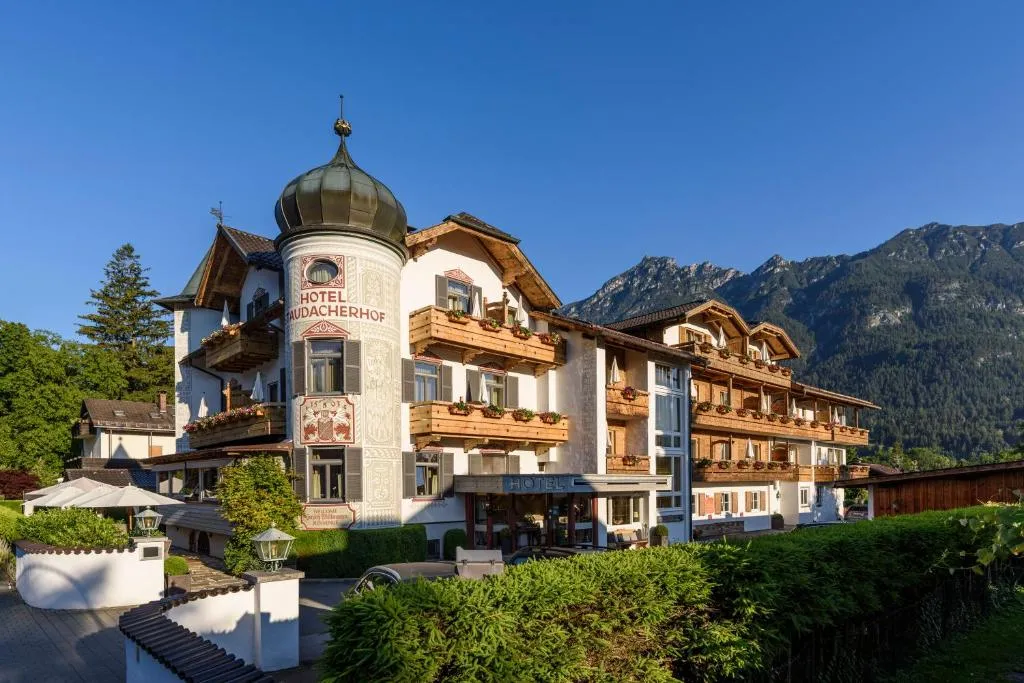
Staudacherhof makes the case for moving your base into the mountains at all: a proper spa, a garden with the Wetterstein peaks right there, and a five-minute walk into Garmisch's old town for dinner. After a day on the Zugspitze cog railway or the Partnachklamm, the pools and sauna are exactly what you want, even if they get busy on a wet afternoon when half the town has the same idea. It's comfortable rather than flashy and priced for a few nights, not one big splurge, fitting a trip built around living in the Alps.
- Guest rating
- 8.8 / 10
- From
- €230/night
- Best for
- Wellness base under the Zugspitze
Want the rest of the picture? Start with our Germany destination guide and the best time to visit the Bavarian Alps, and when you're ready to pin down where to sleep, find your perfect Alps base, answer a few questions and we'll point you to the town that actually fits your trip.


