

Some places in the Alps are pretty. Berchtesgaden is theatrical. Tucked into Germany's far southeastern corner, almost surrounded by Austria, it sits beneath the great limestone wall of the Watzmann, the country's third-highest peak and the spine of its only alpine national park. The valley holds one of the most beautiful lakes in Europe, a mountaintop building tangled up in the darkest chapter of the 20th century, and a working salt mine you ride into on a wooden train. It is also, quietly, one of the easiest world-class destinations to under-plan. Here's how we'd do it properly.
Berchtesgaden at a glance
- Country
- Germany
- Getting there
- Salzburg 30 min
- Ideal stay
- 2-3 nights
- Best months
- June to September
- How long: 2 to 3 nights, minimum
- Best time: June to September (the Eagle's Nest road runs mid-May to late October only)
- Getting there: about 2 hours from Munich, 30 minutes from Salzburg; a car helps
- Don't miss: the first boat to the Obersee, the Eagle's Nest, the salt mine, and the Documentation Center
What the headline sights cost (approximate, and they change year to year):
| What | Roughly | Notes |
|---|---|---|
| Königssee boat (to Salet, return) | ~€22 | Electric boats; take an early sailing |
| Eagle's Nest (bus + entry) | ~€30 | Seasonal; timed ticket from Obersalzberg |
| Salzbergwerk salt mine | ~€23 | Great with kids; reliable rainy-day plan |
| Jenner cable car | ~€30 return | Big view, little effort |
| Documentation Center Obersalzberg | ~€3 | Sobering and essential |
The Königssee: the headline
Start with the lake, because the lake is why you came. The Königssee is often called Germany's cleanest, and it earns it: the water is so protected that only electric-powered boats have been allowed on it since the 1900s. You glide across a glassy fjord of green water walled in by cliffs that drop straight to the surface, in near silence, no engine drone, just the hush and the occasional boatman who stops to play a flugelhorn against the rock face so you can hear the echo return.
The boats stop first at St. Bartholomä, the red-onion-domed pilgrimage church on a little peninsula that you've already seen on a thousand postcards. Most people turn around here. Don't. Take the boat to the far end at Salet, then walk fifteen flat minutes to the Obersee, a smaller, quieter, almost startlingly still second lake, and continue toward the Röthbach waterfall, Germany's highest, spilling off the headwall. This is where the crowds thin and the place feels like yours.
The Eagle's Nest
High on the Kehlstein ridge above the valley sits the Kehlsteinhaus, the Eagle's Nest, built as a mountaintop reception house for the Nazi regime in the late 1930s. It survived the war intact and is now a restaurant, but the reason to go is the approach and the view, not the building.
You can't drive yourself. You park at the Obersalzberg, buy a timed ticket, and ride a special bus up a steep, single-lane road carved into the cliff, an engineering feat in its own right. At the top, a tunnel leads into the mountain to a famous polished brass elevator that lifts you the final stretch to the summit. From the terrace, the whole Berchtesgaden basin and the Austrian Alps open up beneath you. It's a strange, sobering, spectacular outing, and we weigh whether it earns your half-day in is the Eagle's Nest worth it. Note that it's strictly seasonal, roughly mid-May to late October, and closed by snow the rest of the year.
If you are coming from Salzburg after all, the classic half-day Eagle's Nest and Berchtesgaden tour handles the bus logistics and the timed summit ticket in one booking, just know it buys you the highlight, not the valley.
Some links on this page are affiliate links. If you book through them we may earn a small commission, at no extra cost to you. It helps keep our guides free. We only recommend what we’d book ourselves.
The national park and hikes beneath the Watzmann
Berchtesgaden National Park is the only alpine national park in Germany, and it's the reason the lake is so pristine. Even if you're not a serious hiker, spend half a day in it.
The easy win is the Jenner cable car, which lifts you from near the Königssee to a ridge with a panoramic platform looking down onto the lake and across to the Watzmann massif, huge reward, almost no effort. For walkers, the trails around the Hintersee and the Zauberwald ("magic forest") are gentle and gorgeous, while stronger hikers can take on routes climbing toward the Watzmann's flanks. This is genuine high-alpine terrain, so check conditions and hut openings before going up. If you're weighing this region against Germany's other big mountain base, our Garmisch vs. Berchtesgaden comparison lays out who each one suits.
The salt mine and Obersalzberg history
Berchtesgaden was built on salt, "white gold", and the Salzbergwerk salt mine is the most fun half-day in town, especially with kids. You pull on miners' overalls, ride a small train deep into the mountain, slide down polished wooden miners' slides, and cross an underground salt lake by raft. It's genuinely good, and a reliable rainy-day plan.
A few minutes away, the mood shifts entirely. The Obersalzberg was Hitler's mountain retreat and a second seat of Nazi power, and the Documentation Center Obersalzberg confronts that history directly and unflinchingly, an essential, sobering counterweight to the scenery, partly built among the preserved bunker tunnels. We'd build an afternoon around both, in that order, the mine, then the museum. It's the honest way to understand this valley.
Getting there and around
Berchtesgaden sits in a far corner, so plan the approach. It's about 30 minutes from Salzburg (the nearest airport and the easy launch point) and roughly two hours from Munich. You can reach the town by train (with a change), but a car, most easily rented at Munich or Salzburg airport, makes the scattered sights, the Königssee dock, the Obersalzberg, the Hintersee, far easier to string together on your own clock. Buses connect the main sights in season if you'd rather not drive. Either way, base in the valley, not over the border in Salzburg, so you catch the early boats. (Our Munich as a base guide explains why this corner doesn't work as a city day trip.)
How long you need
Two to three nights, minimum. We say this plainly because the most common version of Berchtesgaden is a rushed day trip from Salzburg, it's barely 30 minutes away, and that version gives you a hurried boat ride and nothing else. The Königssee is a half-day. The Eagle's Nest is a half-day. The salt mine and Documentation Center are another. Add a hike and you've filled three days without trying. Stay in the valley, not over the border, so you catch the early boats.
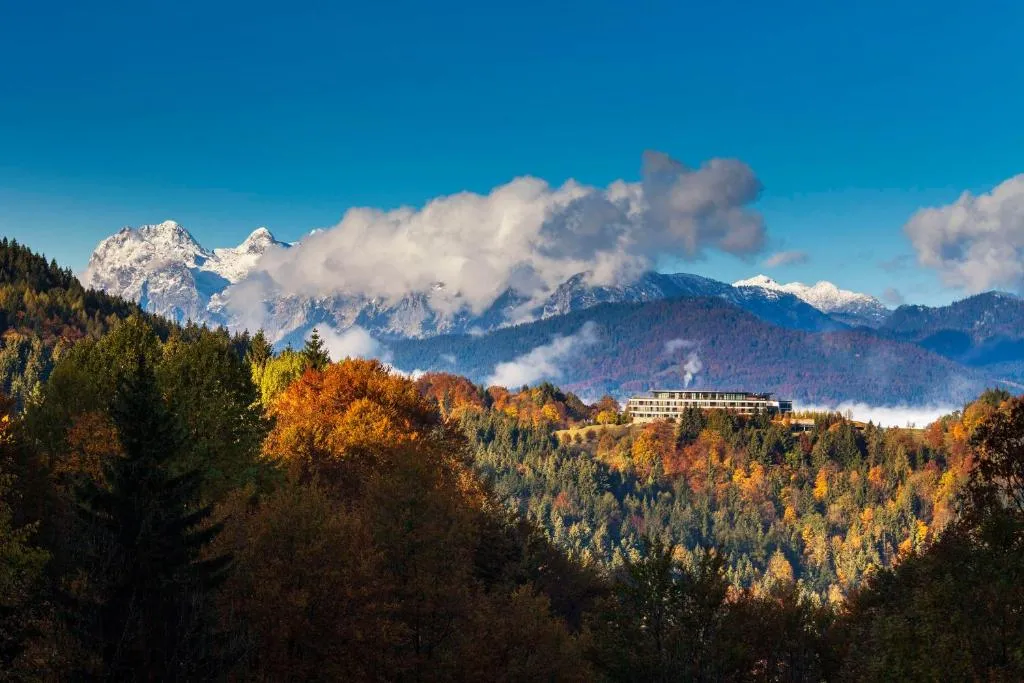 Found on Booking.com
Berchtesgaden, Germany
Kempinski Hotel Berchtesgaden
This is the hotel the "stay in the valley" advice above is really pointing at. Kempinski Hotel Berchtesgaden sits on its own hillside above town with the Watzmann filling the windows, a serious spa, and a kitchen that holds its own after a long day at the Königssee. Book a valley-facing room specifically, since the upgrade is worth it here. It sits a short drive from the boat dock and the old town rather than inside either one, so you will want a car, which most visitors to Berchtesgaden have anyway.
- Best for
- Valley-view splurge, spa
Best time
Late spring through autumn is the window. June to September gives you full lake service, open trails, and the warmest, most stable weather. September is our favorite, golden, calmer, everything still running. The hard constraint is the Eagle's Nest road, which is seasonal (roughly mid-May to late October), come outside that and it's simply closed. Winter turns the valley into a quiet snow-and-spa destination, but the marquee sights shut down, so don't plan a first visit around it. (For the wider regional picture, see the best time to visit the Bavarian Alps.)
The biggest mistake
The biggest mistake is treating Berchtesgaden as a Salzburg side-trip. People ride the Königssee at 11am with a thousand other people, never reach the Obersee, skip the Eagle's Nest because it "didn't fit," and leave thinking they've seen it. They've seen the parking lot. Give it real nights, take the first boat, and the place transforms.
What we'd do
Berchtesgaden rewards people who slow down. See the full Berchtesgaden town guide and where to stay in the Bavarian Alps for the base decision, then find your perfect Alps base to build the rest of the trip around it.


