
Where to stay in Innsbruck
Innsbruck is a proper alpine city: a compact medieval old town on the Inn, with the Nordkette range rising straight behind it and the funicular to the peaks leaving from the centre. Almost everything you will want is walkable, so the choice is mostly atmosphere versus practicality, the historic Altstadt, the grand Maria-Theresien-Strasse, the panoramic Hungerburg terrace up the funicular, or the cheaper, transport-handy streets near the Hauptbahnhof. You will not need a car.

Price level
$$$
Getting there
Train-friendly
Ideal stay
2–3 nights
Best months
May, June, July
Best areas to stay in Innsbruck
Where to base yourself, and who each area suits best.
Altstadt (old town)
The medieval core around the Golden Roof, arcaded lanes, the cathedral, cafes, and the Nordkette funicular station, atmospheric, pedestrian, and busiest by day.
Best for: First-timers who want history and the mountain lift on the doorstep and do not mind paying a small premium for it.
Maria-Theresien-Strasse & centre
The grand baroque shopping boulevard just south of the old town, with the Triumphpforte and the city's best people-watching, central, lively, and well served by trams.
Best for: Shoppers, diners, and anyone wanting a polished central base a short walk from everything.
Hungerburg / Nordkette side
Up the Hungerburgbahn funicular on the city's mountain shoulder, quieter and residential with sweeping views back over the rooftops and quick onward access to the high cable cars.
Best for: Views, peace, and travellers who want the high mountains a few minutes from the door.
Near the Hauptbahnhof
The practical district around the main station, a flat ten-minute walk from the old town, with more chain and business hotels and better value.
Best for: Rail travellers, day-trippers, and budget-minded stays that still want to walk into the centre.
Skiing from Innsbruck
Innsbruck is the rare ski base that is also a city: twelve ski areas on one Ski plus City Pass, a funicular to the Nordkette from the old town, and ski buses from the main station to the rest. The trade is a commute of 20 to 80 minutes each way, so match the area to your group before you match the hotel to your taste.
| Ski area | Suits | Size | Without a car | Door to lift |
|---|---|---|---|---|
| Nordkette (Seegrube, Hafelekar) | Freeriders, view-seekers and a first morning on skis: six slopes with a magic carpet and practice area at the Seegrube, and the Karrinne, a 70 percent ski route the lift company marks for experienced skiers only, avalanche kit essential. | 13.9 km, 1,905 to 2,256 m | Hungerburgbahn from the Congress station, a five-minute walk from the Golden Roof, eight minutes up to the Hungerburg, then the Seegrubenbahn; cable cars every 15 minutes | About 20 minutes from the centre to the slopes, by the lift company's count |
| Patscherkofel | Families and intermediates: the 7.5 km Olympic run from the top station to the valley, and Kofele's Kinderland beside the valley station. | 19 km (5 blue, 10 red, 4 black), top station 2,000 m | IVB bus line J across the city, every 10 minutes on weekdays and every 15 at weekends; regional line 530 from DEZ Süd takes 24 minutes | About 25 minutes by the pass operator's count |
| Glungezer (Tulfes) | Quiet, certified family-friendly mileage popular with locals: beginners, returners and children. | 24 km, 950 to 2,311 m | Bus 540 from the main station, half-hourly, to a stop at the valley station | 28 minutes from the main station, 34 from Congress |
| Schlick 2000 (Fulpmes) | Beginners and families: a flat learning area and BIG Ron's Kinderland, in the resort's own words a tip for big and small. | 25 km, 1,009 to 2,240 m | Bus 590 from the main station, half-hourly, to the Schlick 2000 stop | 32 to 34 minutes |
| Axamer Lizum | The biggest intermediate terrain near the city: blue to black, a practice area and freeride routes, home of the Olympic pistes. | 40 km, nine lifts, 1,560 to 2,340 m | Free ski bus 412 from the main station through the city stops, a handful of times a day (07:39, 08:34, 09:39 and 10:39 on weekdays) | 41 minutes |
| Kühtai | Snow-sure cruising at altitude: Austria's highest ski village, with 10.5 km easy, 34 km medium and 5 km difficult pistes and a freeride reputation. | 51 km, 12 lifts, 2,020 to 2,520 m, open 27 November 2026 to 11 April 2027 | Free ski bus 420 from the main station in winter; last season's dates are published and the 2026/27 winter sheet was not yet out when we checked | About 35 minutes by the pass operator's count |
| Stubai Glacier | The one true big day: Austria's largest glacier area, 17 blue, 11 red and one black piste, open from 9 October 2026 to mid-May 2027. | 65 km of pistes, 26 lifts, 1,695 to 3,212 m | Bus 590 from the station forecourt, every 15 minutes in the morning; free with a Ski plus City Pass or a regional ski pass, otherwise €4.60 each way as far as Schönberg | 76 to 80 minutes each way |
The daily commute, honestly
- Door to lift is about 20 minutes for the Nordkette, 25 to 41 for Patscherkofel, Glungezer, Schlick 2000 and Axamer Lizum, and 76 to 80 minutes each way for the Stubai Glacier, so a glacier day from a city bed costs about two and a half hours on the bus.
- The Ski plus City Pass covers 12 areas, 265 km of pistes and 108 lifts, €223 for three days and €386 for six in 2026/27, valid 10 October 2026 to 25 April 2027, with 23 city attractions thrown in. The ski buses are free with it, but the pass site asks for a minimum two-night stay in Innsbruck or the Stubai valley, and line 590 needs a voucher from Innsbruck Information or the Die Boerse rental shop.
- Return buses are the constraint, not the morning ones: the 540 from Glungezer shows returns between 16:10 and 17:40 and the Axamer Lizum ski bus runs a handful of times a day, so check the last departure before you order the long lunch.
- The Nordkette is the view and the freeride, not the week: 13.9 km and six slopes. Treat it as the half-day between coffee and the museum, and leave the Karrinne to experienced skiers carrying avalanche kit.
- Seasons differ by area: Nordkette 20 November 2026 to 25 April 2027, Axamer Lizum from 20 November, Kühtai 27 November to 11 April, Schlick 2000 from 28 November (snow permitting) to 11 April, the Stubai Glacier from 9 October to mid-May. Patscherkofel and Muttereralm had not published winter dates when we checked.
When a resort bed beats the city
Sleep in the resort when altitude or repetition is the point. Kühtai, at 2,020 m, is Austria's highest ski village in its own words, with ski-in, ski-out hotels and a snow guarantee, and it opens on 27 November: the choice for an early-season week or anyone who wants to be first on the lift. Neustift in the Stubai valley turns the 76-minute glacier commute into a short valley bus for a multi-day glacier trip. Axams, below the Lizum, suits a week of repeat days on the 40 km without the bus timetable. Choose the city when the group mixes skiers and non-skiers, when you want a different area each day, or when the evenings matter as much as the mornings.
Checked 1 October 2026 on ski-plus-city.com, nordkette.com, patscherkofelbahn.at, glungezerbahn.at, axamer-lizum.at, kuehtai.info, stubai.at, stubaier-gletscher.com and the VVT timetables. Where the pass operator and the lift company give different sizes (Patscherkofel 20 or 19 km, Kühtai 49 or 51 km) the lift company's figure is used. innsbruck.info could not be reached, so Welcome Card and airport details are not stated here.
What each price tier buys you
A quick sense of what to expect, and what to spend, across the range in Innsbruck.
A real city, so the budget scene is genuinely good: a strong hostel offering, budget chains, and apartments, best value around the station and the streets just outside the old town. The compact centre means none of it is far from the sights.
Our picks
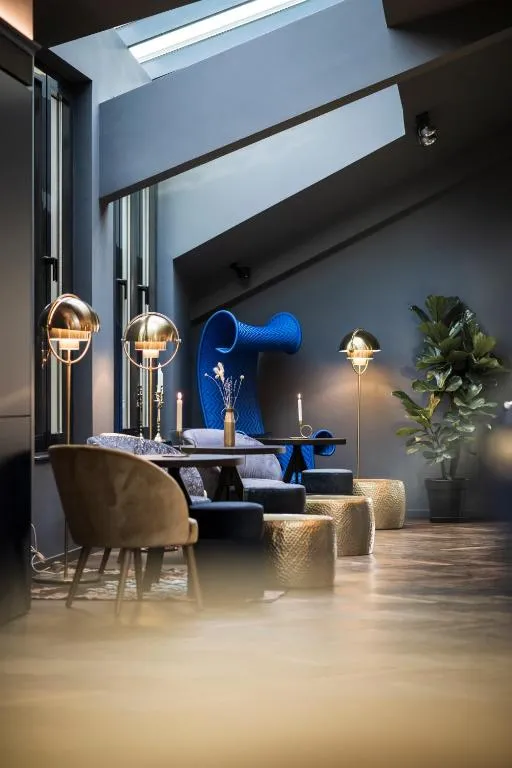 Altstadthotel Weisses Kreuz An inn since 1465 where Mozart really did sleep, steps from the Golden Roof.Check rates
Plenty of comfortable three- and four-star hotels in and around the old town and Maria-Theresien-Strasse, the local sweet spot. Walkable to the Nordkette funicular and the cafes, and well placed for day trips by train.
Our picks
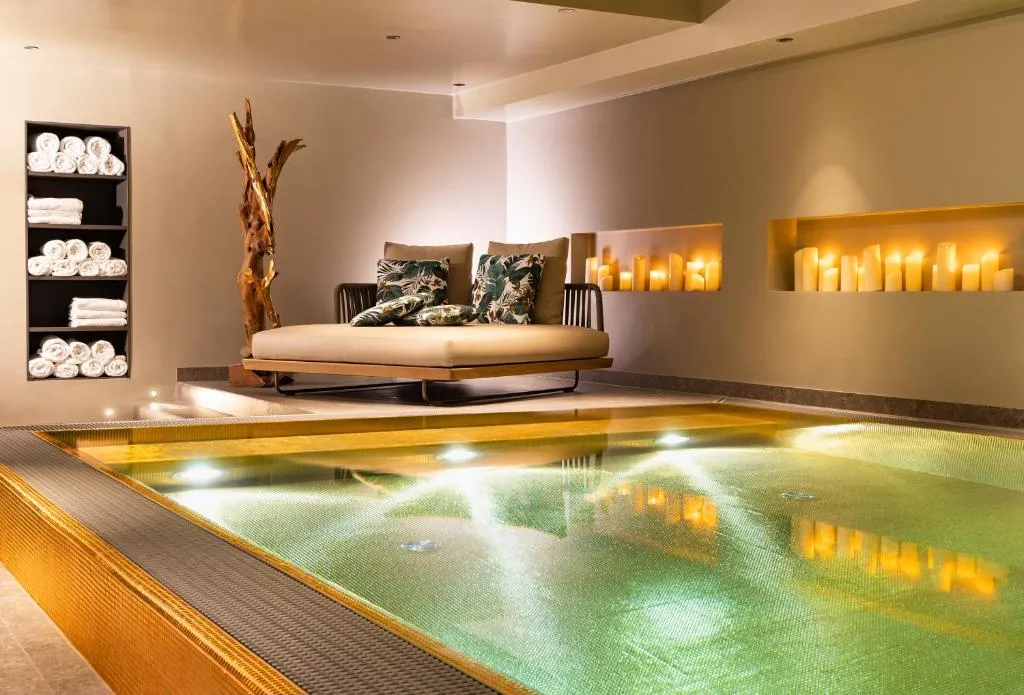 Hotel Innsbruck Right where the Altstadt meets the river, with a rooftop spa and pool looking straight at the Nordkette.Check rates
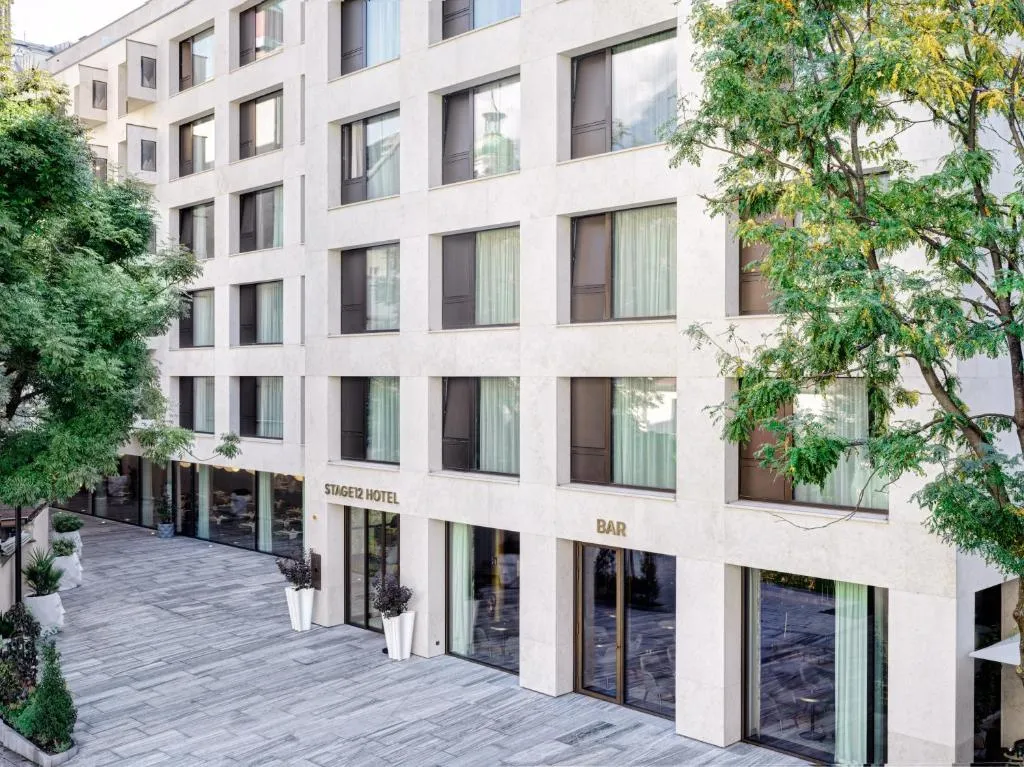 STAGE 12 Hotel by Penz Quiet-luxe rooms on Maria-Theresien-Strasse with the Nordkette framed at the end of the street.Check rates
Design-led and five-star hotels in and beside the old town, several with rooftop bars and Nordkette views. The top end here is urban polish rather than ski-chalet drama; pay up for the view and the central address.
Our picks
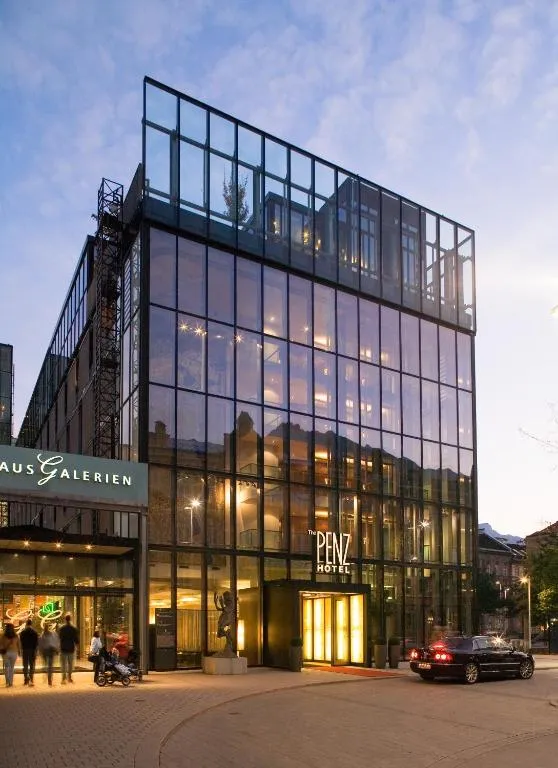 The PENZ Hotel Innsbruck's original design hotel; rooftop breakfast above the old town is a ritual worth planning around.Check rates
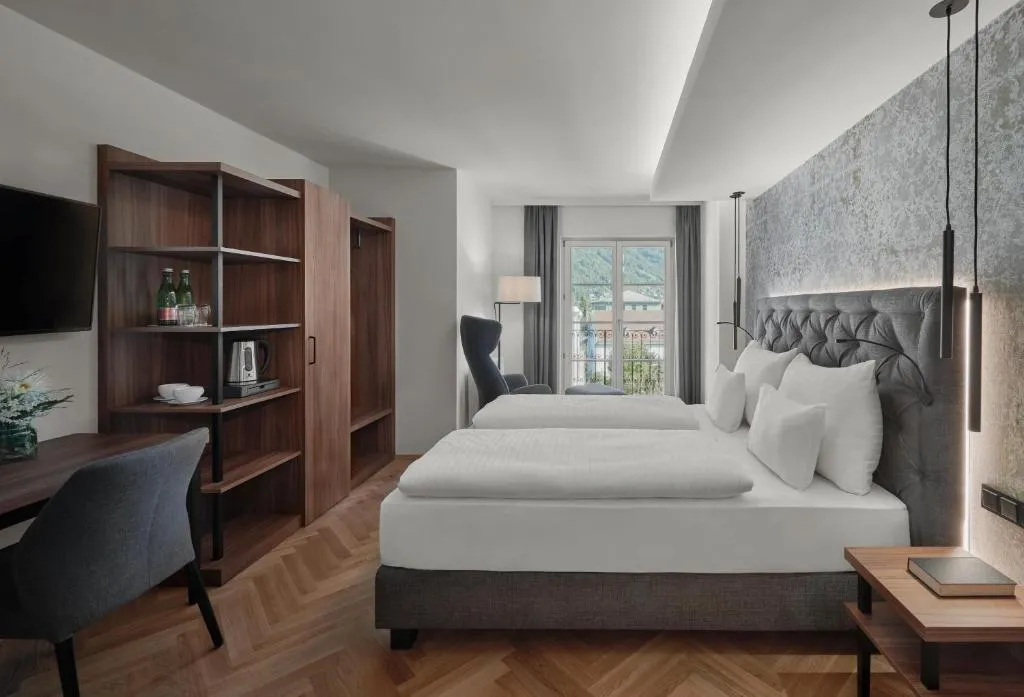 Hotel Schwarzer Adler A 1511 house run by the Ultsch family for five generations, with a rooftop terrace gazing at the mountains.Check rates
Live prices and availability for your dates.
Booking tips for Innsbruck
- The old town is tiny and walkable and the Nordkette funicular leaves from its edge, so stay central and skip the car entirely.
- The Nordkette cable cars carry you from the city to a 2,300m ridge in about twenty minutes, so an early start beats the afternoon haze; build it into a clear morning.
- The Christmas-market weeks and any big congress dates spike prices and sell out the central hotels. Book ahead for December.
- For a ski trip, stay within a walk of the main station or the Congress funicular station: the ski buses leave from the station forecourt and the Nordkette from Congress, so a bed between the two saves a tram ride every morning.
Where to stay in Innsbruck, your questions
The practical questions travelers ask most when choosing a base here.
- Can you ski from Innsbruck without a car?
- Innsbruck is the rare ski base that is also a city: twelve ski areas on one Ski plus City Pass, a funicular to the Nordkette from the old town, and ski buses from the main station to the rest. The trade is a commute of 20 to 80 minutes each way, so match the area to your group before you match the hotel to your taste. Door to lift is about 20 minutes for the Nordkette, 25 to 41 for Patscherkofel, Glungezer, Schlick 2000 and Axamer Lizum, and 76 to 80 minutes each way for the Stubai Glacier, so a glacier day from a city bed costs about two and a half hours on the bus.
- Where is the best area to stay in Innsbruck?
- Altstadt (old town) is the easiest first base: it suits first-timers who want history and the mountain lift on the doorstep and do not mind paying a small premium for it. Maria-Theresien-Strasse & centre is the main alternative if you want something different.
- Which area of Innsbruck is best for families?
- Families do best from a central, walkable base in Innsbruck, close to the main sights, transit, and amenities so the daily logistics stay simple.
- Where should you stay in Innsbruck for a quieter trip?
- Hungerburg / Nordkette side is the calmest pick: views, peace, and travellers who want the high mountains a few minutes from the door.
- How many nights do you need in Innsbruck?
- We'd plan for 2–3 nights, long enough to settle in, do the signature excursions without rushing, and keep an easy pace.
- Is Innsbruck expensive to stay in?
- Innsbruck is mid-range compared with other Alpine bases. Plenty of comfortable three- and four-star hotels in and around the old town and Maria-Theresien-Strasse, the local sweet spot. Walkable to the Nordkette funicular and the cafes, and well placed for day trips by train.
- Do you need a car in Innsbruck?
- No, Innsbruck is train-friendly and walkable, so most visitors base themselves centrally and travel by rail and lift.
Some links on this page are affiliate links. If you book through them we may earn a small commission, at no extra cost to you. It helps keep our guides free. We only recommend what we’d book ourselves.

Researched & written by
Jon Miksis
Jon Miksis is the founder of Alps by Design and an award-winning travel writer whose work has been featured in Forbes, HuffPost, Yahoo Travel, and The Boston Globe. He travels to all six Alpine countries at least twice a year and has been trusted by national tourism boards across Europe.
Innsbruck was vetted in person, and every hotel pick here is individually verified.
More about Alps by Design →Other Austrian Alps bases
Weigh Innsbruck against the other handpicked towns in the region.
Seefeld
$$$A sunny high plateau that's easy on everyone.
 Zillertal, Tirol
Mayrhofen
$$$The Zillertal's adventure hub, trails, glaciers, and energy.
 Ötztal, Tirol
Sölden
$$$Glacier skiing and high Ötztal peaks, snow-sure and lively.
Kitzbühel
$$$$The Alps' most glamorous medieval town.
St. Anton am Arlberg
$$$$The cradle of alpine skiing, big terrain and bigger après.
Lech
$$$$$Discreet Arlberg glamour at the head of a high, snow-sure valley.
Not sure where to start?
Take two minutes to find the Alps base that actually fits your trip, then we'll send the route to match.
Or get the free 7-day starter route: