

If you only have room in your trip for one Swiss panoramic train, here's our verdict up front: the Bernina Express gives you the most jaw-drop per hour. It crosses into Italy, runs on a UNESCO World Heritage line, and climbs the highest Alpine rail pass conquered without a rack railway, all in about four hours. The Glacier Express is the full-day, end-to-end icon: eight unhurried hours from Zermatt to St. Moritz, lunch at your seat, the "slowest express in the world" worn as a badge of honor. Short on time and hungry for drama? Bernina. Here for the bucket-list ritual of a whole day on the rails? Glacier.
Now let's earn that verdict.
- Ride just one
- Bernina Express
- The all-day icon
- Glacier Express
- Duration
- 4h vs 8h
- Reservation
- Required, paid
Decided the Bernina is calling? Our full worth-it verdict, regional-train trick included, is in is the Bernina Express worth it.
The comparison table
| Glacier Express | Bernina Express | |
|---|---|---|
| Route | Zermatt ↔ St. Moritz | Chur / St. Moritz ↔ Tirano (Italy) |
| Duration | ~8 hours | ~4 hours |
| High point | Oberalp Pass, ~2,033 m | Bernina Pass, ~2,253 m |
| Reservation | Required (paid, mandatory) | Required (paid) |
| Best for | The all-day, end-to-end icon | Most scenery per hour + crosses into Italy |
The Glacier Express: the bucket-list full day
The Glacier Express is a ritual more than a journey. It links two of Switzerland's most famous resorts, Zermatt, in the shadow of the Matterhorn, and St. Moritz, the glittering capital of the Engadine, and it takes its sweet time getting between them. Roughly eight hours, around 291 kilometres, cresting the Oberalp Pass at about 2,033 metres, threading nearly a hundred tunnels and almost three hundred bridges. It's been lovingly branded the "slowest express in the world," and that's exactly the point: you are not in a hurry, and the train would prefer you weren't either. If you'd rather not spend all eight hours in one sitting, where to stay along the Glacier Express covers breaking the ride and the best hotel at each stop.
What it's like onboard is half the appeal. You sit in a panoramic carriage with curved windows that sweep up into the roofline, a multi-course meal is served at your seat, and the day unfolds in chapters, high Alpine meadows, deep gorges, the famous Landwasser Viaduct, sleepy mountain stations. It's comfortable, it's civilized, and it's long. Eight hours is a genuine commitment; bring a book, settle in, and treat the whole day as the destination.
Who it's for: travelers who want the singular, end-to-end, "I rode the Glacier Express" experience and have a full day to give it. It's wonderful for a slower-paced trip, for anyone routing between Zermatt and the Engadine anyway, and for people who love the idea of lunch with the Alps rolling past the window. If your time is tight or you get restless sitting still, this is a lot of train.
The Bernina Express: most drama per hour
The Bernina Express is, frankly, the one we'd send most first-timers on. In about four hours it runs from Chur (or directly from St. Moritz) south to Tirano, in Italy, and the scenery does not let up. This is the line that climbs over the Bernina Pass at roughly 2,253 metres, the highest crossing of the Alps by rail achieved without a rack-and-pinion system, gliding past the Morteratsch glacier and the milky Lago Bianco before tumbling down the southern slope toward palm trees and Italian piazzas.
It's also a UNESCO World Heritage railway, part of the Rhaetian Railway's Albula/Bernina line, and it earns the title with sheer engineering theatre. The showstopper is the Brusio circular viaduct, an open-air spiral where the train loops 360 degrees over its own track to lose altitude gracefully. You'll be hanging out the window for that one. Because it's an open adhesion railway rather than a cog, the gradients and curves feel improbable, and the contrast over four hours, from glacier to Mediterranean-flavored Tirano, is genuinely startling.
Who it's for: almost everyone, honestly. People short on time, travelers who want maximum payoff for a half-day, anyone heading toward Italy (the lakes, Milan) afterward, and photographers who'd rather be glued to the glass than to a lunch menu. The seasonal open-air observation cars are a bonus if you can catch one.
Cost and reservations: read this before you book
Here's the part that trips people up. On both trains, a seat reservation is required, and it's a separate paid fee, not optional, not included in the seat price you might assume.
- If you have a Swiss Travel Pass, Eurail, or Interrail pass, the pass covers the fare for the route. Good news.
- You still have to buy a reservation for a specific train, date, and seat, on top of the pass. That fee is not waived.
- Without a pass, you pay the fare plus the reservation.
- Either way, the reservation is the non-negotiable bit, and the good departures sell out in summer.
We won't quote exact figures because they shift, but qualitatively: the Bernina is the lighter spend on both fare and reservation, simply because it's a shorter route; the Glacier Express reservation runs higher, more so if you add the meal service. Book the Glacier Express several weeks ahead for summer travel. It genuinely sells out. The Bernina is a little more forgiving, but don't gamble on a peak-season Saturday. If you're still weighing whether a pass pays off for your whole trip, our take on the is the Swiss Travel Pass worth it question is the place to start, and Eurail vs Interrail for the Alps covers the Europe-wide passes.
How to ride both in one trip
You don't have to choose, and if you have the days, you shouldn't. The two lines meet at St. Moritz, which makes a beautiful two-act itinerary:
- Day one: Zermatt → St. Moritz on the Glacier Express (the long, scenic crossing).
- Overnight: stay in or near St. Moritz and actually enjoy the Engadine.
- Day two: St. Moritz → Tirano on the Bernina Express (the dramatic descent into Italy).
- Onward: from Tirano, regular trains carry you toward Milan or the Italian lakes.
We'd never run both back-to-back in a single day. That's a lot of sitting, and the magic dulls. Give each its own daylight. For the bigger picture of stitching scenic rail into a full crossing of the range, see our Across the Alps by rail route, and our broader Alps by rail hub for how it all connects. (Time it well, too: the best time to visit the Swiss Alps covers the seasons.)
 Found on Booking.comFrom CHF 280/night
St. Moritz, Switzerland
Hotel Schweizerhof St. Moritz
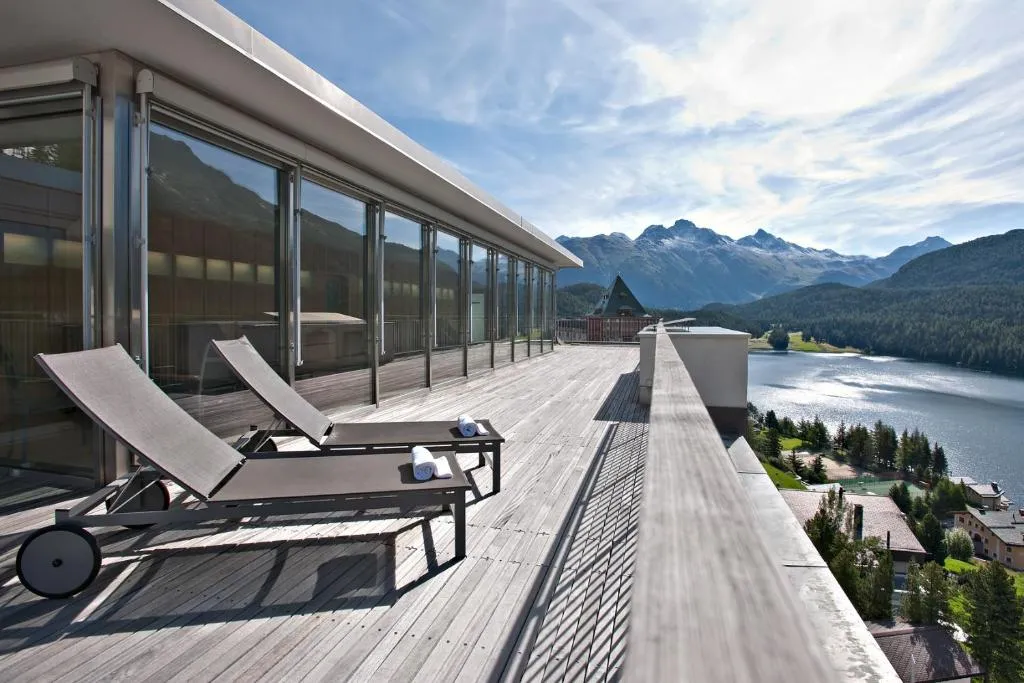
The overnight between the two trains is the detail people skip. Stay it well and St. Moritz becomes part of the trip, not just a stopover. Hotel Schweizerhof St. Moritz sits right on the main square, a short walk from the station for an early Bernina departure, with a spa worth lingering in after a day of glued-to-the-window scenery. Rooms lean classic rather than cutting-edge, which suits the Engadine's old-money mood. Book the spa slot before dinner, it fills fast on winter weekends.
- Guest rating
- 8.8 / 10
- From
- CHF 280/night
- Best for
- Overnight between Glacier and Bernina
What we'd do
If you can only ride one, and you're a first-timer with limited time, take the Bernina Express. It's the higher concentration of wonder, it crosses a border, and it doesn't eat your whole day. If, instead, the romance of a long, slow, lunch-served-at-your-seat crossing between two legendary resorts is what you came to Switzerland for, the Glacier Express is the one you'll never forget. Just guard that full day and book it early.
And if you have two days and a flexible itinerary? Ride both, with a night in St. Moritz between them. It's the most satisfying answer to a question that doesn't really need to be either-or. Pair the rail days with a base from where to stay in the Jungfrau region earlier in the trip, and you've got the spine of a great Swiss week.
These two aren't Switzerland's only panoramic trains, either. If neither quite fits your route, the Gotthard Panorama Express trades altitude for a Lake Lucerne paddle-steamer and a historic spiral-tunnel crossing to Lugano, and the GoldenPass Line runs gentler from Lake Geneva to the Bernese Oberland.
Some links on this page are affiliate links. If you book through them we may earn a small commission, at no extra cost to you. It helps keep our guides free. We only recommend what we’d book ourselves.


