

Most Dolomites hiking guides hand you a list of thirty trails and let you sort the unmissable from the merely nice. We won't do that. The Dolomites have a handful of genuinely world-class walks, a few quieter alternatives that are nearly as good with a fraction of the people, and a lot of trails that exist mostly because they're there. Here's how we'd actually spend the walking days, and how to time each one so you're not sharing the view with a tour bus.
Get your base sorted first, our where to stay in the Dolomites guide covers which valley puts you closest to which trails, and Ortisei vs Corvara weighs the two western-valley hubs, then plan every walk around the mornings.
The best Dolomites hikes at a glance
| Hike | Distance / time | Effort | Best base |
|---|---|---|---|
| Tre Cime di Lavaredo loop | ~10km, 3–4h | Easy–moderate | Cortina / Dobbiaco |
| Seceda ridgeline | Lift + short walks | Very easy | Ortisei |
| Alpe di Siusi meadows | Flexible, near-flat | Easy | Ortisei / the meadow |
| Lago di Sorapis | ~13km, 4–5h | Moderate (exposed bits) | Cortina |
| Lago di Braies loop | ~3.5km, 1h | Easy | Cortina / Braies |
| Cinque Torri | Short loop | Easy (chairlift) | Cortina |
| Viel del Pan (Bindelweg) | ~5km, near-level | Easy | Canazei / Corvara |
| Alta Via 1 | ~120km, ~7 days | Strenuous (hut-to-hut) | Multi-day traverse |
Now the detail on each.
Tre Cime di Lavaredo, the one everyone comes for
- Distance
- ~10 km loop
- Time
- 3–4 hours
- Effort
- Easy–moderate
- Trailhead
- Rifugio Auronzo, 2,320 m
This is the signature hike of the range: a roughly 10km loop around the Tre Cime (Drei Zinnen), the three sheer towers that are the symbol of the Dolomites. It's not a hard walk, mostly gentle, with one modest climb, and the payoff is relentless, especially from the back side at Rifugio Locatelli, where all three towers line up across a basin. Give it three to four hours and a long lunch.
The catch is access and crowds. You drive (or take a shuttle) up a toll road to Rifugio Auronzo at 2,320m, and that car park fills early. In July and August it's full by 8–9am, and the toll is steep. The nearest bases are Cortina and Dobbiaco to the north.
Some links on this page are affiliate links. If you book through them we may earn a small commission, at no extra cost to you. It helps keep our guides free. We only recommend what we’d book ourselves.
Seceda, the most drama for the least effort
- Access
- Lifts from Ortisei
- Walking
- Optional, 20 min+
- Effort
- Very easy
- Best base
- Ortisei
If you have one morning and want the photograph, ride the lifts from Ortisei up to Seceda. The reward is the tilted ridgeline, a great grassy wave of mountain that drops away into the Fermeda towers, and it's right there at the top station, no hike required. But don't just stand at the viewpoint and leave: walk down through the meadows toward Col Raiser or the Troier hut, and within twenty minutes the crowd thins to nothing and the ridge is yours.
This is the rare Dolomites icon that rewards the unfit and the time-pressed equally. Go up for the first or second lift, before the ridge is backlit and busy. Seasonal lift dates and hours are on Dolomiti Superski.
Alpe di Siusi, Europe's great meadow
- Terrain
- Near-flat meadow
- Time
- 1 hour to all day
- Effort
- Easy
- Access
- Cable car or early road
The Alpe di Siusi (Seiser Alm) is the largest high alpine meadow in Europe, a vast, rolling pasture at 1,800–2,000m under the Sassolungo and the Sciliar, laced with easy, near-flat trails. This is the Dolomites hike for families, for a recovery day, or for anyone who wants jaw-dropping scenery without a climb. You can wander for an hour or all day, hut to hut, and never run out of meadow.
The trick is timing your arrival: the access road from Ortisei is closed to day traffic during the day in season, so you either go up early, ride the cable car, or stay in one of the meadow's own hotels. Morning light across the grass toward the Sassolungo is the shot.

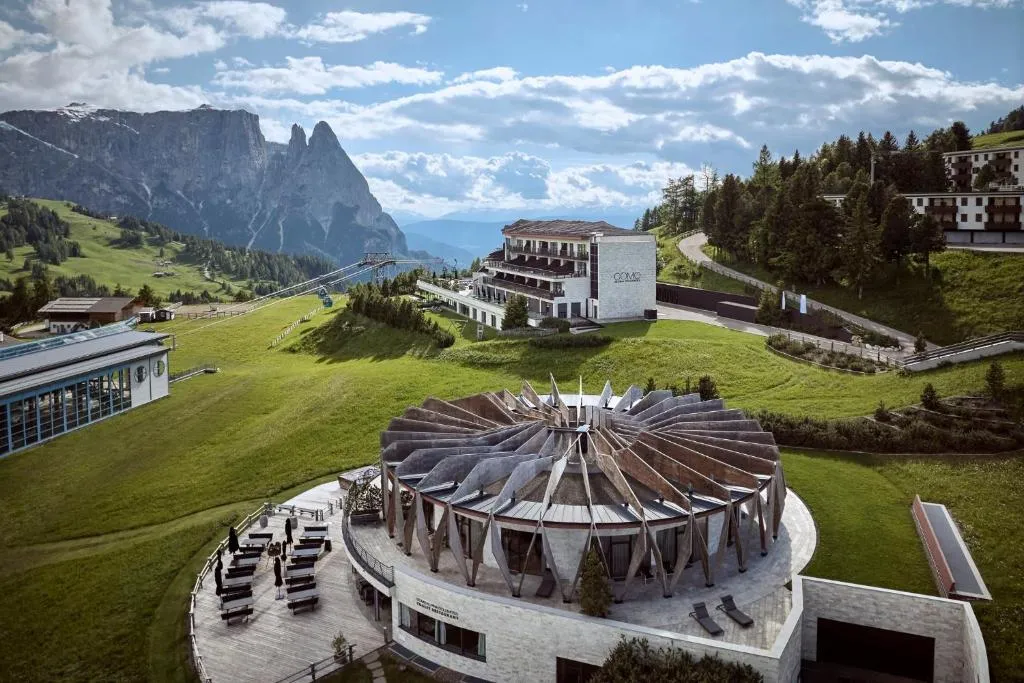 Found on Booking.comFrom €700/night
Alpe di Siusi, Italy
COMO Alpina Dolomites
COMO Alpina Dolomites sits right on the meadow at Compaccio, which means the sunrise you'd otherwise fight a crowd for is simply outside your window. Interiors are calm, pale wood and stone in the brand's understated style, with a spa built for tired hiking legs and a terrace that stares straight at the Sassolungo. It is a genuine splurge and rooms book out fast in high summer, so move quickly if the meadow-at-dawn shot is the point of your trip. Worth it for one night even if you base in Ortisei for the rest.
- Guest rating
- 9.6 / 10
- From
- €700/night
- Best for
- Sunrise light, meadow-top splurge stay
Lago di Sorapis, the turquoise lake
- Distance
- ~13 km return
- Time
- 4–5 hours
- Effort
- Moderate, exposed bits
- Trailhead
- Passo Tre Croci
A glacial lake the colour of antifreeze, ringed by grey walls, Lago di Sorapis is the most rewarding lake hike near Cortina. It's about 6.5km each way from Passo Tre Croci on trail 215, with a couple of short, cabled sections that are exposed enough to give you pause but not technical. Budget four to five hours round trip and bring a head for the narrow bits.
Because there's no lift and no shortcut, Sorapis self-selects for actual hikers, which keeps it saner than the drive-up icons, but the small car park at the pass still fills early, so the morning rule applies. Don't swim; it's freezing and protected.
Lago di Braies, beautiful, and be honest about it
- Distance
- ~3.5 km loop
- Time
- ~1 hour
- Effort
- Easy
- Access
- Timed entry in peak season
The emerald Pragser Wildsee is the most photographed lake in the Alps, and the easy 3.5km loop around its shore is genuinely lovely, wooden boathouse, rowboats, sheer walls rising straight from the water. It's also a victim of that fame: by late morning in summer the shore is a slow-moving river of people, and the access road is now controlled in peak season, sometimes requiring a booking.
We still think it's worth it, but only at the edges of the day. Be at the lake by 7am or come for the last light, and treat it as a short, scenic stop rather than the day's main hike. Skip it entirely if you're allergic to crowds and short on patience; the range has quieter water.
The quiet classics worth choosing on purpose
These don't have the name recognition, and that's exactly the point:
- Cinque Torri, a short, easy loop among five tilted towers above Cortina, threaded with the restored trenches and tunnels of an open-air WWI museum. A chairlift does the climbing; a rifugio does the lunch. The best low-effort, high-reward half-day in the east.
- Friedrich August Weg (Sassolungo loop), a balcony trail traversing under the sheer south face of the Sassolungo from Passo Sella, with two rifugi and constant views. Reachable from Canazei or Val Gardena.
- Viel del Pan (Bindelweg), a near-level high path above the Pordoi pass that puts you face to face with the Marmolada and its glacier across the valley. Easy enough for almost anyone, spectacular out of all proportion to the effort. Base in Canazei or Corvara.
- Adolf Munkel Weg (Val di Funes), the gentle trail under the Odle/Geisler spires, the same skyline as the famous little church of Santa Maddalena. Serene, and far quieter than the marquee valleys.
Go further: hut to hut on the Alta Via 1
If a single day's hiking leaves you wanting more, the Dolomites' real magic is the rifugio system, mountain huts that serve hot lunches, pour local wine, and put you to bed at altitude so you wake up already in the high country. The classic introduction is the Alta Via 1, the most accessible of the great Dolomites traverses: roughly a week from Lago di Braies south to Belluno, sleeping in huts, no technical climbing required. It's the trip that turns a Dolomites hiker into a Dolomites obsessive.
How to actually do this well
A few things that separate a great Dolomites hiking trip from a frustrating one:
- Book rifugio lunches and overnights ahead in summer. The good ones fill, especially in Alta Badia, where the mountain-hut food is a destination in itself.
- Plan the toll roads and parking. Tre Cime, the Alpe di Siusi access, and Lago di Braies all have fees, shuttles, or timed restrictions. Our getting around the Dolomites guide lays out each one.
- Watch the sky after lunch. Afternoon thunderstorms are normal in summer; the high, exposed sections are no place to be when one rolls in. Front-load the climbing.
- Go in the right month. Many high trails and huts only open from mid-June, and the season winds down through late September. See the best time to visit the Dolomites for the month-by-month picture.
What we'd do
For a first trip, we'd build the hiking around two bases. From Ortisei we'd take Seceda at first lift and give a full, slow day to the Alpe di Siusi. Then we'd cross the passes, with a Viel del Pan or Sassolungo walk on the way, and finish from Cortina with Tre Cime at dawn, Lago di Sorapis, and an easy afternoon at the Cinque Torri. That's the shape of our 7-day Dolomites itinerary (or the 5-day road trip for a shorter loop), and it gets you every icon on this page without doubling back over a pass.
Not sure which base puts you closest to the trails you want? Weigh the valleys with Ortisei vs Cortina, or just find your perfect Alps base and we'll match the valley to the hikes on your list.


