

Here's the honest version, before the details: a car transforms a Dolomites trip, and for most travelers it's worth renting one. But a car-free trip is genuinely possible if you base smartly and accept a few limits. The right answer depends on how much of the range you want to cover and how much you value the early starts. Let's work through it.
- Best mode
- Car
- Car needed
- Multi-valley loop
- Buses
- Good in summer
- Watch for
- Tolls, ZTL zones
At a glance
| Train + bus | Car | |
|---|---|---|
| Best for | One lift-served valley, slower pace | The passes, the whole range |
| Reaches the high valleys | Bus transfer from a railhead | Door to door |
| Scenery | The buses are scenic too | The passes are the trip |
| Cost | Cheap with a Mobilcard | Rental, fuel, and tolls, worth it to roam |
| Flexibility | Bends to the bus timetable | Total, dawn starts and weather-chasing |
The case for a car
The Dolomites are a region of valleys separated by mountain passes, and the things that make the range unforgettable, the dawn light at a remote trailhead, the great pass roads driven slowly with stops, the freedom to chase clear weather to a different valley, all run on having your own wheels. The famous trailheads also reward arriving before the crowds, and a car is what lets you be there at 7am instead of waiting on the first bus.
If your trip is the classic two-or-three-base loop across the range, Val Gardena to Alta Badia to Cortina, rent a car. It's not really optional for that itinerary; the 5-day road trip and the 7-day version are both built around one. (For the pan-Alps version of this decision, see do you need a car in the Alps.)
Getting there
You'll most likely fly into Venice (VCE) or Verona (VRN), each roughly two to three hours from the main valleys, with Treviso (TSF) and Innsbruck (INN) also in range. Innsbruck is the closest to Val Gardena, just over the Brenner. Pick up a rental car at the airport and drive in.
For a car-free start, the main rail line up the Adige valley, the Brenner line between Munich, Innsbruck, Bolzano, and Verona, puts Bolzano and Bressanone within easy reach by train, and the Val Pusteria line carries you east to Brunico and San Candido. From those rail towns, regional buses climb into the valleys. Cortina, in the east, has no train station at all and is reached by bus from Venice and its airports, or from the Puster Valley rail line to the north.
Pairing the Dolomites with a Swiss leg? The Bernina Express crosses from the Engadine into Italy at Tirano, a spectacular, if roundabout, rail approach from the west.
Some links on this page are affiliate links. If you book through them we may earn a small commission, at no extra cost to you. It helps keep our guides free. We only recommend what we’d book ourselves.
Driving the passes
The driving here is the good kind of demanding. The Great Dolomites Road and the four passes of the Sella massif, Gardena, Sella, Pordoi, and Campolongo, are sequences of tight hairpins climbing over 2,000m, gorgeous and slow, shared with road cyclists and packs of motorbikes. None of it is technical, but all of it is slower than the map implies. A "two-hour" transfer between bases can eat a morning once you factor in the switchbacks and the stops you'll want to make.
Two habits make it easy. Start early, the passes clog by mid-morning in summer, and the same hairpins that are a joy at 8am are a crawl at noon. And treat the drive as part of the trip, not a transfer: the passes are the scenery, so build in time for the viewpoints. Note that some summer days the Sella passes close to motor traffic entirely for cyclists, and in winter certain high passes shut altogether. Check before you rely on one.
The toll roads and parking traps
One reassuring note first: Italy has no vignette. Unlike Austria or Switzerland, there's no motorway sticker to buy; the autostrada are pay-as-you-go toll roads, ticket on entry, pay by distance on exit, and the roads up into the mountains are mostly free anyway. What catches first-timers is different: several of the headline sights have their own access rules, which exist precisely because everyone wants to be there at once. Here's the quick reference:
| Sight | Access rule | What to do |
|---|---|---|
| Tre Cime di Lavaredo | Toll road (~€30/car); lot fills by mid-morning | Go at opening, come late, or take the shuttle |
| Alpe di Siusi (Seiser Alm) | Road closed to cars ~9am–5pm in season | Ride the cable car from Ortisei or Siusi |
| Lago di Braies | Summer daytime parking booking / shuttle | Arrive at first light, or book ahead |
| Val di Funes | Seasonal shuttle + parking limits | Use the shuttle; plan it the night before |
The pattern is consistent: the more famous the spot, the earlier you need to be there, and the more likely it has a fee or a shuttle. Plan these the night before, not at the trailhead.
A couple of general rules round it out. Town centres, Cortina, Bolzano, the valley villages, often have a ZTL (limited-traffic zone) you mustn't drive into without a permit, so use the car parks and your hotel's guidance. And from mid-November to mid-April, Italian law requires winter tyres or chains in the mountains; any winter rental will be equipped, but confirm it.

The car-free option
If you'd rather skip the rental entirely, base somewhere the buses and lifts do the work. Ortisei is our pick: the Val Gardena bus network and three lift systems fan out from the village, and in season the guided Lago di Braies day tour from Ortisei solves the lake's parking-permit puzzle for you.
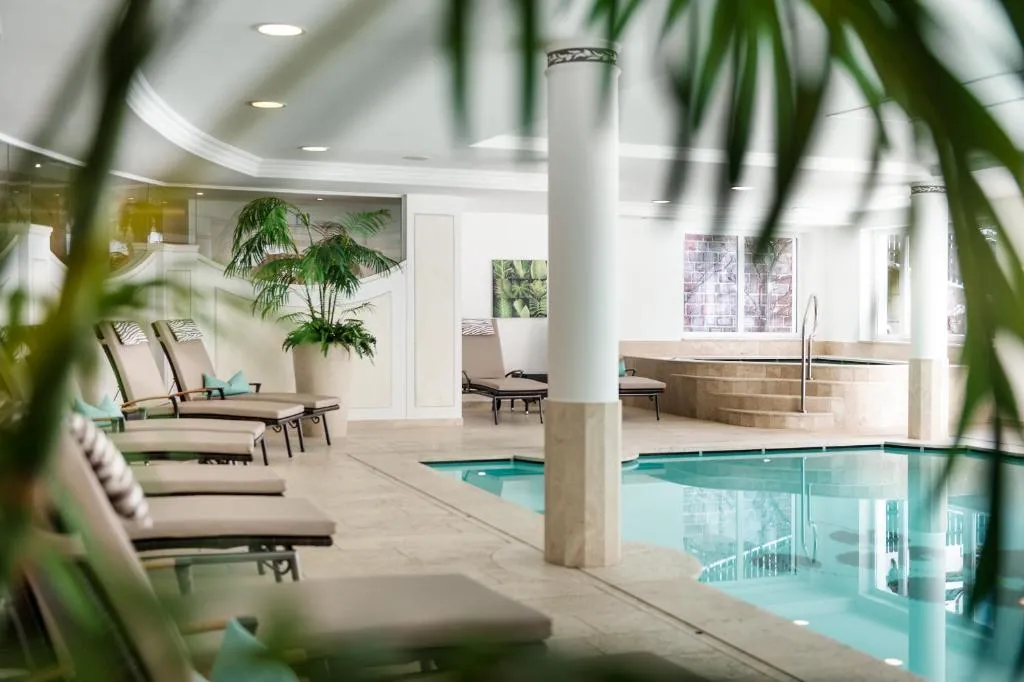 Found on Booking.com
Ortisei, Val Gardena, Italy
Hotel Grones
Family-run four-star where the half board genuinely delights and balconies face the Dolomites. Base here and the getting-around question mostly answers itself.
- Best for
- Car-free Dolomites base, lifts and buses at the door
If you'd rather not drive, the Dolomites can still work, you just plan differently. The trick is to stay put in one well-connected valley rather than chasing the whole range.
Base in Bolzano and you arrive by train and never need a car for the city itself, with cable cars to the surrounding plateaus and buses into the nearer valleys. Base in a hiking valley like Val Gardena (Ortisei), Val di Fassa (Canazei), or Alta Badia (Corvara), and you'll find genuinely good summer bus networks linking the villages and trailheads, plus the cable cars that do most of the climbing anyway. A regional guest card or mobility card, often included by your hotel, typically covers the local buses, which makes a single-valley trip almost effortless. Seasonal lift running dates are on Dolomiti Superski.
What you give up is the early-morning freedom and the remote trailheads. The first bus rarely beats the crowds to Tre Cime, and the further-flung viewpoints are awkward without wheels. For a relaxed, one-valley trip built around lifts and marked trails, car-free is a pleasure. For ticking off the icons across the whole range, it's a compromise.
Renting a car: the practical notes
A few things worth knowing before you book:
- Pick up at the airport (Venice, Verona, or Innsbruck) or in Bolzano if you start there by train. One-way rentals across the border (say, Innsbruck to Venice) are possible but cost more, a loop from one airport is usually cheaper.
- Book an automatic early if you need one; the default in Europe is a manual, and automatics are limited and pricier, especially in summer.
- Smaller is better on the hairpins and in the village car parks. You don't want a barge on a Dolomites pass.
- Carry a card and some cash for tolls, parking machines, and the rifugio that doesn't take cards.
What we'd do
For the classic multi-valley trip, we'd rent a car and lean into it, the passes are half the joy, and the freedom to be at a trailhead at dawn is worth every hairpin. We'd often start car-free with a night or two in Bolzano, arriving by train and easing in over food and wine, then pick up the car when we head for the mountains. If we only had one valley and wanted to keep it simple, we'd base in Ortisei, buy nothing but a guest card, and let the lifts and buses do the work.
Sort your base first, where to stay in the Dolomites walks through the valleys (and Ortisei vs Cortina settles the classic base debate), and the best time to visit covers when the lifts and buses are actually running. Weighing the Dolomites against Switzerland? See Swiss Alps vs Dolomites. Then find your perfect Alps base and we'll match the logistics to the trip you want.
Comparing other regions? See the same train-or-car call for the Swiss Alps, Austria, the French Alps, the Bavarian Alps, and Slovenia, or zoom out to do you need a car in the Alps.


