

There's a version of Slovenia you can do entirely by train and bus, Ljubljana, Lake Bled, a postcard or two, and it's lovely. But it isn't the Slovenia that makes people fall in love with the place. That one lives up the valleys: in the Julian Alps, the Soča River's impossible turquoise, hairpins stacked against limestone walls. And that Slovenia runs on a car. Mountain public transport here is thin and seasonal, a few summer buses that don't go where you want, when you want, so renting a car isn't a luxury. It's the key. Here's how we'd use it.
The great drives at a glance
| Drive | What it is | Open | Character |
|---|---|---|---|
| Vršič Pass | 50 hairpins, Kranjska Gora to the Soča | ~May–Oct | The headline; cobbled, slow, scenic |
| Mangart road | Slovenia's highest paved road | Summer | Narrow, exposed, small toll |
| Solčava panoramic road | Ridge drive above the Logar Valley | Most of the year | Gentle, pastoral, easy |
The Vršič Pass: the headline drive
- High point
- 1,611 m
- Length
- ~50 km
- Hairpins
- 50, numbered
- Open
- May to October
If you do one drive in Slovenia, do this one. The Vršič Pass is the country's highest road at 1,611 metres, linking Kranjska Gora in the north to the Soča Valley in the south by way of roughly fifty numbered hairpins, each one signposted, so you always know how many are left to fight. The northern side climbs through forest in a tight cobbled spiral; the southern side unspools toward the Soča in long, sweeping curves. The whole thing is barely 50 kilometres of driving, but it's the most concentrated alpine theatre in the country.
A short way up from the Kranjska Gora side, pull over for the Russian Chapel, a small wooden church built by Russian prisoners of war who died building this very road during the First World War. It's a quiet, moving stop, and a good reminder that the pass exists for grim reasons. Above it, the road tops out at the saddle, where the jagged spire of Prisojnik and the Mojstrovka peaks crowd in. Park, walk a few minutes, breathe.
For the seasonal window, see the best time to visit Slovenia's Julian Alps.
Other drives worth the detour
The Vršič gets the glory, but it's not alone.
Above Bovec in the Soča Valley, the Mangart saddle road is Slovenia's highest paved road, switchbacking up toward the Italian border with tunnels cut straight through the rock and a finale of raw, exposed high-mountain views. It's narrower and wilder than the Vršič, a small toll applies, and you want your nerve and your brakes in good order, but the payoff at the top is some of the best scenery you can reach on four wheels in the country. (The river itself is covered in our Soča Valley guide.)
Further east, the Solčava panoramic road loops high above the Logar Valley, a glacial U-shaped trough of pasture, farmhouses, and waterfalls in the Kamnik–Savinja Alps. It's gentler than the big passes, a slow, scenic ridge drive past working hillside farms, and it pairs perfectly with a walk up the valley floor to the Rinka waterfall. This is the Slovenia people don't photograph enough.
Practical driving tips
A few things that save grief:
- Buy a vignette. Slovenia's motorways and expressways require an electronic vignette (toll sticker) tied to your plate. Rental cars usually come with one, confirm at pickup, and if you're driving in from abroad, buy the e-vinjeta online before you cross the border. The mountain passes themselves are toll-free. (Vignettes, border rules, insurance, and pickup strategy for the whole range are covered in our complete car rental guide.)
- Expect narrow, busy roads in summer. The good drives are single-lane-ish, cobbled in places, and full of cyclists, motorbikes, and campervans from June to September. Drive defensively, use the pull-offs, and don't plan tight timings.
- Parking is the real headache at Bled. Spaces around Lake Bled are limited and paid, and they fill fast in season. Arrive early, park once, and walk. The lake loop is on foot anyway.
- Distances lie. Slovenia is small but slow. A "short" hop over a pass can eat half a day once you factor in hairpins, photo stops, and traffic. Build in slack.
When you don't actually need a car
Be honest with yourself about the trip you're taking. If your plan is Ljubljana plus Bled and nothing more, skip the car entirely. The train and bus network between the capital, the airport, and Bled is frequent, cheap, and stress-free, and parking in both is a chore you'd rather avoid. A car earns its keep the moment you point it at the Julian Alps, Vršič, Bovec, the Soča, Mangart, the Logar Valley. For a city-and-lake long weekend, it's just an expense and a parking problem. (For the broader call, see do you need a car in the Alps.)
The biggest mistake
The biggest mistake is renting a car and never leaving the obvious loop, Bled, Bohinj, back to Ljubljana, because the high roads felt intimidating. People look at "fifty hairpins" and quietly decide it's not for them, then spend the week within sight of the same lake. The Vršič is not a road for experts; it's slow, well-graded, and driven by ordinary rental cars all summer long. The other mistake is the inverse: paying for a car on a trip that never needed one. Match the car to the mountains, not the city.
What we'd do
Base in Kranjska Gora for two nights and drive the Vršič in the morning while it's quiet, ending the day down in the Soča Valley.
 Found on Booking.com
Kranjska Gora, Slovenia
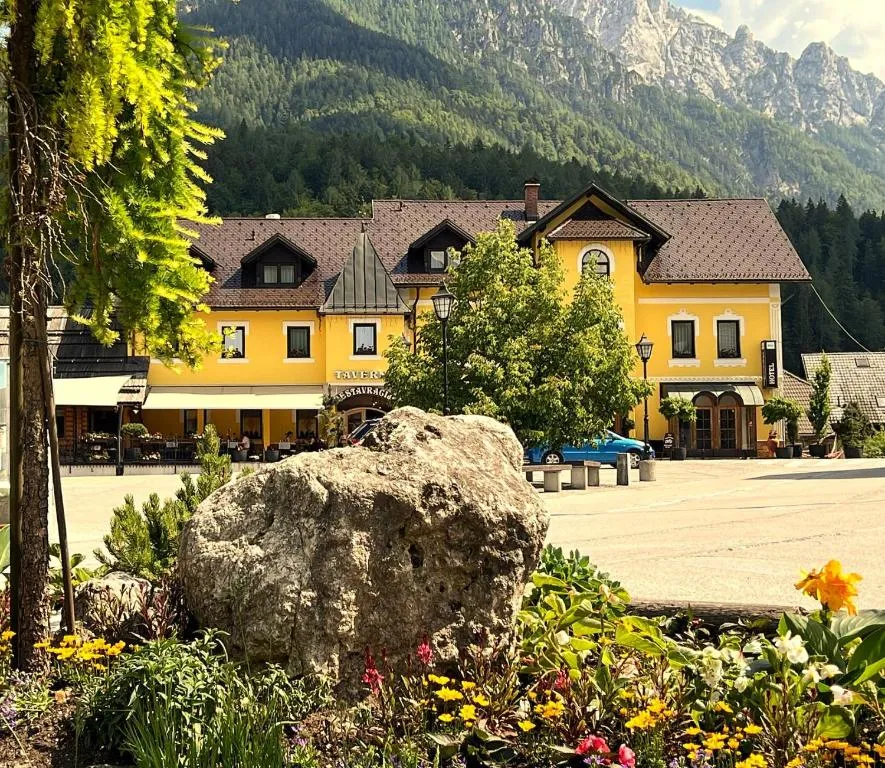
Kotnik Boutique Hotel
After a morning spent counting switchbacks on the Vršič, you want a room that feels like a reward. This boutique address in Kranjska Gora delivers exactly that: contemporary rooms, a kitchen that leans into hearty Slovenian cooking, and a location minutes from where the pass road begins its climb. Breakfast is generous enough to fuel a full day of hairpins. It's a comfortable, unfussy two-night anchor for the drive, not a spa retreat, so come ready for early starts and long days behind the wheel.
- Best for
- Comfortable base, Vršič pass mornings
Move over to Bovec for two more, tackling the Mangart road and the river.
 Found on Booking.comFrom €110/night
Bovec, Slovenia
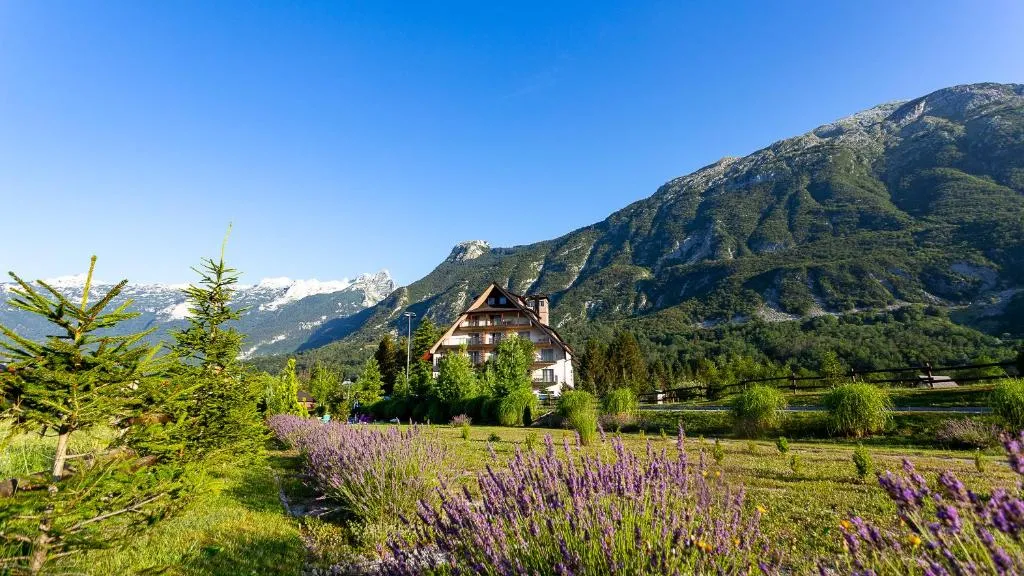
Hotel Mangart
Named for the same high pass you'll have just driven, this modern riverside hotel in Bovec is the kind of place that makes the Soča valley feel like the reward it is. Rooms are clean-lined and comfortable, there's a proper wellness area to loosen up switchback-tight shoulders, and the turquoise river is a short walk away for a cold-water dip. It won't dazzle you with history, it's a solid, well-run modern hotel, but after the Mangart's exposure and hairpins, that's exactly the point.
- Guest rating
- 8.3 / 10
- From
- €110/night
- Best for
- Riverside recovery after Mangart road
If time allows, swing east on the way out for the Logar Valley and the Solčava panoramic road, a softer, pastoral coda after the high drama. Read up first with our Slovenia destination guide, pair it with Lake Bled and Lake Bohinj on the lakes side, and sort the bases with where to stay in the Julian Alps. If you want the whole thing sequenced, our 7-day Julian Alps itinerary strings these drives together with the hikes and towns between them.
Slovenia rewards the people who turn off the main road. Sort the wheels, point them uphill, and find your perfect Alps base to build the rest of the trip around it.


