

The single biggest decision you'll make about a Julian Alps trip isn't where to stay. It's when to go. The month doesn't just change the weather; it changes the trip entirely. Come in July and you'll swim in glacier-fed lakes, raft the Soča, and drive every hairpin of the Vršič Pass. Come in February and those same roads are simply closed, replaced by skiing and snow-dusted lakeshores. Both are wonderful. They're also barely the same destination.
So before you book, decide which version of Slovenia you actually want. Here's how the seasons break down, and the one mistake we see people make every year.
The seasons at a glance
- Peak season
- Jun–Aug
- Best month
- September
- Quietest
- May / October
- Ski season
- Dec–Mar
| Season | Weather (valleys) | Lakes swimmable? | High passes | Crowds | Best for |
|---|---|---|---|---|---|
| Summer (Jun–Aug) | Warm, ~25–30°C | Yes (late Jun–Aug) | Open | High (esp. Bled) | Swimming, rafting, every high road |
| September | Mild, crisp, golden | Early Sept, yes | Open | Moderate, dropping | The all-round sweet spot |
| May / October | Cool, variable | Too cold | Opening late / closing early | Low | Quiet + value, flexible plans |
| Winter (Dec–Mar) | Cold, snowy | No | Closed | Low (busy at ski resorts) | Skiing + snow-globe scenery |
Temperatures are rough guides, mountain weather does what it likes. Now the detail.
Summer (June–August): everything is open
This is the Julian Alps at full volume. By late June the lakes have warmed enough to swim, and Lake Bled and Lake Bohinj become the kind of places where you'll happily spend a whole afternoon in the water. The Soča rafting season is in full flow out of Bovec, with the river running its famous milky turquoise. Every high road is open, the Vršič Pass and its fifty hairpins, the white-knuckle Mangart road, and the mountain huts and trails are all running.
The catch is crowds. Lake Bled in July and August is genuinely busy: full car parks, queues for the island boat, lakeside paths shoulder-to-shoulder by mid-morning. Bohinj, larger and wilder, absorbs the numbers far better. (Our complete guide to Lake Bled covers exactly how to time it, and the Lake Bohinj and Triglav guide makes the case for the quieter base.)
September: the sweet spot
(The cross-Alps case for the month, all six countries, lives in the Alps in September.)
If you let us pick one month, it's September. The water still holds enough summer warmth for a swim in the first couple of weeks. The light goes golden and the air turns crisp and clear. The passes are still open, the huts are still staffed, the rafting is still running, and the peak-season crowds have largely gone home with the school holidays. You get nearly everything summer offers with a fraction of the people. It's not a secret, exactly, but it's the closest thing the Julian Alps have to one.
Shoulder season (May, October): quiet and beautiful, with caveats
May and October are lovely and blissfully uncrowded, and they come with real limits you need to plan around. October in particular turns the beech forests around Bled to gold, one of the Alps' great fall foliage displays. The high passes are the big one: the Vršič and Mangart roads open later and close earlier than the calendar suggests, often not reliably clear until late May and shutting again as October fades. (If a pass is your centerpiece, read driving Slovenia and the Vršič Pass before locking dates.) Some mountain huts keep the same short season. And the water is cold, May especially. People picture an Alpine lake in spring sunshine and imagine swimming; the reality is a swim that lasts about ninety seconds.
These months reward flexibility. If your heart is set on a specific pass or hut, check its status before you commit, and have a low-elevation plan B, the lakeshores, the Soča Valley at lower altitude, and the towns are all rewarding regardless.
Winter (December–March): a different trip
Winter swaps the lakes and rivers for snow. You'll ski at Kranjska Gora, right at the foot of the closed Vršič Pass, and at Vogel, the resort perched above Lake Bohinj with some of the best views in the country from a chairlift. Bled dusted in snow, with the island church framed against white peaks, is flat-out magical.
But understand what's gone: the Vršič and Mangart passes are closed, the Soča adventure season has shut down completely, and many high trails are out of reach without proper winter kit. Winter is a ski-and-scenery trip, not a hiking-and-rafting one.
What to pack, by season
The Julian Alps reward layering in every month. In summer, pack for warm valley days and cool mountain mornings: swimwear and sun protection, but also a fleece and a rain shell, afternoon thunderstorms are common in the high country. In September, add a warmer layer for crisp evenings. In shoulder season, assume changeable weather and bring proper waterproofs. In winter, it's full cold-weather kit, and if you mean to drive, expect winter-tire requirements and carry chains for the higher roads.
Who each season is for
- Summer is for families, swimmers, and anyone who wants the rafting, the canyoning, and the full sweep of high roads, and who can make peace with crowds at Bled.
- September is for almost everyone. If your dates are flexible and you want the best all-round experience, this is it.
- May and October are for travelers who prize quiet and shoulder-season prices over swimming and guaranteed pass access, and who'll happily adapt their plans to conditions.
- Winter is for skiers and anyone chasing the snow-globe version of Bled and Bohinj, not for anyone whose itinerary depends on the high passes or the river.
The biggest seasonal mistake
It's planning a winter or early-spring trip around driving the Vršič Pass. The pass is one of the great Alpine drives, and it's the spine of a classic Slovenia loop connecting Kranjska Gora to Bovec and the Soča Valley, so people build whole itineraries around it without checking that it's snow-closed for much of the year. The close cousin of this mistake: arriving in May with swimsuits, expecting warm lake swimming, and meeting water still cold from snowmelt.
Both are easily avoided. Match your must-dos to the calendar before you book, not after.
What we'd do
We'd go the second and third weeks of September. We'd base at Lake Bohinj for the quiet and the swimming, drive the Vršič Pass on a clear morning while it's still open, drop into Bovec for one last raft on the Soča, and save a snow trip to Vogel and Kranjska Gora for a separate winter visit.
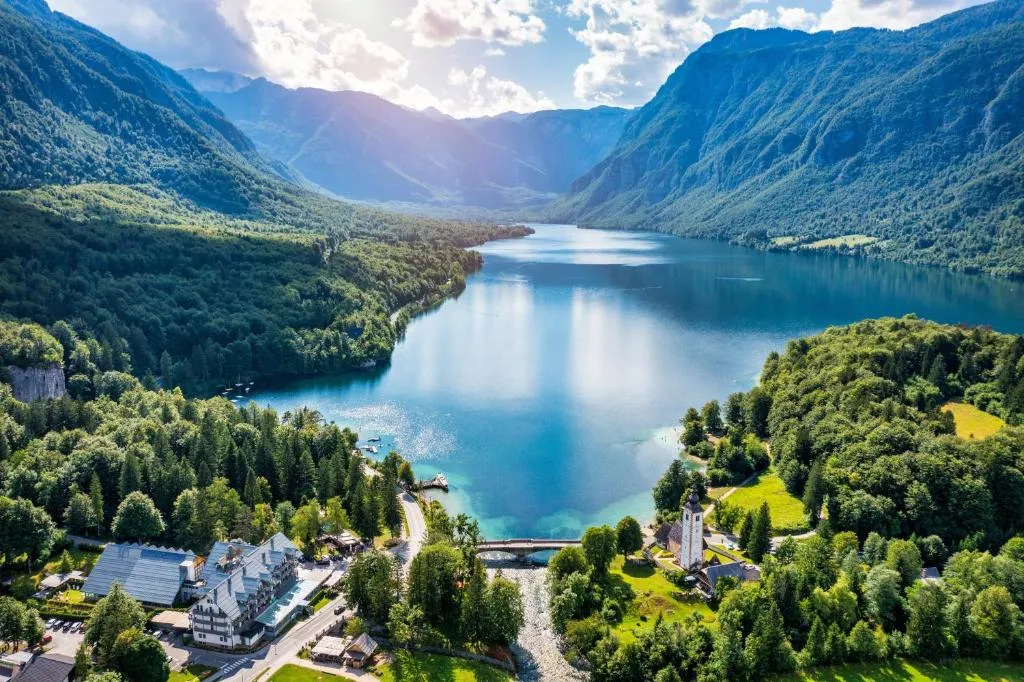 Found on Booking.comFrom €140/night
Lake Bohinj, Slovenia
Hotel Jezero
Hotel Jezero, Bohinj means 'lake' in Slovene, and this one earns the name: it sits directly on the water at the quiet end of the lake, with its own swimming platform and kayaks free for guests. Rooms are plain, alpine-lodge comfortable rather than stylish, which suits Bohinj's whole unpretentious character. September mornings here, mist on the water, no crowds, are the best argument for this itinerary that we know. Ask for a lake-facing room; the car-park-facing ones are noticeably less special.
- Guest rating
- 8.7 / 10
- From
- €140/night
- Best for
- Quiet lakeside base, September swim
One destination, two completely different, and both excellent, trips. It maps almost exactly onto our 7 days in the Julian Alps itinerary.
Once the month is settled, the rest follows: see where to stay in the Julian Alps for the base decision, and if you're still weighing the whole country against the obvious alternative, Slovenia vs Switzerland is an honest take.
Whichever month wins, the next step is the same: find your perfect Alps base.


