

Some rivers are a nice color. The Soča is a color you won't quite believe is real. It runs the length of this valley in northwestern Slovenia as a vivid, glacial emerald-turquoise, milky in spring, clearer and brighter in late summer, threading between the limestone walls of the Julian Alps with the kind of saturation that makes people stop the car and just stare. Italians know it as the Isonzo, and a century ago it was the front line of some of the most brutal fighting of the First World War. Today it's the most beautiful river valley in the Alps, and one of the most under-visited. Here's how we'd do it.
The Soča Valley at a glance
- How long: 3 to 4 days (it rewards nights, not hours)
- Best time: June or September, warm enough for the river, quieter than the July–August festival peak, with the high roads open
- Getting there: about 1.5 to 2 hours from Ljubljana; drive in over the Vršič Pass in summer or via Italy, a car is essential
- Don't miss: a raft on the Soča, the Kobarid Museum and Kozjak falls, the Tolmin Gorges, and the Vršič Pass drive
- Region
- NW Slovenia
- Getting there
- Car essential
- Ideal stay
- 3–4 days
- Best months
- June or September
What the headline activities cost (approximate, per person, and they vary by operator and season):
| What | Roughly | Notes |
|---|---|---|
| Half-day rafting | ~€45–55 | Gear and guide included |
| Canyoning (Sušec) | ~€55–70 | Guided, around 3 hours |
| Tolmin Gorges entry | ~€10 | Seasonal ticket |
| Kobarid Museum | ~€10 | Outstanding WWI museum |
| Kanin cable car | ~€20 return | Up to the high plateau |
| Mangart road toll | ~€5 | Summer only; Vršič is free |
The river and the adventure: Bovec
Start with the water, because the water is the whole point. Bovec is the adventure hub at the top of the valley, and the Soča here is fast, cold, and outrageously clear. This is the rafting and kayaking capital of Slovenia. Half-day raft trips run the rapids through spring and summer, and the kayaking is good enough that national teams train on it. If rafting feels tame, the canyoning in the side gorges (Sušec is the classic) has you sliding and abseiling down natural waterslides, and there are river zip-lines strung across the canyon.
Some links on this page are affiliate links. If you book through them we may earn a small commission, at no extra cost to you. It helps keep our guides free. We only recommend what we’d book ourselves.
Off the water, Bovec is a launchpad for the valley's two finest waterfalls. The Boka waterfall is enormous, a roaring 100-meter plume that's at its most thunderous in May snowmelt, visible from the road and worth the short climb to the viewpoint. The Virje waterfall is the opposite mood: a soft, photogenic curtain into an emerald pool, an easy stroll from the car. For the high country, the Mangart saddle road is Slovenia's highest road, switchbacking up to roughly 2,000 meters with jaw-dropping views (it's a summer-only proposition), and the Kanin cable car lifts you onto a high karst plateau on the Italian border. Bovec is where you'll feel your pulse.
History and food: Kobarid
Twenty minutes down the valley, Kobarid is the gentler, deeper base, and our pick for where to sleep if you want the valley's soul rather than just its adrenaline. (We weigh the two in detail in Bovec vs. Kobarid.)
Kobarid is Caporetto, the site of the catastrophic 1917 battle where Austro-Hungarian and German forces, led by a young Erwin Rommel, broke the Italian line and routed an entire army. The award-winning Kobarid Museum tells the story of the Isonzo Front with extraordinary restraint and humanity, and the Walk of Peace (Pot miru) links the trenches, memorials, and the great hilltop Italian ossuary into a moving outdoor route. It is the emotional counterweight to all that bright water below. Lace up for the loop trail to the Kozjak waterfall, which falls into a hidden cathedral-like cavern of rock, one of the most atmospheric short walks in the country.
And then there's the food. Kobarid is home to Hiša Franko, chef Ana Roš's restaurant, a Michelin three-star regularly ranked among the best in the world. Book months ahead. Even if a tasting menu isn't your trip, the village punches far above its size for valley cheese, cured meats, and trout.
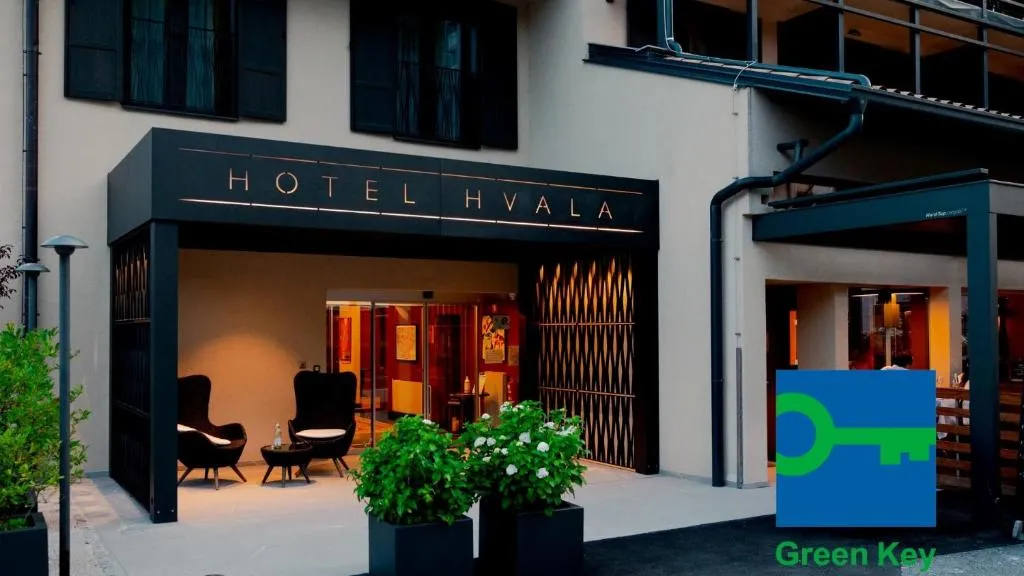 Found on Booking.com
Kobarid, Slovenia
Hotel Hvala - Topli Val
Kobarid's own case for staying a beat longer. Hotel Hvala sits right in the village center in Kobarid, an easy walk to the WWI museum and the start of the Walk of Peace, with the well-regarded Topli Val restaurant downstairs for the nights Hiša Franko is booked out (it usually is, so plan ahead either way). Rooms are simple and comfortable rather than plush, and the upper-floor balconies facing the mountains are worth requesting. It is unpretentious in the best way, exactly the kind of base this valley rewards.
- Best for
- Central base, food-forward
Gorges and the lower valley: Tolmin
Further south, Tolmin anchors the lower valley where the mountains soften. The headline is the Tolmin Gorges (Tolminska korita), the southern tip of Triglav National Park and the lowest point in it, where two rivers carve deep, narrow slots of green water spanned by the dizzying Devil's Bridge and a famous boulder wedged between the walls. It's a 45-minute to two-hour loop, cool and dramatic, and one of the best easy adventures in the valley.
Tolmin is also the valley's summer party: the riverside meadows host big music festivals in July and August (Punk Rock Holiday, the metal-leaning Tolminator, and more), which transform the sleepy town and book out beds for miles.
Threading the whole valley, the Soča Trail (Soška pot) is a roughly 25-kilometer waymarked walking route from the river's source near the Vršič Pass down past Bovec and Kobarid, walkable in sections, the most beautiful way to experience the river on foot.
The scenic way in: the Vršič Pass
How you arrive matters here. The most spectacular entry is over the Vršič Pass from the Bled and Kranjska Gora side, Slovenia's highest mountain pass at 1,611 meters, a serpentine of 50 numbered hairpin bends climbing through the heart of the Julian Alps. Near the top you pass the Russian Chapel, built by WWI prisoners of war, and on the descent you reach the very source of the Soča before following the infant river down into Bovec. It's a white-knuckle, postcard-at-every-turn drive that's only open roughly May to October. When it's shut by snow, you come in from the Italian side near Gorizia instead. Our guide to driving Slovenia and the Vršič Pass covers the route in detail.
Getting there and around
The Soča Valley sits in Slovenia's far northwest, and you'll almost certainly arrive by car. From Ljubljana it's about 1.5 to 2 hours: the fast way is the motorway and the Predel or Italian approach, the beautiful way is over the Vršič Pass in summer. The nearest airports are Ljubljana, Trieste, and Venice (Treviso), all an easy drive. Once you're in the valley, a car is non-negotiable, the waterfalls, the Mangart road, the trailheads, and the gorges are scattered and barely served by bus. Rent in Ljubljana and build the valley into a wider loop; it pairs naturally with Lake Bled and Lake Bohinj.
How long, and the best time
Give the valley three to four days. One day for the river and waterfalls from Bovec, one for Kobarid's history and the Kozjak walk, one for the Tolmin Gorges and the lower valley, with a half-day spare for the Mangart road or a stretch of the Soča Trail.
The season is May to September. Rafting and the high adrenaline sports run from roughly April to October, with the biggest water in late spring snowmelt. The high roads, Vršič and Mangart, are summer-only, generally clear from May into autumn. June and September are our favorites: warm enough for the river, quieter than the July–August festival peak, and with the mountain roads open. (The full seasonal picture is in the best time to visit Slovenia's Julian Alps.) And we'll say it plainly. You want a car. The valley simply doesn't connect well by bus.
The biggest mistake
The biggest mistake is treating the Soča Valley as a day trip from Bled or Lake Bohinj, driving over Vršič, photographing the river, and turning around. People see the color and miss the place: no canyoning, no Kobarid Museum, no Kozjak cavern, no gorges, no dinner that lingers. They've seen a viewpoint. The valley rewards nights, not hours. Sleep here, and the river becomes a place you live alongside rather than a photo stop.
What we'd do
For where this fits a longer Slovenia trip, see our 5-day Soča Valley itinerary, the 7 days in the Julian Alps loop, and where to stay in the Julian Alps. And if you're still weighing the whole country, Slovenia vs Switzerland is an honest take. When you're ready to build it, find your perfect Alps base.


