

Most guides to autumn in Europe will tell you October is pretty. That is not useful. The question that actually matters is when, and where, is it peaking the week you can travel, and the honest answer is the thing that makes the Alps special: the color does not arrive everywhere at once. It falls down the mountain over about six weeks, and it comes in a form no other range does so well, the golden larch. Get the elevation and the week right and you stand in gold forest under fresh snow and 3,000 m rock. Get it wrong and you arrive to bare branches or green. This is the guide to getting it right.
- Peak window
- Late September to early November
- The stars
- Golden larches
- Turn first
- High valleys, late September
- Turn last
- Lakes and vineyards, November

The one thing to understand: the color falls down the mountain
Peak foliage in the Alps is not a date, it is a wave that moves downhill. Match your elevation to your travel week and you will always find color; this is the single most useful idea in the whole guide.
| Elevation | What turns | Peak window | Where to find it |
|---|---|---|---|
| High larch belts, 1,800 to 2,300 m | Golden larches | Late September to mid-October | The Engadin, the high Dolomites, upper Tyrol and the Valais |
| Mid valleys and forests, 1,000 to 1,700 m | Larch and broadleaf mix | Mid to late October | The main valley resort towns |
| Valley floors, lakes, vineyards, 500 to 900 m | Beech, maple, chestnut, and vines | Late October to early November | The Bernese Oberland lakes, the Salzkammergut, South Tyrol's vineyards, Lake Bled |
So the smart autumn trip has a shape: start high in the larch country in late September or early October, then drop to the lakes and valleys as October ends. A traveler who understands this can have three weeks of peak color from one trip by simply losing altitude as the season moves. A traveler who does not can miss it entirely by a week.
There is a regional layer too. Larch-gold dominates the drier, higher central and eastern Alps, the Engadin, the Dolomites, Tyrol, the Valais, and peaks early. Broadleaf color, the reds and coppers of beech, maple, and chestnut, dominates the lower, wetter, southern edges, the lakes and the pre-Alps, and holds later. Combine the two and you get the full autumn palette across a single trip.

The golden larch, the Alps' secret weapon
If you know one thing about Alpine autumn, know the larch. It is a conifer that behaves like a broadleaf: every autumn its needles turn from green to brilliant gold and then drop, leaving whole mountainsides glowing before winter. No forest in New England or the American Rockies has this in quite the same way, and it is why the Alps belong in any honest conversation about the best autumn scenery on earth.
The larch grows highest of the Alpine trees, right up to the treeline, so it turns first and it turns where the scenery is most dramatic: gold forest against bare grey rock and, often, the season's first snow. The Engadin's Val Roseg, the larch meadows of the Dolomites, and the valleys above Zermatt are where it does its best work. Chase the larch and you have chased the best of Alpine fall.
Where to go, by when it peaks
Ordered the way the season actually moves, high and early to low and late.
The Engadin, Switzerland: the larch capital
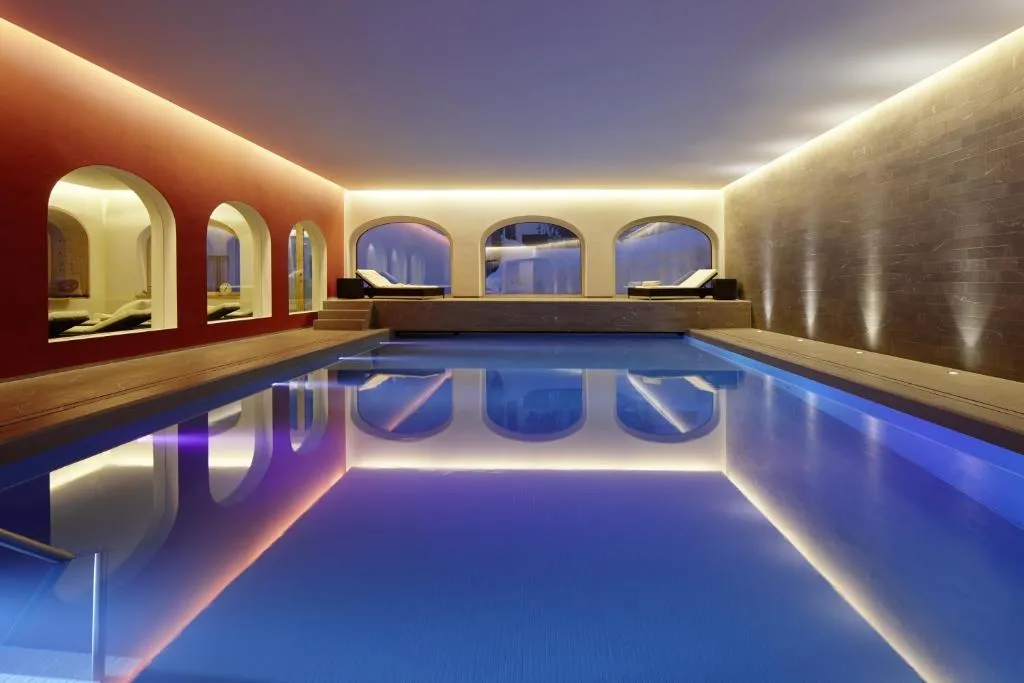 Found on Booking.comFrom CHF 220/night
St. Moritz, Engadin, Switzerland
Hotel Steffani
The high Engadin around St. Moritz is the finest larch country in the Alps, and Hotel Steffani, family-run since 1869, is the practical, well-placed base for it. Peak is usually the first half of October, when the Val Roseg, the woods above Pontresina, and the lakes at Silvaplana turn gold under the Bernina peaks. Book a walking day in the Roseg valley and a slow one by the lakes; it is the trip the whole larch idea is built around.
- From
- CHF 220/night
- Best for
- The best larch valleys on the doorstep
Zermatt and the Valais, Switzerland: gold under the Matterhorn
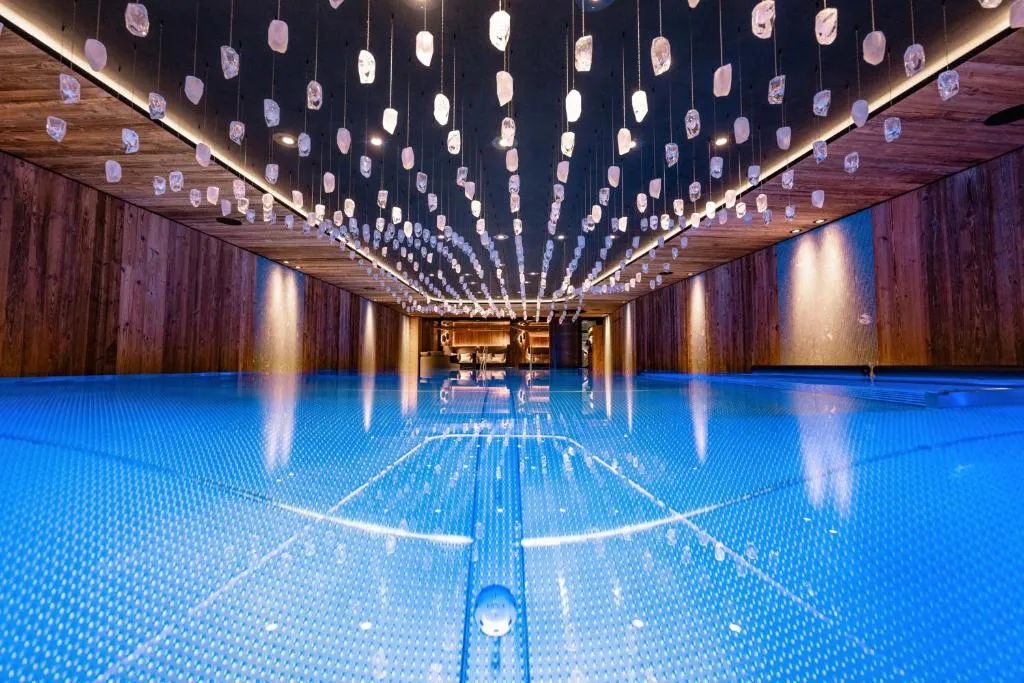 Found on Booking.comFrom CHF 250/night
Zermatt, Valais, Switzerland
Tradition Julen Hotel
The larch forests above Zermatt turn in early-to-mid October, and the payoff is the one photograph autumn in the Alps is made for: gold trees under the Matterhorn. The car-free village stays open and calm in the shoulder season, and the Julen family's chalet classic, with true Matterhorn-view rooms, is the warm base for it. Ride up while the higher lifts are still running and walk the larchen trails around Findeln and Zmutt.
- From
- CHF 250/night
- Best for
- Larch color with the Matterhorn behind it
The Dolomites, South Tyrol: larch meadows and spires
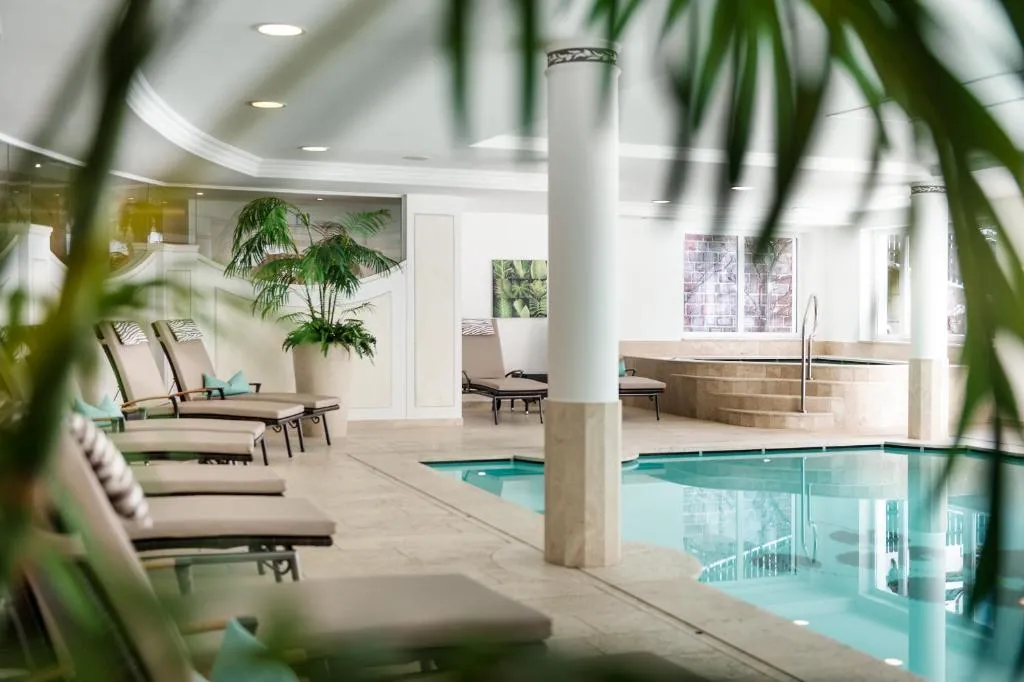 Found on Booking.comFrom EUR 200/night
Ortisei, Val Gardena, South Tyrol
Hotel Grones
The Dolomites do autumn with their own signature: scattered larch meadows glowing against pale limestone towers, from the Alpe di Siusi to Val Gardena, usually peaking early-to-mid October up high and later in the valleys. Base in Ortisei, where the cable cars keep running into autumn, and read our best hikes in the Dolomites and where to stay in the Dolomites to build the days around the color.
- From
- EUR 200/night
- Best for
- Gold larch against the Dolomite rock
The Salzkammergut, Austria: the lakes turn
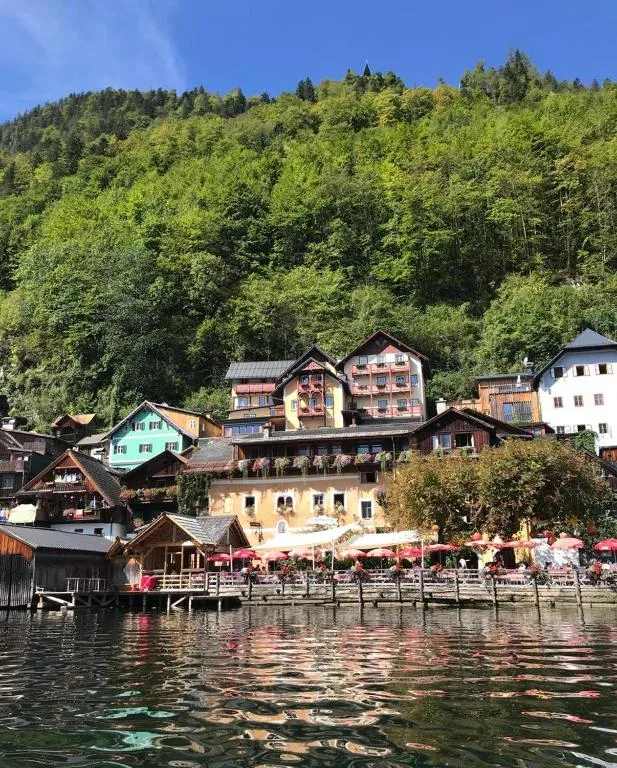 Found on Booking.comFrom EUR 150/night
Hallstatt, Salzkammergut, Austria
Bräugasthof Hallstatt
When the high larches are past, the Salzkammergut takes over, usually late October, when the beech woods around Hallstatt and the Wolfgangsee turn copper and gold and the lakes go mirror-still on calm mornings. It is the back half of the perfect autumn trip: base at a lakefront inn, take the first boat, and let the color come to the water. Thin autumn crowds make the famously busy village finally breathe.
- From
- EUR 150/night
- Best for
- Mirror lakes and beech-gold hillsides
Lake Bled and the Julian Alps, Slovenia: the latest, and among the loveliest
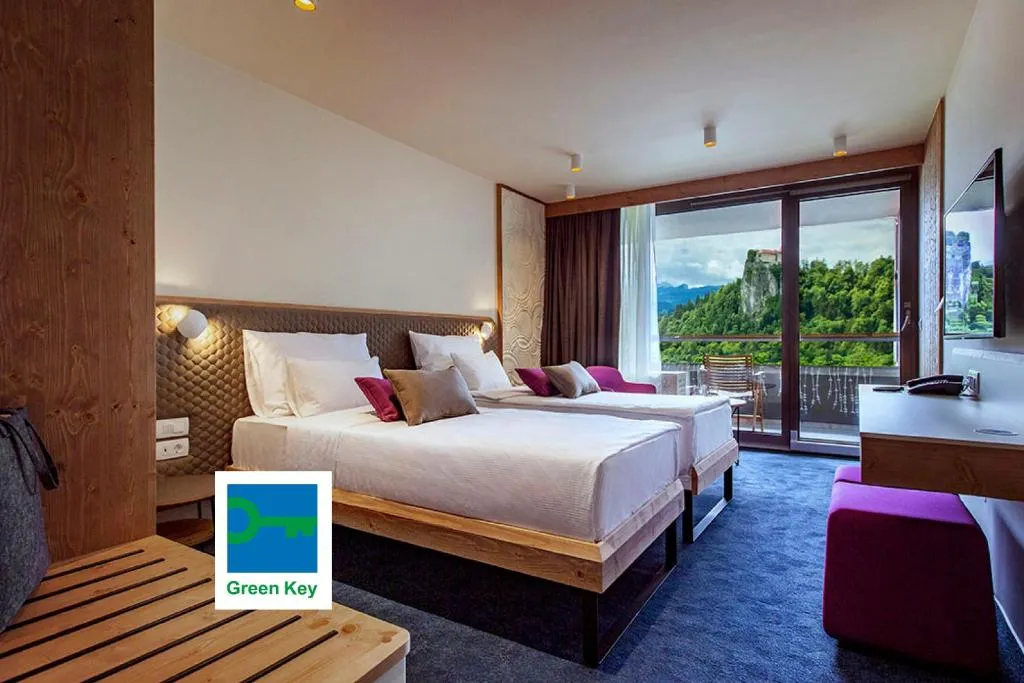 Found on Booking.comFrom EUR 140/night
Lake Bled, Slovenia
Hotel Park Bled
Slovenia's Lake Bled holds its color latest, into early November, when the beech forests ringing the lake turn gold and copper around the island church and the cliff-top castle. It is the softest, most affordable of these bases and the natural finale to a color-chasing trip that started high and dropped south. Pair it with Lake Bohinj and Triglav National Park for the wilder side of Slovenian autumn.
- From
- EUR 140/night
- Best for
- Island church framed in golden woods
The scenic trains and drives are never better
Autumn is the season the great Alpine journeys were made for. The Bernina Express climbs straight through the Engadin's larch country and over the pass, and a clear October day on that line is one of the best-value spectacles in the Alps; we weigh the ride honestly, and compare it to the Glacier Express, in Glacier Express vs Bernina Express. The high pass roads, the Stelvio, the Grossglockner, the Dolomite passes, are at their most dramatic with gold on the slopes, but they close for winter from late October, so check dates before you plan a drive around them.
Tips for chasing the color
- Plan by elevation, not by date. Decide your week first, then pick the altitude that will be peaking. Early October means go high; late October means drop to the lakes.
- Chase a first snowfall. Gold larch under a dusting of fresh snow is the image of Alpine autumn. If a cold front passes through a high-pressure spell, get up high the morning after.
- Book the shoulder-season room early anyway. Rates soften in autumn, but the best foliage weeks and the lakefront rooms still fill; reserve ahead.
- Check lift and pass dates. Many high cable cars and pass roads close for the between-seasons break from mid-to-late October. Confirm before building a day around anything high.
- Shoot the low sun. The autumn sun stays low all day, so the golden-hour light lasts for hours. Mornings on still lakes and late afternoons on west-facing larch slopes are the magic windows.
Our verdict
Timing the wider trip? Our month-by-month take is in the best time to visit the Alps, and the case for the shoulder season in full is the Alps in September. For the color's best single region, start with where to stay in the Dolomites and the prettiest villages in the Swiss Alps.
Some links on this page are affiliate links. If you book through them we may earn a small commission, at no extra cost to you. It helps keep our guides free. We only recommend what we’d book ourselves.


