

Let's settle this honestly. We plan trips across the whole range, and the French Alps versus Swiss Alps question comes up more than any other. The short version: France gives you better value, better food, and easier access, while Switzerland gives you the most iconic peaks and the best scenic trains on Earth. Neither is "better." But for most first-timers, one is clearly the smarter start. Here's how we'd actually decide.
At a glance
| French Alps | Swiss Alps | |
|---|---|---|
| Scenery | Range + variety (Mont Blanc) | Iconic giants (Matterhorn) |
| Cost | ~25–40% cheaper, in euros | The priciest in the Alps |
| Food | Savoyard + Michelin depth | Good, pricier, less range |
| Getting around | Car (road trips) | Train (unmatched) |
| Skiing | World's biggest linked areas, value | Marquee names, glacier, pricier |
| Lakes | Annecy (intimate) | Lucerne (polished) |
| Best for | Value, food, flexibility | Icons, trains, car-free ease |
Scenery: French range vs Swiss icons
Switzerland wins the postcard. The Matterhorn above Zermatt and the Eiger-Mönch-Jungfrau wall above Grindelwald are the most recognizable mountains in the Alps, full stop. If you want the single most jaw-dropping peak you can stand beneath, Switzerland delivers it.
France counters with drama and variety. Chamonix sits directly under Mont Blanc, the highest summit in the Alps, and the Aiguille du Midi cable car drops you into a glaciated world that feels genuinely alpine and raw. France is bigger and more varied: serrated peaks, sweeping lakes, and gentler gourmet valleys all within an hour of each other. Switzerland is icons; France is range.
Verdict: A tie that breaks on what you want to feel, Switzerland for the single most iconic peak, France for range and variety.
Cost: France wins, clearly
This isn't close. Switzerland is the most expensive country in the Alps, and the strong franc makes the gap show up everywhere. Run the same day in both countries and Switzerland costs more at every line: a mid-range hotel night, a sit-down lunch, the morning coffee, a day lift pass, a flagship cable-car excursion (the Jungfraujoch or Matterhorn Glacier Paradise against France's Aiguille du Midi), and the airport transfer in from Geneva all land higher on the Swiss side. None of it is wildly out of reach on its own, but expect to pay roughly a quarter to a third less across the board in France, and that premium compounds over a week into real money.
That gap changes the trip. In France, the same budget buys a nicer room, an extra dinner out, and a few more lift days. In Switzerland, you'll spend more and ration more. Switzerland is worth the premium when those specific icons are the point, but if value matters at all, France wins decisively. (Weighing the Swiss spend? See is the Swiss Travel Pass worth it.)
Verdict: France, decisively, unless those specific Swiss icons are the whole point of the trip.
Where we'd stay on each side
Food: France wins (and it's not subtle)
Both serve fondue and raclette, but France pulls ahead on depth. Savoyard cooking, the tartiflette, the diots, the reblochon, is hearty and regional, and the Haute-Savoie hides a startling number of Michelin stars. Megève alone punches far above a village its size. Switzerland eats well, especially in the resort towns, but it's pricier for less range. For a trip where dinner is part of the joy, France is the one we'd book.
Verdict: France, and it's not subtle.
Logistics: Swiss trains are unmatched
Here Switzerland earns its premium. The rail network is the best in the world: punctual, scenic, and so complete you never need a car. The Glacier Express and Bernina Express are destinations in themselves, and car-free villages like Zermatt make the whole country feel effortless once you arrive. Our 7 days in the Swiss Alps by train leans entirely on this.
France is different. Geneva Airport is the gateway for both countries, and from there France is fast, but you'll usually want a car to link Chamonix, Annecy, and the gourmet villages. That's freedom if you like driving and friction if you don't. Switzerland for seamless rail; France for flexible road trips, as our 7 days in the French Alps and lakes shows. (Still deciding how to get around? Do you need a car in the Alps lays it out.)
Verdict: Switzerland if you'd rather not drive; France if a road trip sounds like freedom, not friction.
Crowds
Worth knowing before you book a summer date. Switzerland's icons concentrate the crowds: Zermatt, the Lauterbrunnen valley, and Grindelwald fill up in peak summer, and the Jungfraujoch ("Top of Europe") can mean queues for the train and elbows at the viewpoint. On the French side, Chamonix runs intense in summer too, with lines for the Aiguille du Midi on clear mornings. The flip side is winter: France's purpose-built mega resorts are built to move volume, so they absorb ski crowds far better than the tight Swiss villages do.
Verdict: A summer wash at the big icons; France's mega-resorts handle winter crowds better.
Lakes: Annecy vs Lucerne
If lake-town romance is on your list, this matters. Annecy is the most charming lake town in the French Alps, with a canal-laced old town, turquoise water, and a backdrop of peaks, all an easy reach from Geneva (see our first-timer's guide to Annecy). Lucerne is Switzerland's answer, grand and beautiful, framed by Pilatus and Rigi. Both are stunning. Annecy is more intimate and walkable; Lucerne is more polished and rail-connected.
Verdict: Annecy takes the romance, Lucerne takes the polish and rail access.
Skiing: France or Switzerland?
This one has a clearer answer than scenery does. France owns the numbers. It's home to the world's largest linked ski areas: Les Trois Vallées (the biggest of all, stitching Courchevel, Méribel, and Val Thorens onto one pass), Paradiski (Les Arcs and La Plagne), and the Espace Killy above Tignes and Val d'Isère. These are purpose-built, high-altitude, snow-sure resorts, Val Thorens is the highest in Europe, with glacier skiing on the Grande Motte above Tignes and lively après waiting at the bottom. You get enormous terrain on a single pass, for noticeably less than Switzerland charges. If your priority is maximum linked kilometers and better value, France is the pick.
Switzerland counters with the marquee names and the views. Zermatt skis beneath the Matterhorn with year-round glacier runs; Verbier anchors the 4 Vallées and is a serious freeride town; the Jungfrau region (Wengen, Grindelwald), Davos-Klosters, and St. Moritz round out a roster of icons. Villages are often car-free, the scenery is unmatched, and the polish is real. The catch is that it's pricier, and the linked areas are generally smaller than the French megas.
Verdict: France for sheer linked size and value; Switzerland for the icons, the scenery, and glacier skiing if the budget stretches.
Choose France if…
- Value matters and you want your budget to stretch
- Food is central to the trip (Savoyard plus Michelin)
- You're happy renting a car and road-tripping
- You want lake-town romance and gourmet villages alongside big peaks
- You're flying into Geneva and want to be skiing or strolling within 90 minutes
Choose Switzerland if…
- You want the single most iconic peak you can stand under
- You'd rather never touch a steering wheel
- The scenic trains are a bucket-list item in themselves
- Car-free, storybook villages are the dream
- Budget is not the deciding factor
Can you combine them?
Geographically, yes, they share the Geneva gateway and sit side by side, so a longer trip can take in both. The trap is doing it in a single week: people see Geneva on the map, assume the two countries blur together, and cram Chamonix, Zermatt, and the Jungfrau into seven days. They spend the week in transit, blow the budget on Swiss prices, and rush the parts they came for. If you have ten days or more, pair them deliberately; otherwise pick one and go deep.
One place the two countries stop competing: Lake Geneva, which they share. The shoreline day is mapped in the prettiest villages on Lake Geneva.
The biggest mistake
Trying to do both in one short trip, exactly the cram described above. Pick one country per trip. Go deep, not wide. You'll come home wanting the other, which is exactly the right reason to return.
What we'd do
For a first Alps trip, we'd choose France. It's the easier, better-value, better-fed introduction, and Geneva makes it almost frictionless. Base in Chamonix for Mont Blanc, drop down to Annecy for the lake (our Annecy vs Chamonix comparison weighs the two), and detour to Megève for dinner. Our where to stay in the French Alps guide sorts the bases, and the best time to visit the French Alps sorts the month. Save Switzerland for trip two, when you're ready to spend more for the Matterhorn and the trains, and you'll appreciate every franc, start with where to stay in the Jungfrau region.
If you're still split between the two flagship bases, our Chamonix vs Zermatt comparison settles that specific question. Torn between Switzerland and its other neighbour? See Swiss Alps vs Austrian Alps.
Where we'd actually stay
Whichever side won you over, here is a verified first booking for each, with the full guides one click deeper.
 Found on Booking.com
Annecy, France
Le Splendid Hôtel
An Art Deco four-star on the exact seam between the lake and the old town. It puts the lake, the canals, and the old town all within a stroll.
- Best for
- Lake-and-old-town France
 Found on Booking.com
Zermatt, Switzerland
Tradition Julen Hotel
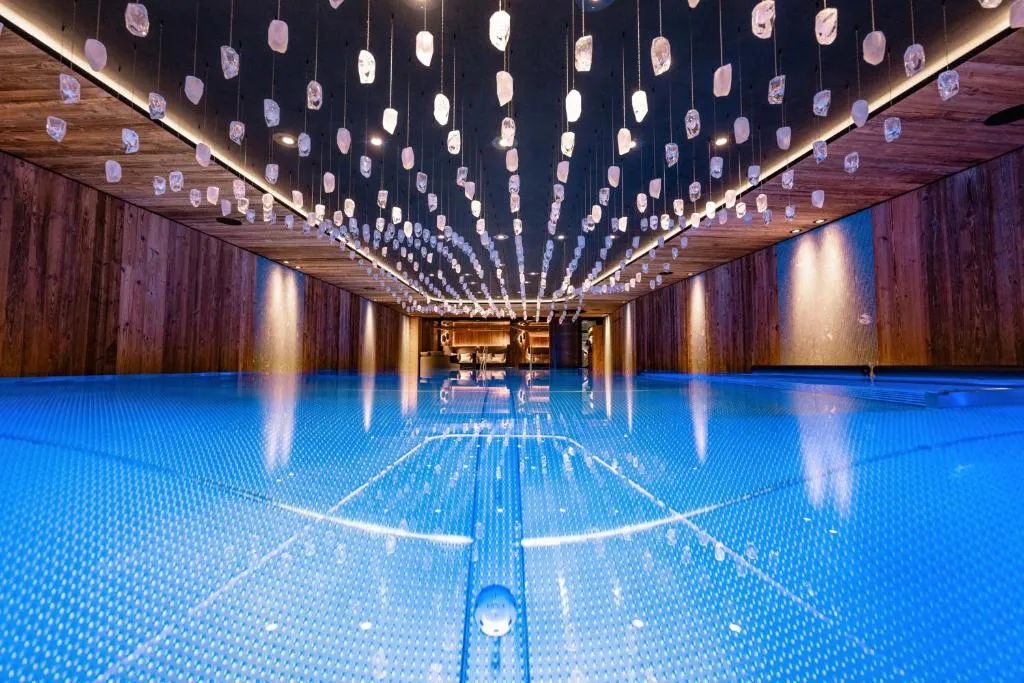
The Julen family's warm chalet classic with a three-floor spa and true Matterhorn-view rooms. The Swiss side of this comparison, distilled into one chalet.
- Best for
- Matterhorn Switzerland, family-run
Every budget covered: where to stay in Annecy and Zermatt, up to Zermatt's luxury Matterhorn-view hotels.
Some links on this page are affiliate links. If you book through them we may earn a small commission, at no extra cost to you. It helps keep our guides free. We only recommend what we’d book ourselves.
Both countries are extraordinary. The smart move is choosing the right one first. Find your perfect Alps base and we'll match the country to how you actually want to travel.


