

It's the closest call in the Alps, and the one we love arguing about: Switzerland or Austria? They share a border, a mountain range, and a lot of cowbells, but they reward very different travelers. Get this choice right and the trip plans itself. Get it wrong and you'll either blow the budget or spend a fortnight quietly wishing you'd splurged.
The one-paragraph answer: choose Switzerland for the once-in-a-lifetime icons, the Matterhorn, the Jungfrau, the world's best mountain trains, and accept that it costs like the splurge it is. Choose Austria for bigger linked ski areas, swimmable lakes, real cities, warmer prices, and the more relaxing trip, roughly a third cheaper across the board. First-and-only trip: Switzerland. Almost everyone else, especially families and returners: Austria.
Here's the honest head-to-head, beat by beat.
At a glance
| Swiss Alps | Austrian Alps | |
|---|---|---|
| Scenery | Iconic, sharp giants | Softer, lakes, fairytale villages |
| Skiing | Glamour, glacier runs, costly | Bigger linked areas, après, value |
| Cost | The priciest in the Alps | Serious mountains for less |
| Food | Hearty, pricey | Schnitzel + coffee-house ritual |
| Getting around | World's best trains | Excellent, well-priced rail |
| Cities | Resort villages | Real cities (Innsbruck, Salzburg) |
| Best for | Once-in-a-lifetime icons | Value, families, lakes, repeat trips |
Scenery: Swiss grandeur vs Austrian softness
Switzerland is bigger, sharper, more iconic. The Matterhorn above Zermatt and the Eiger-Mönch-Jungfrau wall above Grindelwald are among the most recognizable mountains on Earth, and standing under them genuinely takes your breath away. Nothing in Austria hits quite that high a note.
But Austria plays a different, gentler tune, and it's lovelier than people expect. Think rolling green pastures, fairytale villages like Hallstatt reflected in a glassy lake, and warm, swimmable water you'd never dare dip a toe into at Swiss altitudes. Switzerland is the dramatic solo; Austria is the warm chorus you don't want to leave.
Verdict: Switzerland for jaw-drop icons, Austria for storybook charm and lakes.
Skiing: which wins?
Here's where Austria takes the lead it doesn't get elsewhere. Austria is, arguably, the better all-round ski destination and the spiritual home of alpine skiing. The Arlberg around St. Anton is a huge single linked area joining Lech and Zürs on one pass (choosing between those two very different base towns is its own decision: Lech vs St. Anton), with the steep terrain and the legendary, full-throttle après that made its name. Beyond it sit Kitzbühel and Ischgl, the snow-sure glacier skiing of Sölden (plus the year-round Stubai and Hintertux glaciers), buzzy Mayrhofen, and Schladming in the vast, multi-mountain Ski amadé. It's all excellent value and reliably snow-sure: more terrain, more snow, and better nightlife, for less.
Switzerland answers with the marquee scenery resorts. Zermatt skis under the Matterhorn with glacier runs that hold into summer; Verbier is the big freeride name; the Jungfrau, Davos-Klosters, and St. Moritz round out a world-class roster. It's superb, but pricier, and the individual linked areas are often smaller than Austria's biggest. What's unbeatable is the backdrop: no one out-skis those peaks.
Verdict: Austria for value, après, and huge linked terrain (the Arlberg, Ski amadé); Switzerland for the scenery, the glamour, and glacier skiing if budget is no object. The full resort-by-resort map is in where to ski in the Alps.

Hiking and summer
Both are superb, and the choice mirrors the skiing one. Switzerland has the most dramatic high-alpine scenery and, crucially, the best public transport to the trailheads: trains and cable cars reach almost everywhere, so you can start a hike high without a car or a long slog. The mountain huts are polished, but you pay Swiss prices for the privilege.
Austria is gentler and greener, and it runs on a deep hut-to-hut (Hütte) culture that's woven into the way Austrians walk. The Tyrol and the Salzkammergut serve up endless trails at a more relaxed, family-friendly pace, the huts are more affordable, and the whole rhythm is slower.
Verdict: Switzerland for sheer drama and effortless trailhead access; Austria for the warm, walkable, wallet-friendly long game.
Cost: Austria wins, and it isn't close
Switzerland is the most expensive country in the range, full stop. A coffee, a cable car, a plate of rösti, everything is premium, and it compounds over a week. The scenery is worth it, but you pay dearly for it. (If you're costing a Swiss trip, start with is the Swiss Travel Pass worth it.)
Austria gives you serious mountains for meaningfully less, and the gap is bigger than people assume: figure on roughly a third less across lodging, lift passes, and meals. A Swiss mountain lunch, a day on the lifts, and a hotel night each run materially higher than their Austrian equivalent, and over a week those differences compound into real money. If value matters, or if you simply want to travel longer on the same budget, Austria is the obvious pick.
Verdict: Austria, by a wide margin.
Where we'd stay on each side
Food: Austria edges it
Swiss mountain food is hearty and satisfying, fondue, raclette, rösti, but you go to Switzerland for the views, not the menu. Austria, on the other hand, genuinely punches above its weight. Crisp Wiener schnitzel, apple strudel, and the unhurried ritual of a Viennese-style coffee house make eating part of the holiday rather than a refuelling stop. Salzburg alone is worth a chapter for the cafés.
Verdict: Austria, and it's more fun.
Logistics: both are wonderfully rail-friendly
Good news, you can't really lose here. Switzerland runs on the world's best scenic trains (the Glacier Express, the Jungfrau railways), connecting car-free villages with clockwork precision. Austria's network is excellent too, well-priced, and stitches together mountain towns and lake resorts with ease. Neither country requires a car for a classic itinerary. Getting in is just as easy: Switzerland flows from Zurich or Geneva, Austria from Innsbruck, Salzburg, or nearby Munich, each with trains running from the airport straight toward the peaks; our gateway airports guide breaks down which to fly into from the US.
Compare the routes directly: our 7-day Swiss Alps by train and our 7-day Austrian Alps itineraries.
Verdict: A tie. Both are a joy without a car.
Crowds
Both countries have their honeypots, and they behave differently. Hallstatt is the cautionary tale of day-tripper overtourism, a tiny lake village that can be swamped by midday tour buses, so you stay the night and have it to yourself once they leave. On the Swiss side, the Jungfrau region and Zermatt draw the biggest peak-season crush, the price of being world-famous. Away from those few magnets, Austria spreads its visitors more thinly, which is part of why it feels the more relaxed of the two.
Verdict: A near-tie at the honeypots, but Austria feels less crowded overall.
Families and first-timers
For families, Austria is our default. Zell am See, the Salzkammergut lakes, and gentler trails mean more swimming, more downtime, and a budget that survives multiple kids. It's the most relaxed corner of the Alps. Come winter, the same logic holds: the best family ski resorts in Austria is our resort-by-resort case.
For first-timers, it depends on what you want. If this is a once-in-a-lifetime trip and you crave the postcard icons, Switzerland delivers them with the least planning. If you'd rather a softer landing, lakes, cities, cafés, and change to spare, Austria is the warmer welcome. Austria also has more genuine city culture: Innsbruck and Salzburg are real, lived-in cities ringed by peaks, not just resort villages (torn between them? Innsbruck vs Salzburg).
Can you do both?
You can, they share a border and both run superb trains, so a longer trip can take in both (often via the Arlberg or a swing through Liechtenstein). Be realistic, though: it's a two-week-ish undertaking, and the price gap between the two is real, so a combined trip needs deliberate budgeting. For most trips, pick the country that fits your priorities. If you want to go wider still, the 14-day Grand Alpine Tour threads several countries together.
The biggest mistake
The biggest mistake travelers make is choosing Switzerland to save money, or Austria to chase the Matterhorn. Neither works. Switzerland is never the budget option, so going there to economize means cutting your trip short and resenting every receipt. And Austria, beautiful as it is, simply doesn't have those singular, planet-famous summits, so going there for them leaves you faintly disappointed. Pick the country for what it's actually best at.
Who should choose Switzerland
- First-timers who want the iconic, once-in-a-lifetime peaks
- Travelers chasing the Matterhorn or Jungfrau specifically
- Anyone who wants the world's best scenic trains and car-free villages
- Honeymooners and special-occasion trips where budget is secondary
Start with our Switzerland hub, where to stay in the Jungfrau region, and the best time to visit the Swiss Alps.
Who should choose Austria
- Anyone watching the budget or wanting a longer trip
- Families, especially with younger kids
- Lake lovers who want to actually swim
- Food and café people, and travelers who want real cities
- Repeat Alps visitors who've already ticked off the icons
Start with our Austria hub, where to stay in the Austrian Alps, and the best time to visit the Austrian Alps. (Choosing between lake villages? See Hallstatt vs Zell am See.)
Some links on this page are affiliate links. If you book through them we may earn a small commission, at no extra cost to you. It helps keep our guides free. We only recommend what we’d book ourselves.
What we'd do
If it's your first and possibly only Alps trip and you want the icons, we'd go to Switzerland, pay the premium, see the Matterhorn, ride the trains, and don't look back. For everyone else, families, value-seekers, lake people, and anyone coming back to the Alps, we'd choose Austria every time. It's softer, friendlier, cheaper, and quietly the more relaxing holiday.
Where we'd actually stay
A verdict only matters once a room is booked. One field-verified pick for each side of this comparison, and the full lodging guides go deeper at every budget.
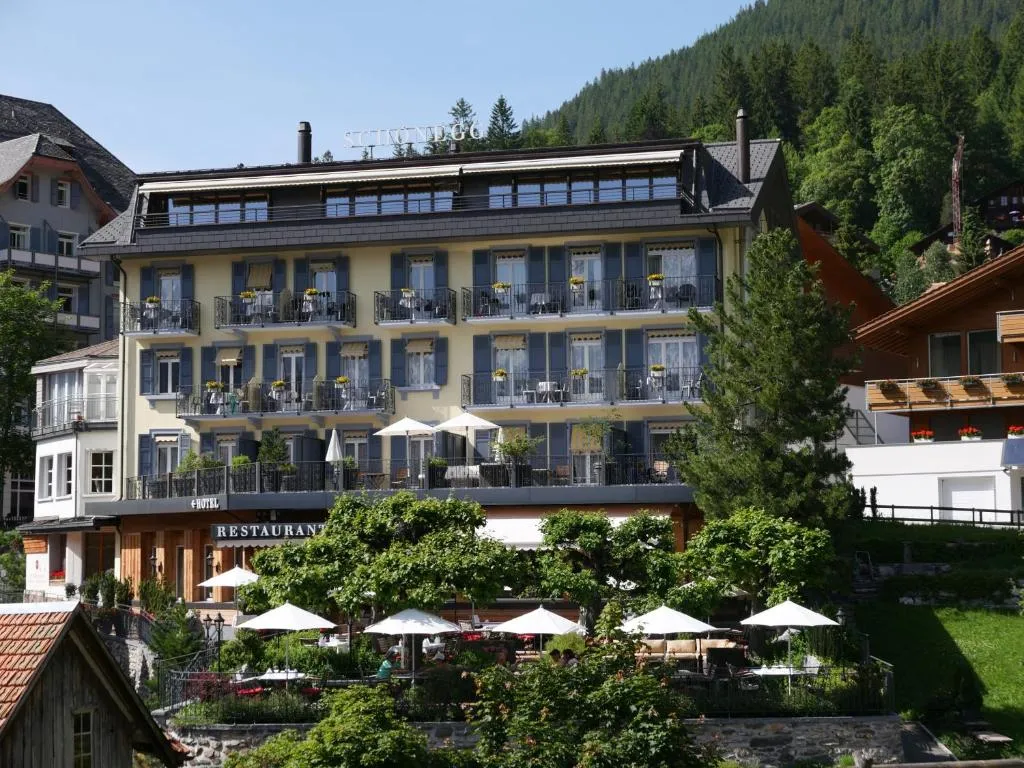 Found on Booking.com
Wengen, Switzerland
Hotel Schönegg
Polished rooms, a terrace aimed squarely at the Jungfrau, and an award-winning restaurant under one roof. This is the icon side of the debate in one address. Book well ahead for summer, Wengen is car-free and small.
- Best for
- The Switzerland case, made from a balcony
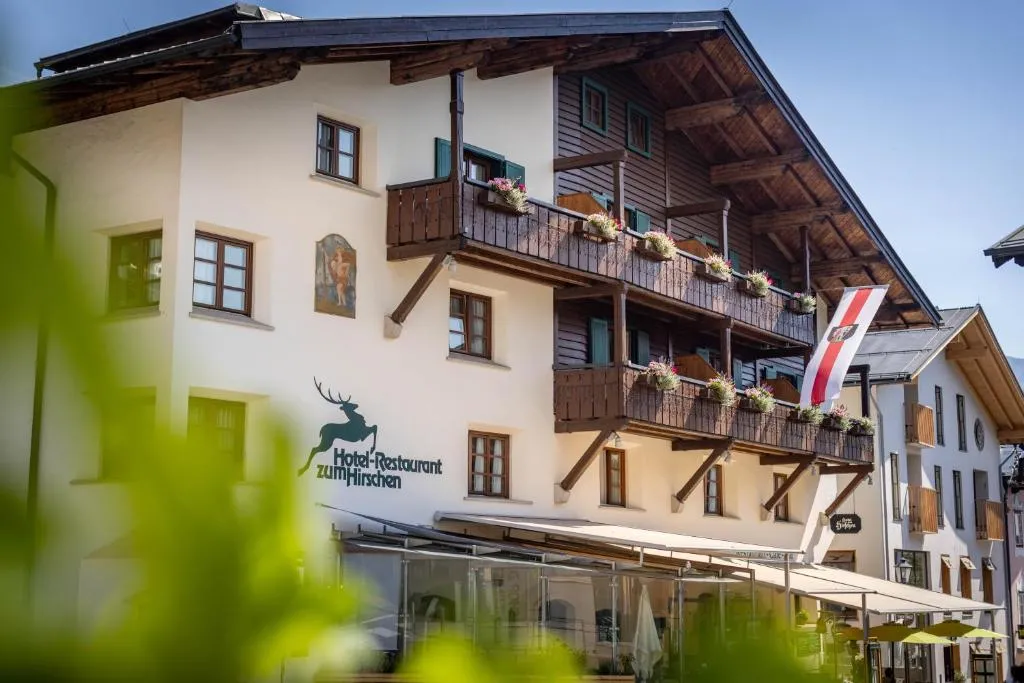 Found on Booking.com
Zell am See, Austria
Hotel zum Hirschen
The beloved family-run four-star of the center, with a toqued restaurant and a proper little spa. It is the Austrian formula this article describes, working exactly as advertised.
- Best for
- The Austria case: warmth, lake, value
More options at every budget: where to stay in Wengen and Zell am See.
Some links on this page are affiliate links. If you book through them we may earn a small commission, at no extra cost to you. It helps keep our guides free. We only recommend what we’d book ourselves.
Weighing other neighbors? See Bavarian Alps vs Austrian Alps, French Alps vs Swiss Alps, and Slovenia vs Switzerland. Still torn? Find your perfect Alps base and we'll match the region to how you actually like to travel.


