

Switzerland needs fewer bases than most people book. For four days, sleep in one region: the Jungfrau for the mountains, or Lucerne for a city with mountains attached. For seven, two: Lucerne and the Jungfrau, or the Jungfrau and Zermatt, with two to three nights in each. For ten, three: Lucerne, the Jungfrau and Zermatt, plus a last night on Lake Geneva if you fly home from Geneva, or Lugano in place of Zermatt if you want sun after snow. Everything else here, the Engadine, Lake Geneva, Ticino, Appenzell and the gateway cities, is a case for adding, swapping or skipping, with the train times that decide it.
The one-paragraph answer: base in the Jungfrau region first, add Lucerne for a city and a lake or Zermatt for the Matterhorn, give every base at least two nights and the mountain bases three, and sleep in Zurich or Geneva only when a flight forces it. Then stop. The Engadine, Verbier, Gstaad and Ticino are second-trip regions, or the third base on a ten-day trip, and they cost four to six hours of train from the Jungfrau and Zermatt, which is a day.
This guide decides between regions. The village-level choice already has its own pages: where to stay in the Jungfrau region settles Grindelwald against Wengen, Mürren and Lauterbrunnen, where to stay along the Glacier Express covers the overnights between Zermatt and St. Moritz, and the town pages carry our verified hotel picks. Here the job is the map: which regions suit which traveler, how many nights each one deserves, how they connect, and which pairings spend the best hours of a day on a train for nothing.
- Minimum trip
- 4 days, one region
- Sweet spot
- 7 days, two bases
- Car-free bases
- Zermatt, Wengen, Murren, Stoos
- Sleep in a gateway
- Only when a flight forces it
Which region should you base in?
The Jungfrau region for a first trip, Lucerne for a short one or for a city, Zermatt for the Matterhorn; the rest are additions. The table matches each region to the traveler it suits, the nights it deserves and the train time from each airport.
| Region | Base town(s) | Best for | Days it deserves | From Zurich airport | From Geneva airport |
|---|---|---|---|---|---|
| Jungfrau region (Bernese Oberland) | Lauterbrunnen, Wengen, Grindelwald, Mürren, or Interlaken as the hub | A first trip, the big-mountain postcard, car-free villages | 3 to 4 | Interlaken Ost 2h13 direct; Grindelwald 2h51 | Interlaken Ost 3h01; Grindelwald 3h45 |
| Lucerne and central Switzerland | Lucerne; Engelberg, Bürgenstock or Stoos for a mountain night | A city, a lake and summits in one; short trips; first and last nights | 2 to 3 | 1h10 direct | 3h10 to 3h16 |
| Valais | Zermatt, Saas-Fee, Verbier | The Matterhorn, glaciers, the best high-altitude hotels | 3 | Zermatt 3h31; Saas-Fee about 3h25; Le Châble (for Verbier) about 4h, then the lift | Zermatt 3h55; Saas-Fee about 3h50; Le Châble 2h22, then the lift |
| Graubünden and the Engadine | St. Moritz, Pontresina, Davos | The scenic trains, high light and lakes, a second Swiss trip | 3 | St. Moritz 3h23; Davos about 2h40 | St. Moritz 6h17; Davos 5h30 |
| Lake Geneva and Vaud | Montreux, Lausanne, Gstaad | Lake towns and vineyards, a soft landing or send-off at Geneva | 1 to 2 (Gstaad 2 to 3) | Montreux about 3h; Gstaad 3h11 | Montreux 1h14 direct; Lausanne 49 min; Gstaad about 3h |
| Ticino | Lugano, Locarno | Sun, palms and Italian food after the mountains | 2 | Lugano 2h09 | Lugano 5h03 |
| Eastern Switzerland | Appenzell | Painted villages and green hills, a day trip or one slow night | 1 to 2 | 1h37 | 5h05 |
| The gateways | Zurich, Geneva, Basel, Bern | A first or last night only | 0 to 1 | Zurich HB 10 min; Bern 1h12; Basel about 1h10 with a change | Geneva 7 min; Bern 2h01; Lausanne 49 min |
Journey times are the fastest regular connections on the Swiss public timetable (SBB data), read on 9 October 2026 for weekdays without engineering work on the leg in question (13 and 27 October and 15 December 2026, the last on the timetable valid from 13 December). Three closures matter if you travel before then: Visp to Täsch is closed from 12 October to 9 November 2026, with a replacement bus on every Zermatt leg that adds roughly five to twenty-five minutes; Interlaken West to Interlaken Ost is closed from 19 October to 12 December, with a bus between the two stations that adds about five minutes to every train from Bern, Spiez or Montreux; and replacement buses were still running on the last stretches into Davos and Engelberg in late October. Confirm your own date on sbb.ch before you rely on a tight connection.
How many bases for your trip length?
One region for four days, two bases for a week, three for ten. A base, in this guide, is somewhere you unpack for at least two nights. The exceptions are a single night in a gateway city when a flight forces it, and a single night in Montreux or Lucerne on the way to the airport. Everything else is a base or a day trip.
| Days (nights) | Bases | The shape of the trip |
|---|---|---|
| 4 days (3 nights) | One region | The Jungfrau region, with the Jungfraujoch or the Schilthorn, the Lauterbrunnen valley and a lake afternoon as your days. Or Lucerne, with Pilatus, Rigi or Stoos and a boat. Fly into and out of Zurich. |
| 7 days (6 nights) | Two | Lucerne for 2 nights and the Jungfrau for 4, or the Jungfrau for 3 and Zermatt for 3. Both pairs are about two hours apart by train, so the move costs a morning, not a day. |
| 10 days (9 nights) | Three | Lucerne 2, the Jungfrau 3, Zermatt 3, then a last night in Montreux, 1h14 from Geneva airport. Fly into Zurich and out of Geneva and nothing is ridden twice. Swap Zermatt for Lugano if you want warmth at the end. |
| 12 days or more | Three or four | Add the Engadine via the Glacier Express, Appenzell as a slow night from Zurich, or Verbier and Lake Geneva as a western loop. |
Three nights in a mountain base is not generosity. The Jungfraujoch and the Gornergrat are weather tickets, and a third night is what lets you move the summit day to the clear morning.

Jungfrau region: sleep in Interlaken or up in the villages?
Base in the Jungfrau region if this is your first Swiss trip and the mountains are the point; sleep in Interlaken only if you want a town, and in the villages if you want the view at breakfast. Interlaken Ost is the hub: direct trains reach Lauterbrunnen in 22 minutes and Grindelwald in 36, and the Jungfraujoch, at 3,454 m the highest railway station in Europe, is 1h30 from Interlaken Ost via the Eiger Express gondola. Wengen and Mürren (1,638 m) are car-free, reached by the Wengernalp railway and by cable car, and the Lauterbrunnen valley between them is the scenery that put Switzerland on postcards. Interlaken Ost itself is 2h13 by direct train from Zurich airport, 3h01 from Geneva airport and under an hour from Bern.
Give it three nights, four if the Jungfraujoch and the Schilthorn are both on the list, because the forecast will move at least one of them. The village choice is the biggest single decision in the Swiss Alps and it has its own guide: where to stay in the Jungfrau region weighs all four, and the pair pages settle the usual head-to-heads, Interlaken vs Grindelwald for the town-or-village call, Grindelwald vs Lauterbrunnen for lifts against scenery, and Mürren vs Wengen for the two car-free balconies.
If you choose the town over the villages, these are the Interlaken addresses we would book.
Our verified Interlaken picks
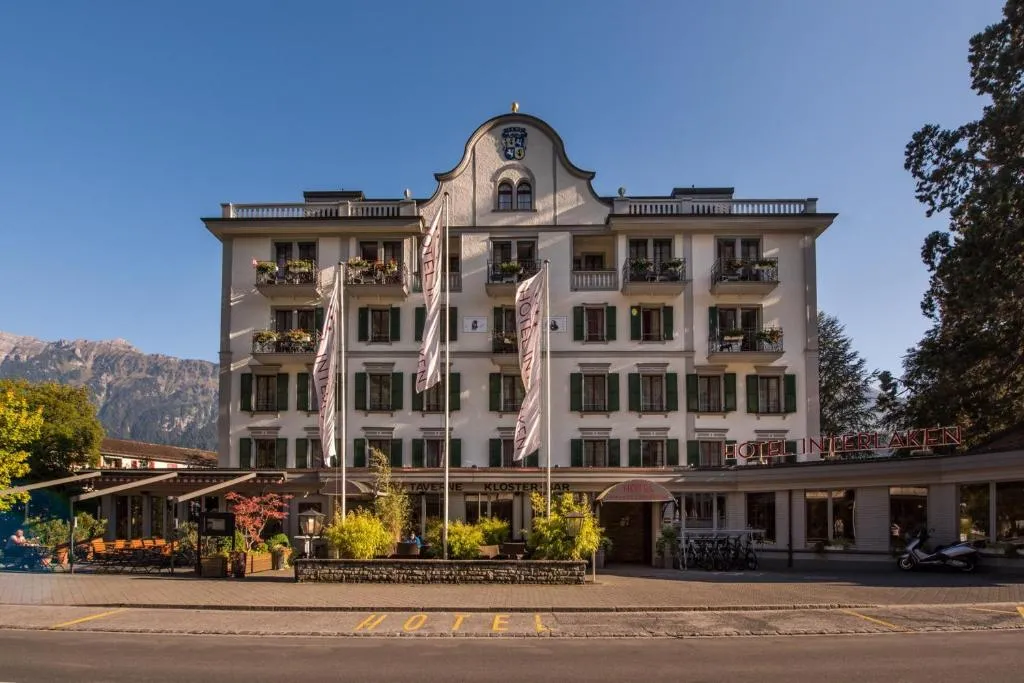 Mid-range Hotel Interlaken The town's oldest inn, dating to the 14th century, holding the leafy quiet end of the Höheweg. Check rates →
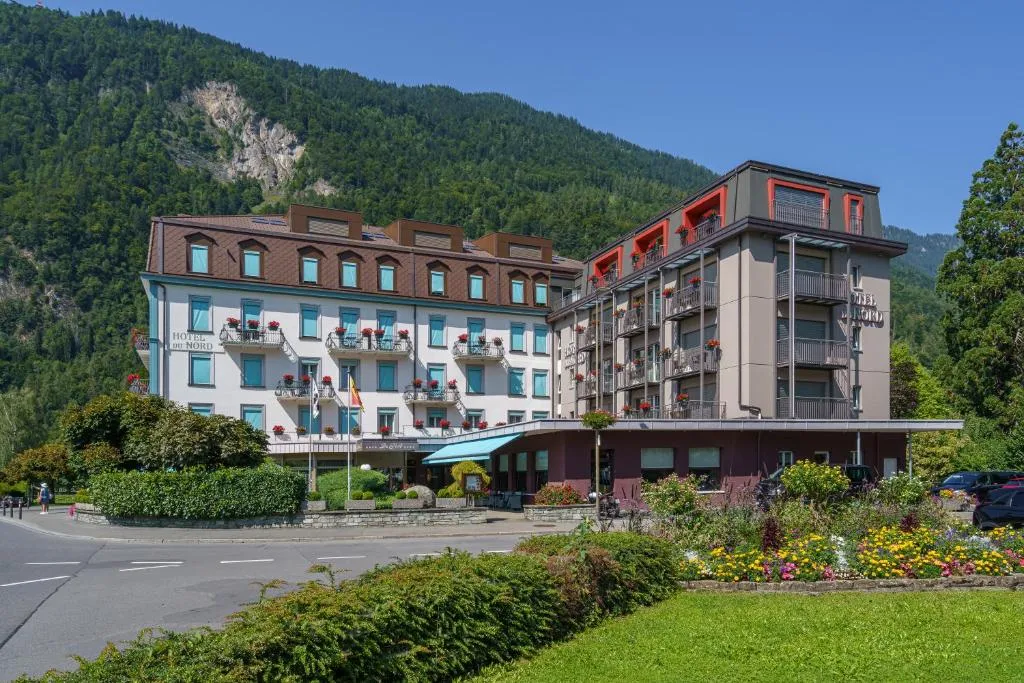 Mid-range Hotel Du Nord An 1847 house right on the Höheweg with mountain views; four-star polish without the grand hotel bill. Check rates →
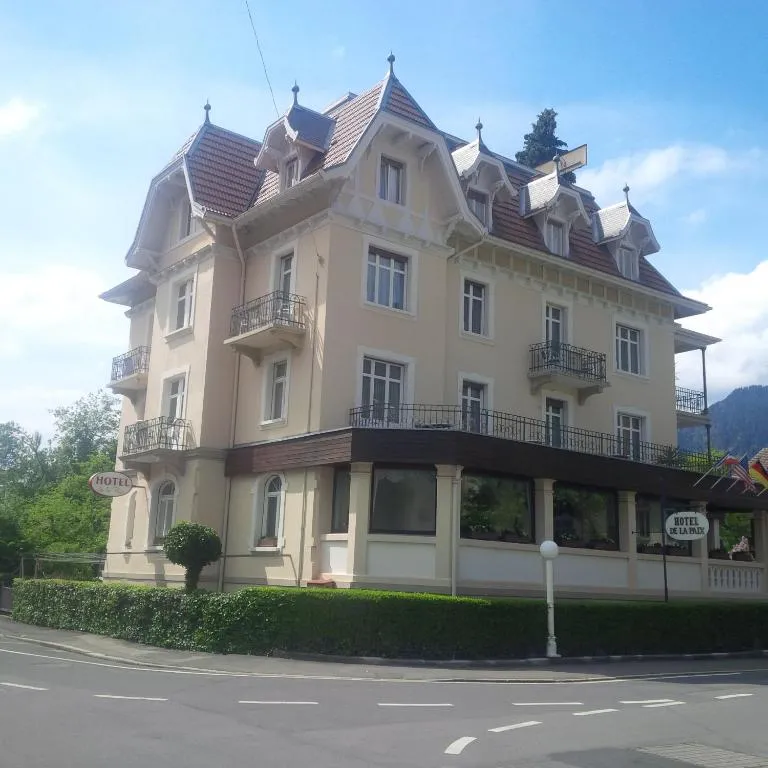 Budget Hotel De La Paix Family-run keeper on a calm street minutes from Interlaken West, with a breakfast people write home about. Check rates →
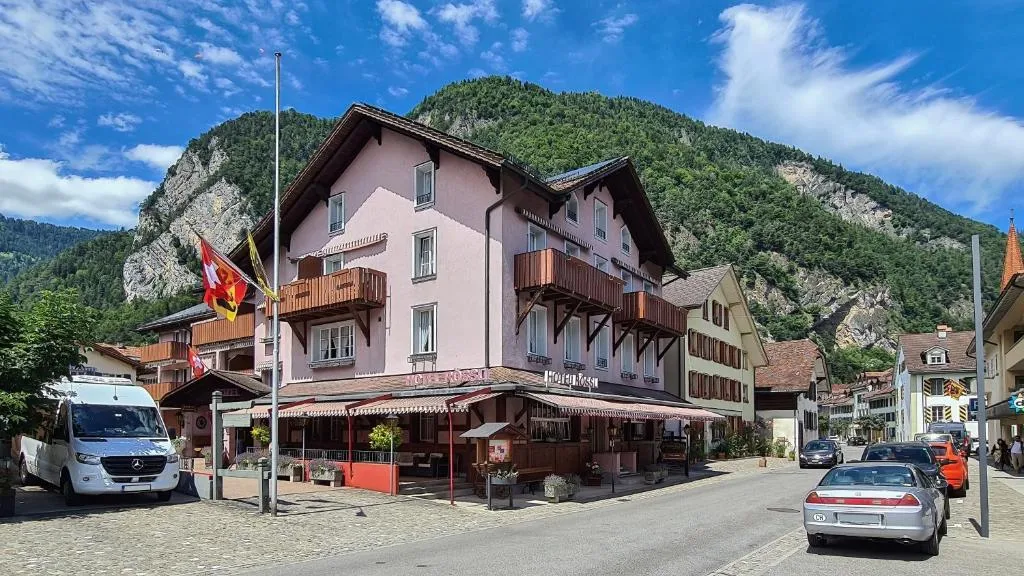 Budget Hotel Rössli Freshly renovated rooms in Unterseen's cobbled old quarter across the river, quieter than the center. Check rates →
Lucerne and central Switzerland: the best base for a short trip?
Base in Lucerne when you have four days or fewer, when you want a city and a lake as well as mountains, or for the first two nights of any longer trip that lands at Zurich. It is 1h10 by direct train from Zurich airport and about 45 minutes from Zurich main station, and the mountains around the lake are a day trip each: Pilatus by the world's steepest cogwheel railway from Alpnachstad, a 48 percent gradient to the summit at 2,132 m, running May to November and best done as the Golden Round Trip with a boat out and the cableway down to Kriens; Rigi, the Queen of the Mountains, which the Swiss Travel Pass covers outright; and Stoos, a car-free village at 1,305 m reached by the world's steepest funicular (a 110 percent gradient from the valley station below Schwyz) with the Klingenstock to Fronalpstock ridge trail above it, about 1h30 from Lucerne by train, bus and funicular. We have ridden the Pilatus cog railway in two summers and walked the Stoos ridge twice, in July 2021 and October 2025, and both are worth a whole day.
For a mountain night without leaving the region, Engelberg sits at 1,000 m under the Titlis (3,020 m), about 45 minutes from Lucerne on the direct Luzern-Engelberg Express; Bürgenstock rises 500 m above the lake, reached by boat from Pier 3 in Lucerne and a funicular; and Villa Honegg at Ennetbürgen, where we have stopped for a drink and the view, is the quieter address on the same ridge (both appear in our Swiss spa hotels guide). Lucerne pairs with everything: the Luzern-Interlaken Express runs direct to Interlaken Ost in about 1h50, and Lugano is 1h40 the other way. Deciding between the city and the mountain hub? Lucerne vs Interlaken is the page.

Our verified Lucerne picks
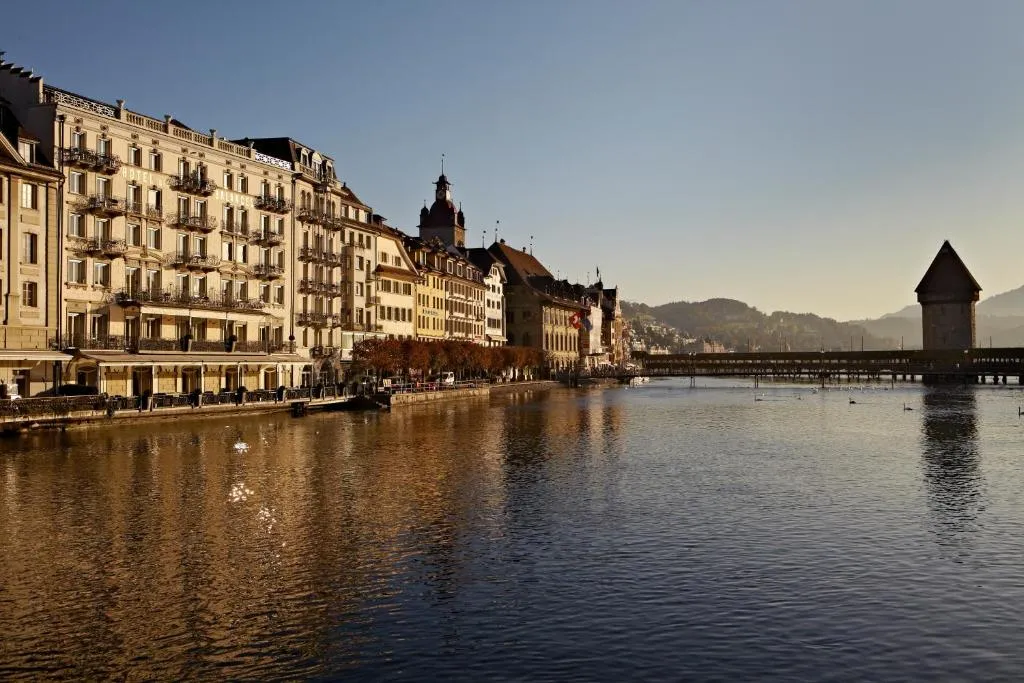 Mid-range Hotel des Balances A former guild hall on the Reuss; river-view rooms take in the Chapel Bridge with polished four-star service. Check rates →
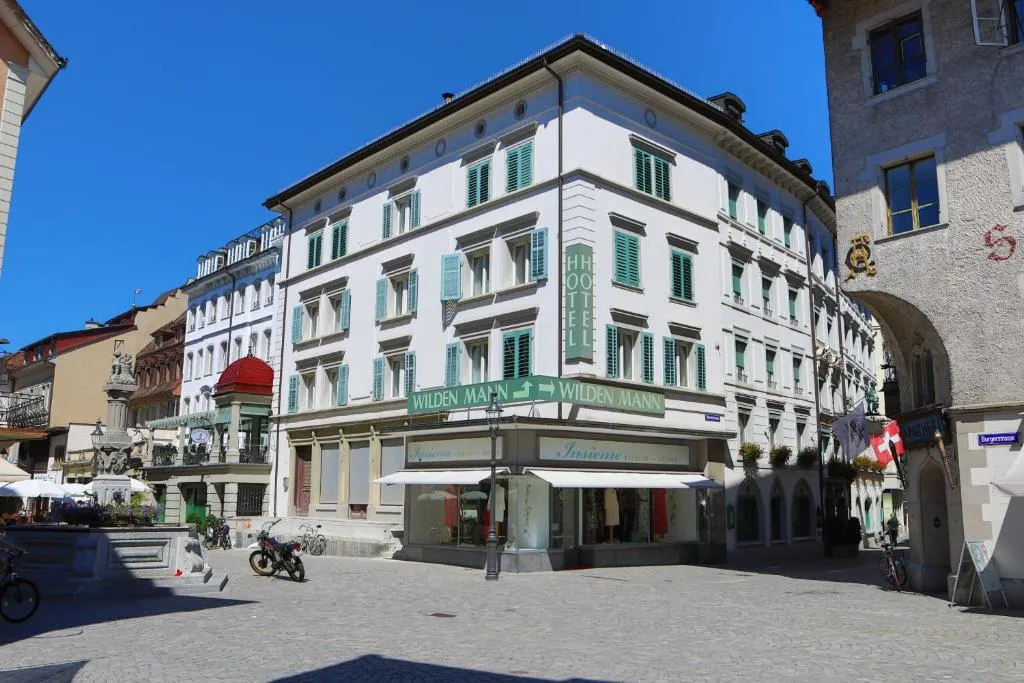 Mid-range Romantik Hotel Wilden Mann Five centuries of Lucerne innkeeping in one antique-filled house, for travelers who prefer character to minimalism. Check rates →
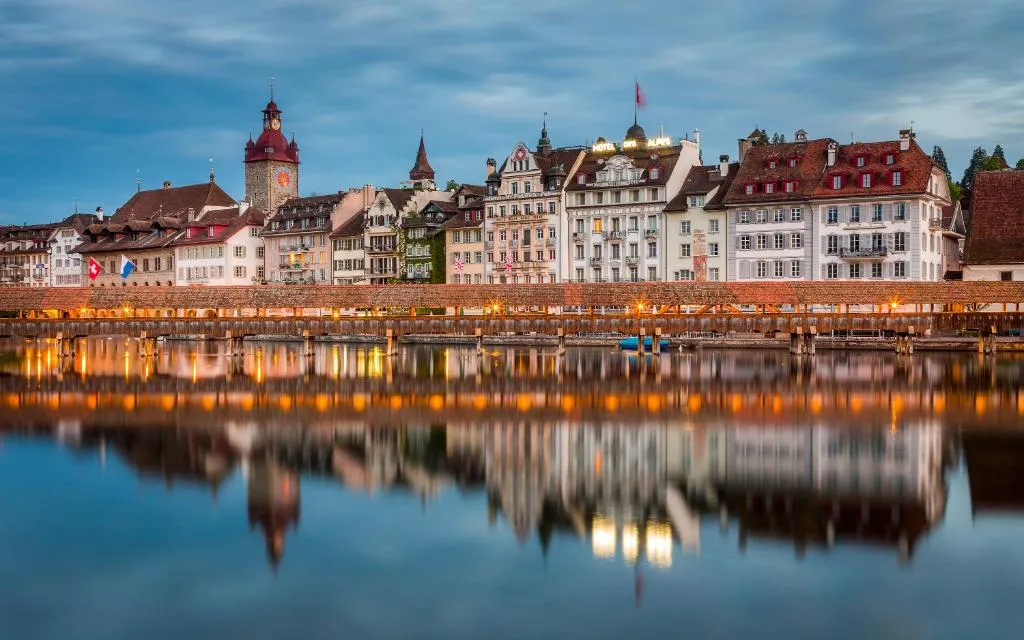 Budget Hotel des Alpes Riverfront rooms looking straight onto the Chapel Bridge, the postcard without the four-star bill. Check rates →
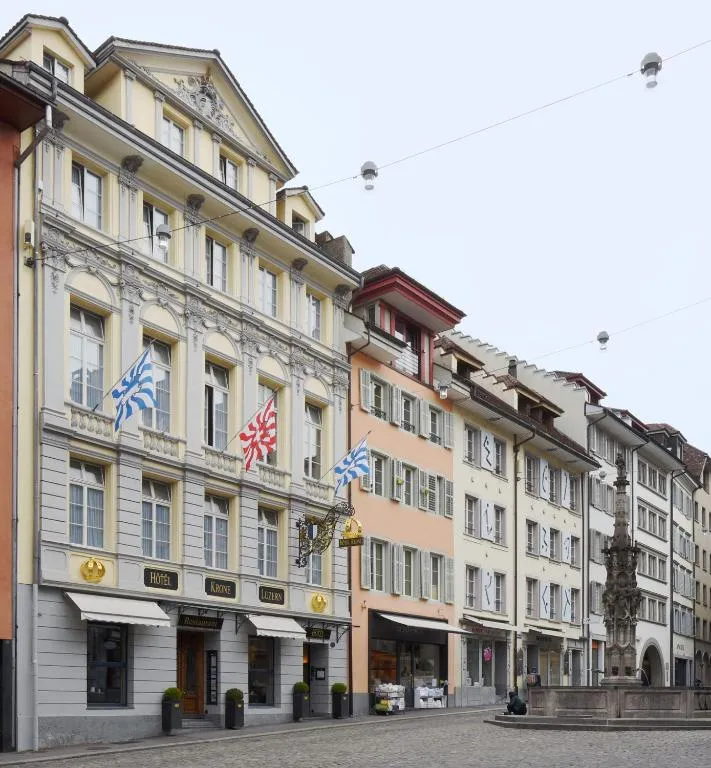 Budget Altstadt Hotel Krone A snug base on the painted Weinmarkt square; sleep inside the old town and spend your francs on the mountains. Check rates →
Valais: Zermatt, Saas-Fee or Verbier?
Base in Zermatt for the Matterhorn and the best high-altitude hotels in the country; choose Saas-Fee for the same glacier scenery at a gentler price, and Verbier only for a ski-led trip or one that starts and ends in Geneva. Zermatt has always been car-free: you drive no further than Täsch, 5 km down the valley, where the Matterhorn Terminal holds 2,100 covered spaces, and the shuttle train runs every 20 minutes and takes 12. By rail it is 3h31 from Zurich airport and 3h55 from Geneva, 2h10 from Interlaken Ost and 2h42 from Montreux, so it pairs with the Jungfrau and with Lake Geneva without a wasted day. Give it three nights: the Gornergrat railway climbs to over 3,000 m for the classic Matterhorn view, the Matterhorn Glacier Paradise is the glacier day, and one of the three will be cloudy.
Saas-Fee, at 1,800 m in the next valley, is the quieter glacier village: the PostBus 511 runs every half hour from Visp, Zermatt is about 2h15 away by train and bus, and cars stop at the garage at the village entrance. Saas-Fee vs Zermatt weighs it against the icon. Verbier, at 1,500 m with the Mont Fort at 3,330 m above it, is the western outlier: Le Châble, its valley station, is 2h22 from Geneva airport but about four hours from Zurich, and the lift carries you up from there. It is about 2h50 from Zermatt, which is fine for a ski week and a poor use of a summer one. Within Zermatt, the one address that changes the base decision is the hotel on the mountain rather than in the village.
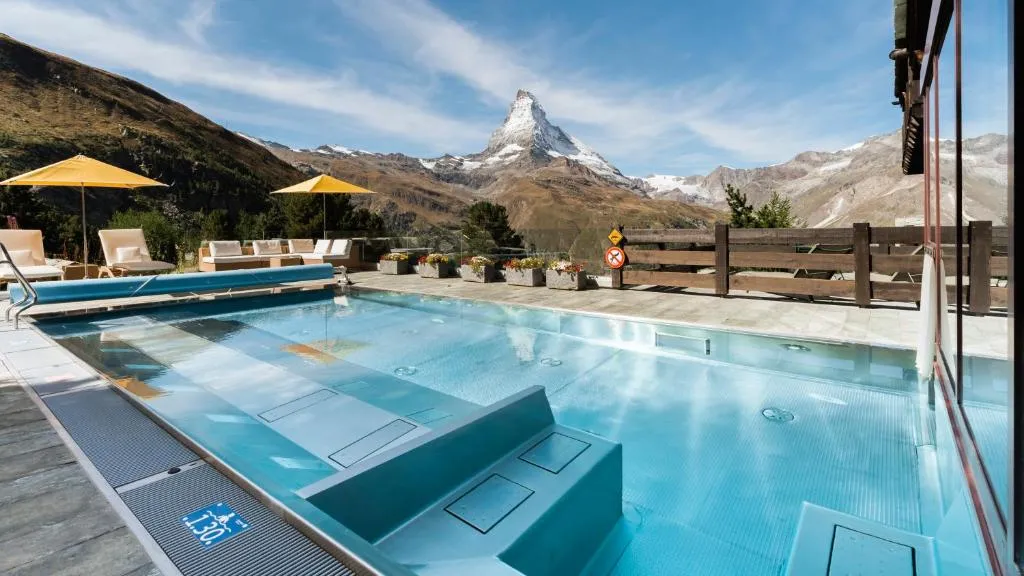 Found on Booking.comFrom CHF 550/night
Riffelalp, 2,222 m, above Zermatt
Riffelalp Resort 2222m
Reached by the Gornergrat cog railway, Riffelalp sits alone on a shelf at 2,222 m with the Matterhorn framed head-on from the rooms, the spa and the highest outdoor pool in the Alps. You trade the village's restaurants and evening bustle for silence and stars, which is the right trade for a honeymoon or a once-only trip built around the mountain. For a first visit with day trips in every direction, sleep in the village and ride up for lunch; for the full village shortlist at every budget, see where to stay in Zermatt.
- Guest rating
- 9.7 / 10
- From
- CHF 550/night
- Best for
- Sleeping above the village, facing the Matterhorn
Our verified Zermatt picks
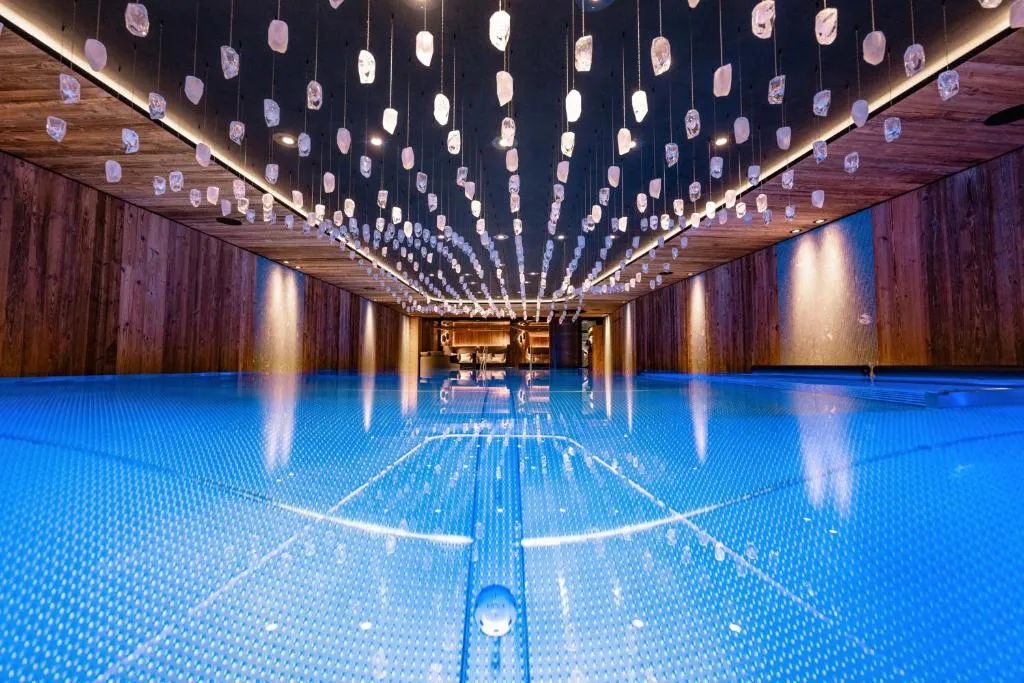 Mid-range Tradition Julen Hotel The Julen family's warm chalet classic with a three-floor spa and true Matterhorn-view rooms. Check rates →
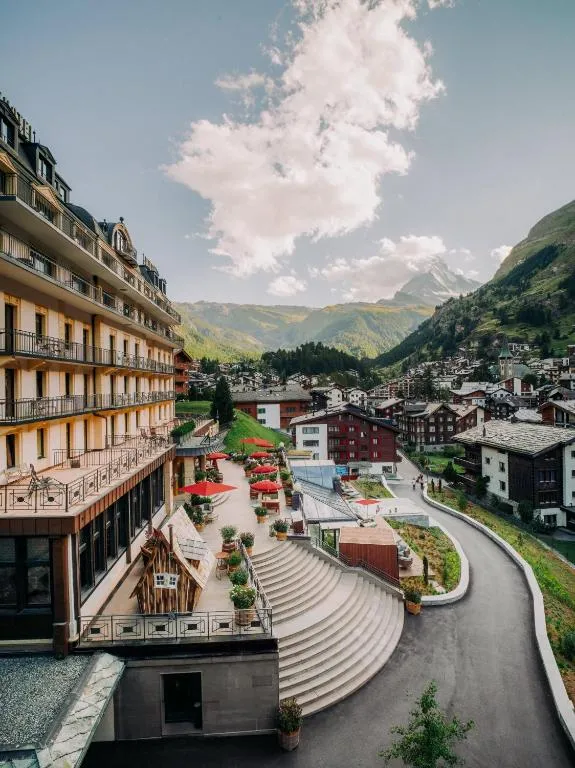 Mid-range BEAUSiTE Zermatt A 1907 grand hotel reborn as a playful design stay whose warm pool faces the Matterhorn head on. Check rates →
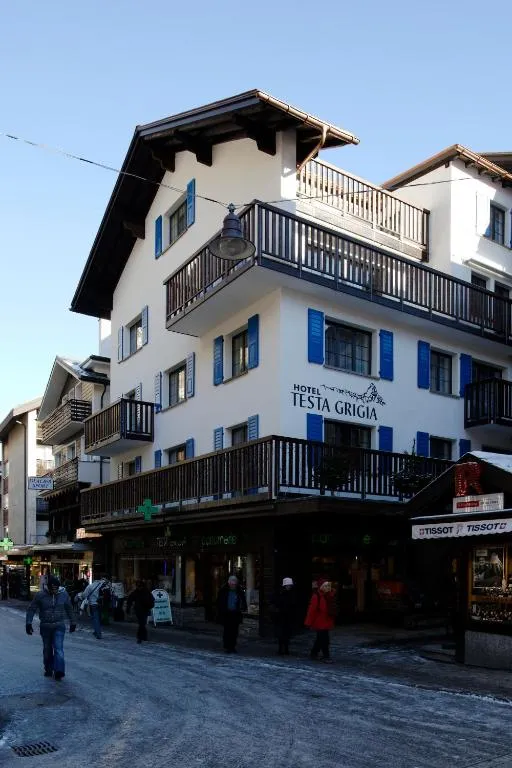 Budget Hotel Garni Testa Grigia Friendly family garni right on Bahnhofstrasse with balcony rooms; gentle pricing by Zermatt standards. Check rates →
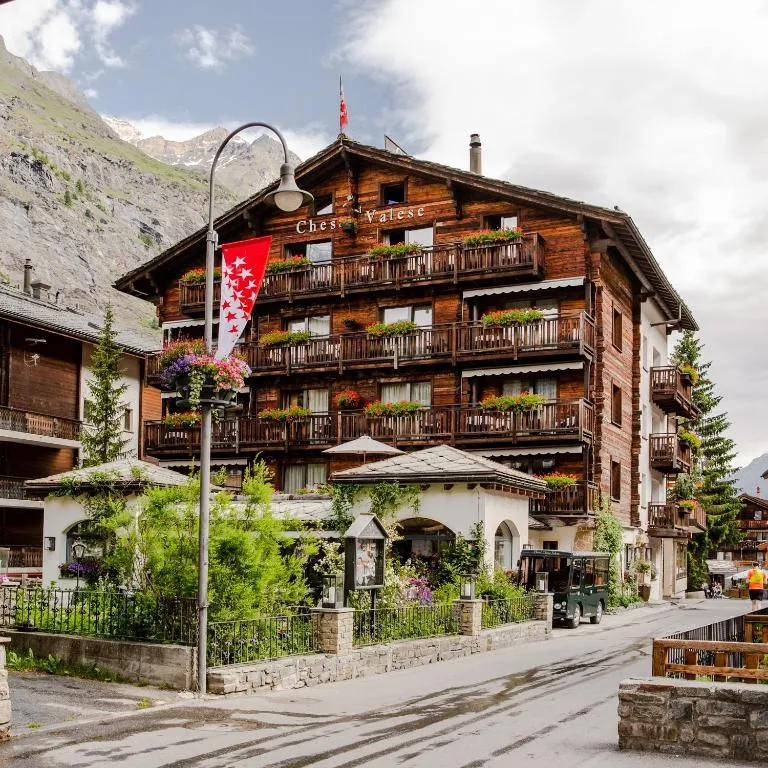 Budget Chesa Valese by Sisters A timber Valais chalet on a hushed lane with a fireplace lounge, sauna, and steam bath. Check rates →
Graubünden and the Engadine: when does St. Moritz earn the distance?
Base in the Engadine when the scenic trains are the point, when you are arriving from or leaving for Italy, or on a second Swiss trip; on a first week it costs more hours than it returns. St. Moritz sits at 1,856 m on its lake, 3h23 from Zurich airport with two changes and 6h17 from Geneva; Pontresina, the quieter village, is eight minutes away by train; and Davos, at 1,560 m the highest town in Europe, is about 2h40 from Zurich and 1h24 from St. Moritz. What makes the region is the railway: the Glacier Express takes around eight hours from Zermatt, needs a seat reservation on top of a ticket or pass, and pauses from mid-October to early December; the Bernina Express leaves Chur over 196 bridges and through 55 tunnels on a line that has been UNESCO-listed since 2008, and a direct PostBus (line 631) runs from St. Moritz to Lugano in about 3h30.
The arithmetic is the warning. St. Moritz is about 5h15 to 5h30 from Interlaken Ost and 4h03 from Lucerne by the ordinary trains, and the Zermatt leg is well over six hours even without the panoramic carriages, so the Engadine only belongs in a trip where the ride is the day. If it is, where to stay along the Glacier Express breaks the journey into overnights, St. Moritz vs Zermatt chooses between the two resort ends, and Gstaad vs St. Moritz weighs the two grand-hotel villages. Three nights, and ride in on one line and out on the other.
Our verified St. Moritz picks
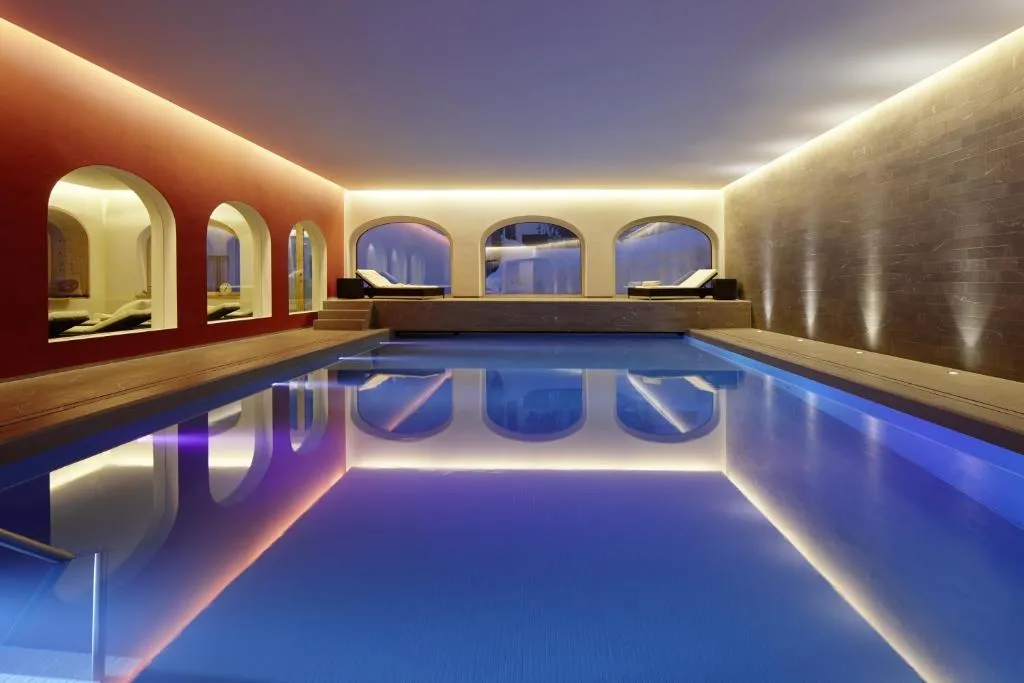 Mid-range Hotel Steffani Family-run since 1869 with pool, spa and three restaurants steps from the Corviglia funicular; the right-for-most classic. Check rates →
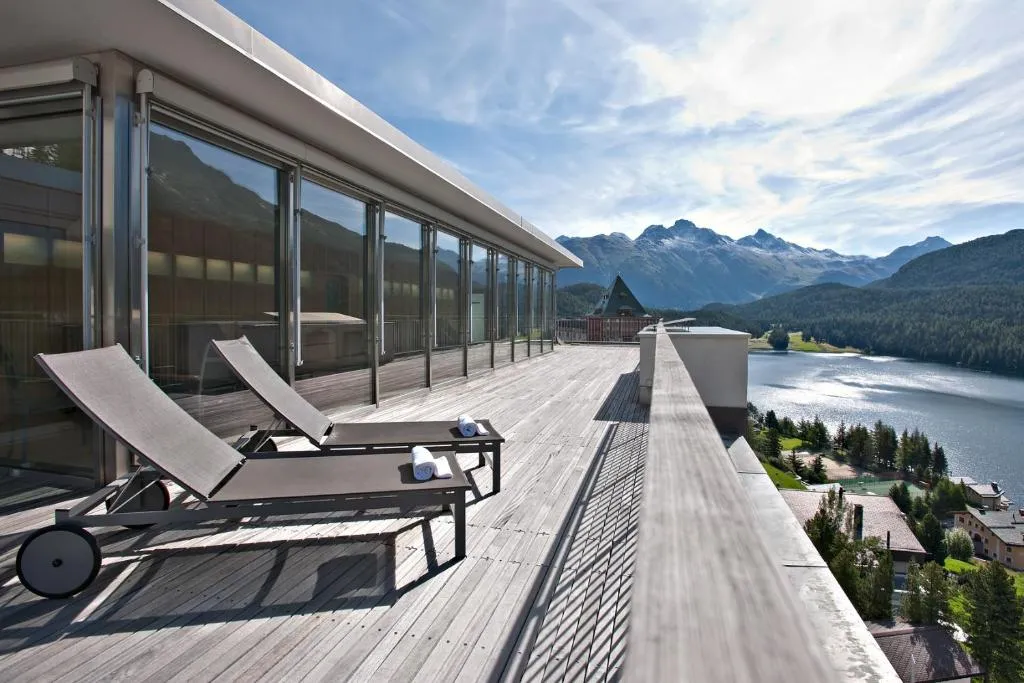 Mid-range Hotel Schweizerhof St. Moritz A 120-year Dorf institution with many lake-facing rooms; its own bars run lively, so light sleepers ask for a higher floor. Check rates →
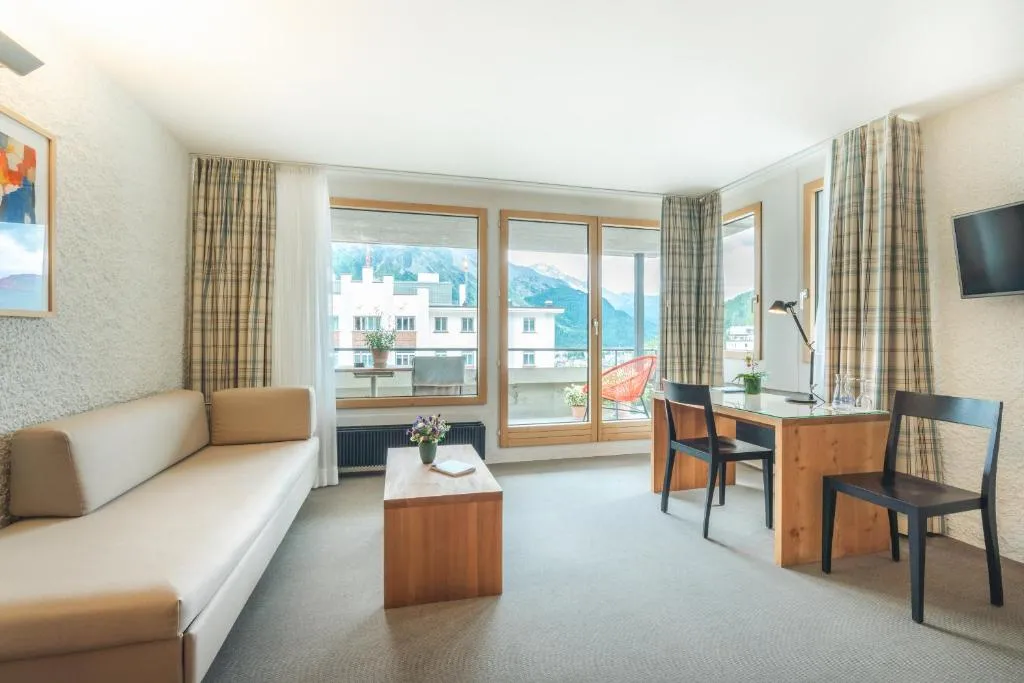 Budget Hauser Hotel St. Moritz A fourth-generation family house on the Dorf square whose own confectionery bakes Engadiner Nusstorte; the characterful floor here. Check rates →
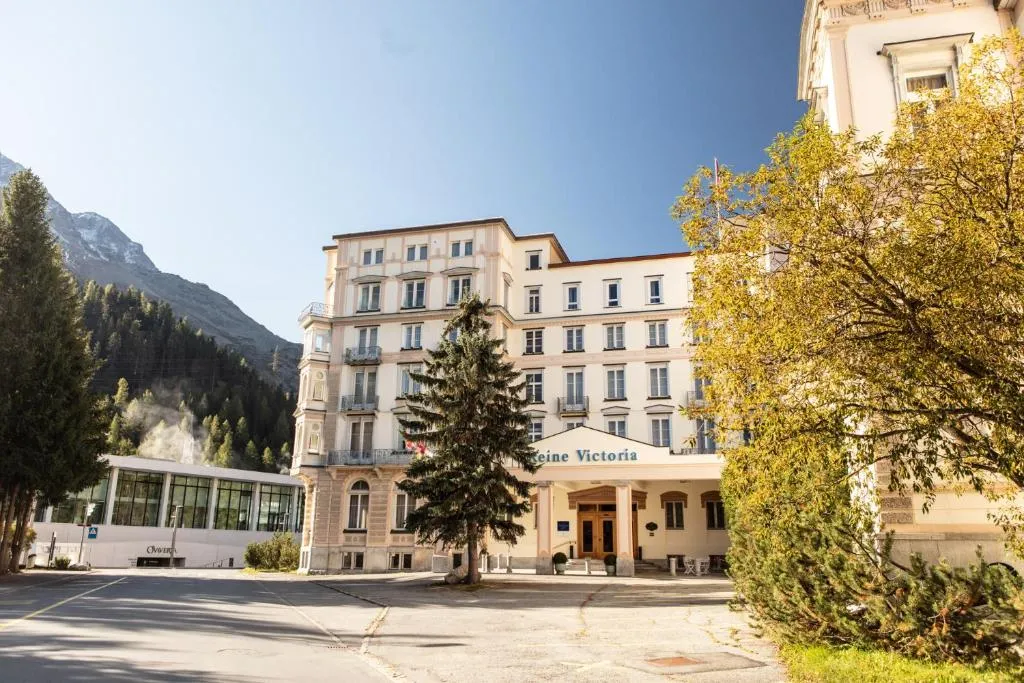 Budget Hotel Reine Victoria An Art Nouveau grande dame of 1875 with its own chandeliered theatre hall, at gentler Bad-side prices near the Signal lift. Check rates →
Lake Geneva and Vaud: Montreux, Lausanne or Gstaad?
Base on Lake Geneva for a night or two at the Geneva end of a trip, not as a mountain base; choose Montreux for Chillon and the lake, Lausanne for a city, and Gstaad when you want a chalet village between the lake and the Bernese Oberland. Montreux is 1h14 by direct train from Geneva airport and Lausanne 49 minutes, which is why a last night here beats a last night in Geneva: Chillon Castle, Switzerland's most visited historical monument, stands on the shore a short ride away, the UNESCO-listed Lavaux vineyard terraces climb the slopes toward Lausanne, and Zermatt is 2h42 up the valley. The GoldenPass Express runs from Montreux through Gstaad to Interlaken Ost in 3h15 without a change of train, which turns the lake into a scenic way into or out of the Jungfrau rather than a detour.
Gstaad, at 1,050 m with a traffic-free village centre, is 1h25 from Montreux by direct train and about three hours from either airport. It is a base for a slow chalet week, not a hub for day trips; the summits it looks at are gentle, and its real argument is the hotels. Two to three nights, and pair it with Montreux rather than with Zermatt.
Our verified Montreux picks
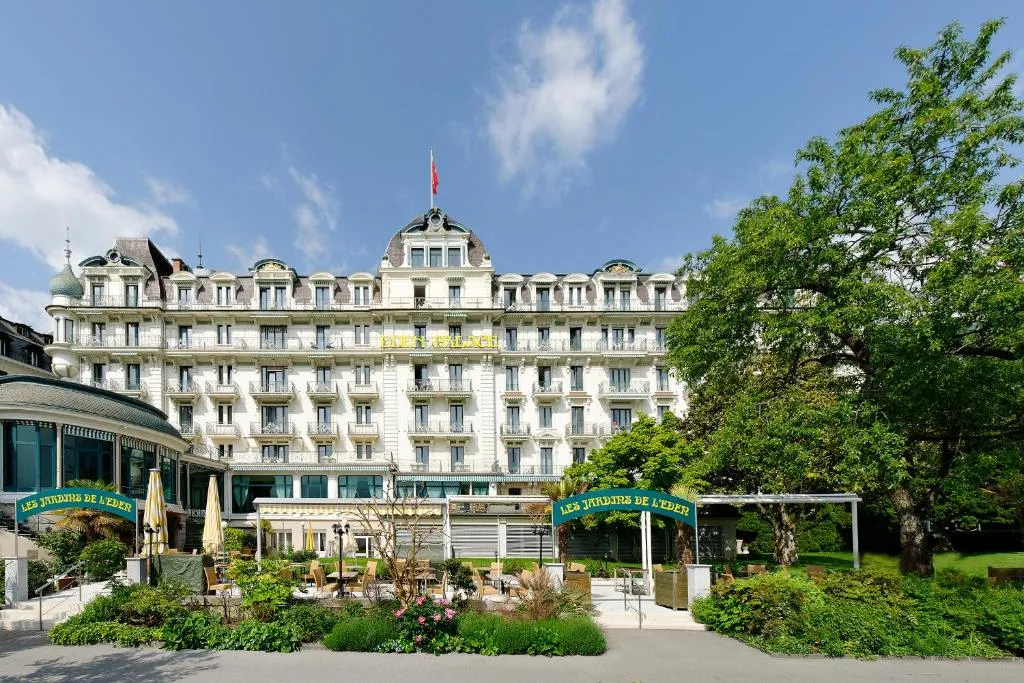 Mid-range Hotel Eden Palace au Lac The affordable way into the belle epoque story: an 1896 grande dame on the water where lake-view rooms cost what chain doubles do elsewhere. Check rates →
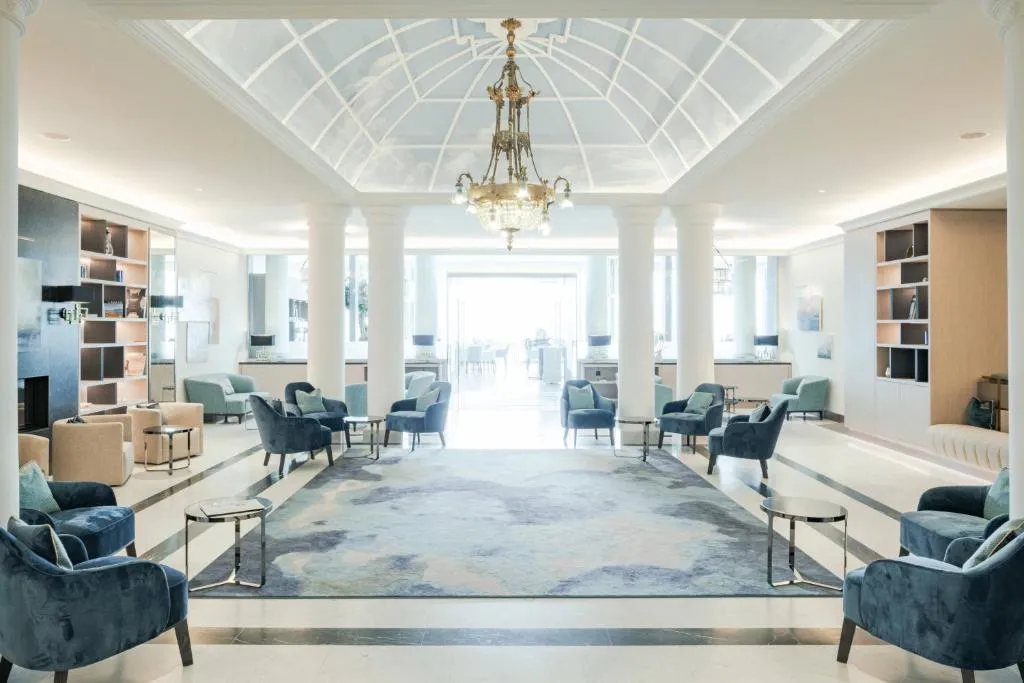 Mid-range Grand Hotel Suisse Majestic An 1870 belle epoque hotel polished into a stylish stay directly opposite the station; ask for a high, lake-facing floor. Check rates →
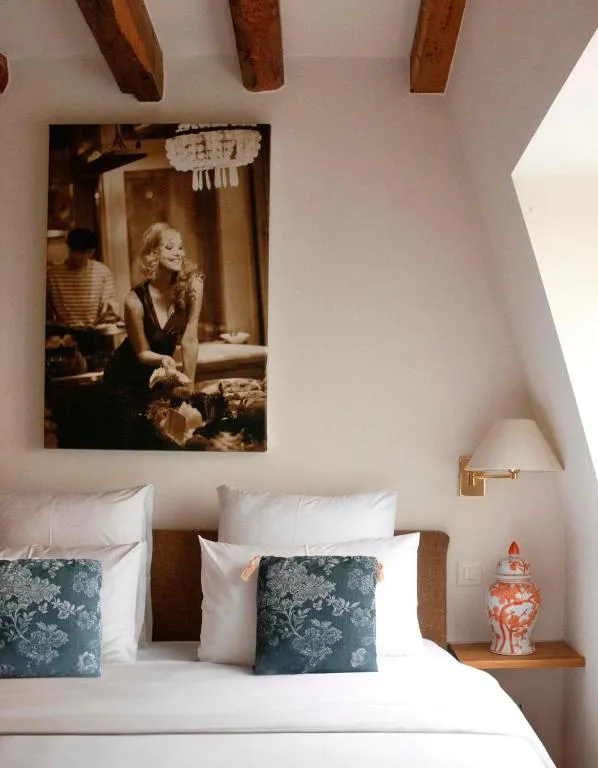 Budget La Rouvenaz A family-run guesthouse above its own Italian trattoria, one row off the lakefront by the Freddie Mercury statue. Check rates →
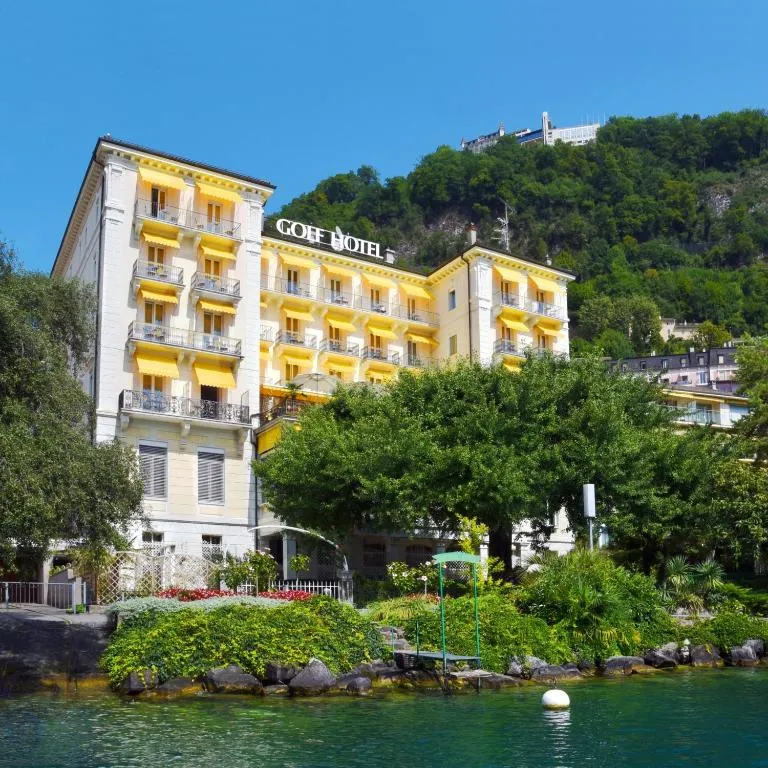 Budget Golf Hotel René Capt True water's-edge balconies looking toward Château de Chillon at three-star prices, at the quiet end of the promenade. Check rates →
Ticino: is Lugano worth adding for the sun?
Add Lugano for two nights at the end of a ten-day trip, or whenever the mountain forecast turns, because it is the warm, Italian-speaking side of the Alps and only 1h53 from Zurich main station. Ticino Tourism calls itself the most Mediterranean of the Swiss cantons, and the Gotthard Base Tunnel makes that a short ride: Zurich airport to Lugano is 2h09 with one change, Lucerne to Lugano 1h40, and Locarno on Lake Maggiore is 33 minutes further by direct train. The Gotthard Panorama Express pairs a Lake Lucerne boat with the old line over the pass, which is the slow, scenic way to arrive.
What Lugano is not is an Alps base. From Zermatt it is about 5h25 and from Geneva 5h03, so it belongs with Lucerne, which is where the Zurich-side loop ends anyway, or with the Engadine via the PostBus. Two nights, a boat to Gandria, Monte Brè or San Salvatore for the view, and a flight home from Zurich or Milan.
Eastern Switzerland: should Appenzell be a base or a day trip?
Make Appenzell a day trip from Zurich on a short trip, and a one- or two-night base only when you want green hills and painted villages instead of glaciers. Appenzell is 1h37 from Zurich airport and 1h52 from Zurich main station with one change, but 2h51 from Lucerne and over five hours from Geneva, so it fits a Zurich-centred trip and little else. The village walk passes the painted house fronts and the Landsgemeindeplatz where the canton holds its open-air assembly; the Appenzell railway continues to Wasserauen, where the Ebenalp cable car climbs from 867 m to 1,590 m in six minutes, and a 45-to-60-minute walk from the top reaches the Wildkirchli caves and the Äscher inn, built straight onto the rock face.
Stay the night if you want the Äscher before the crowds or the Alpstein for two days of hiking; otherwise it is the best of our day trips from Zurich by train.
Our verified Appenzell picks
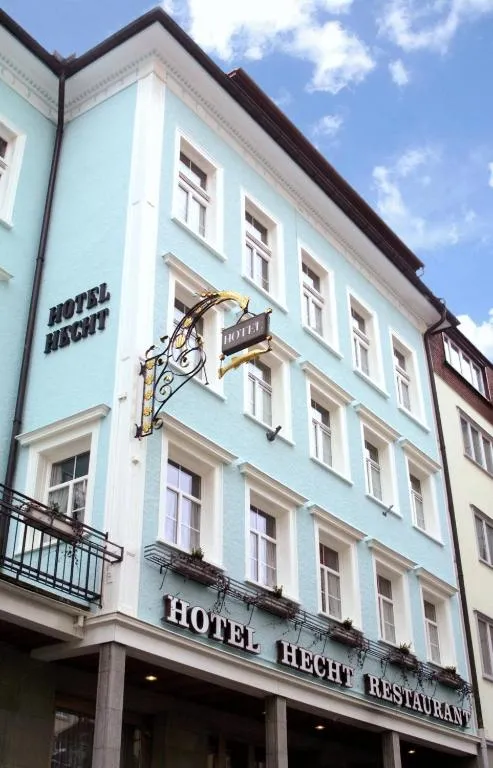 Mid-range Hotel Hecht Appenzell The classic inn on the painted Hauptgasse: renovated rooms over a serious regional restaurant, two minutes from everything. Check rates →
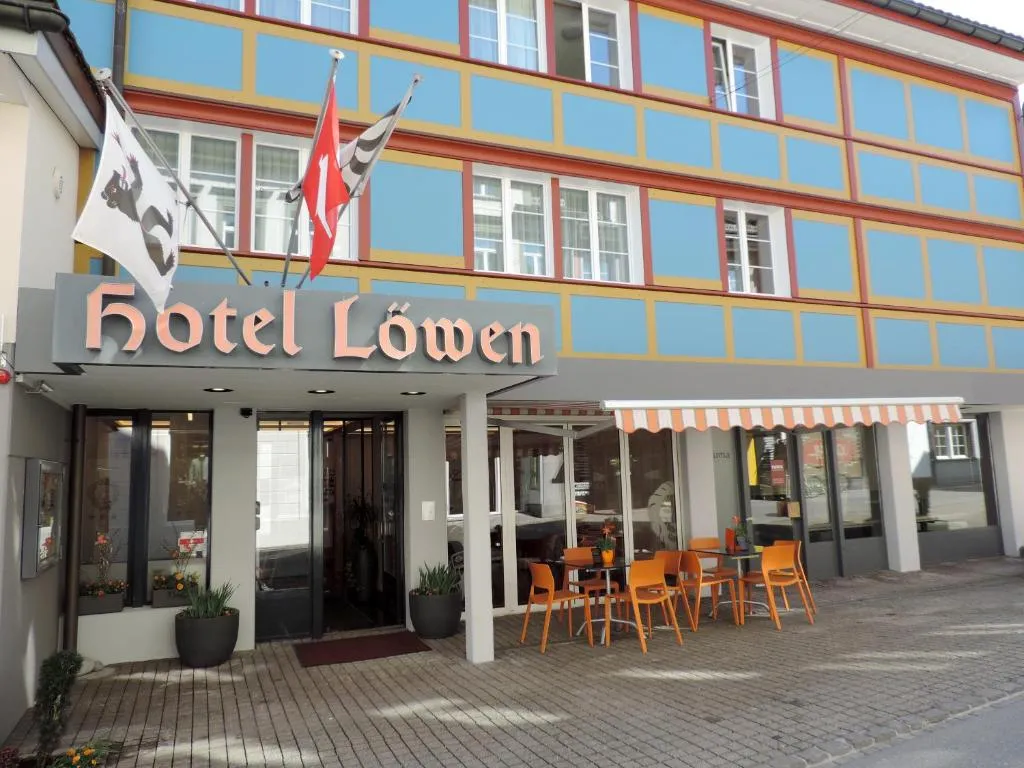 Mid-range Hotel Löwen Fresh rooms in the car-free painted lane, several styled with original Appenzeller painted furniture; the whole village is your dining room. Check rates →
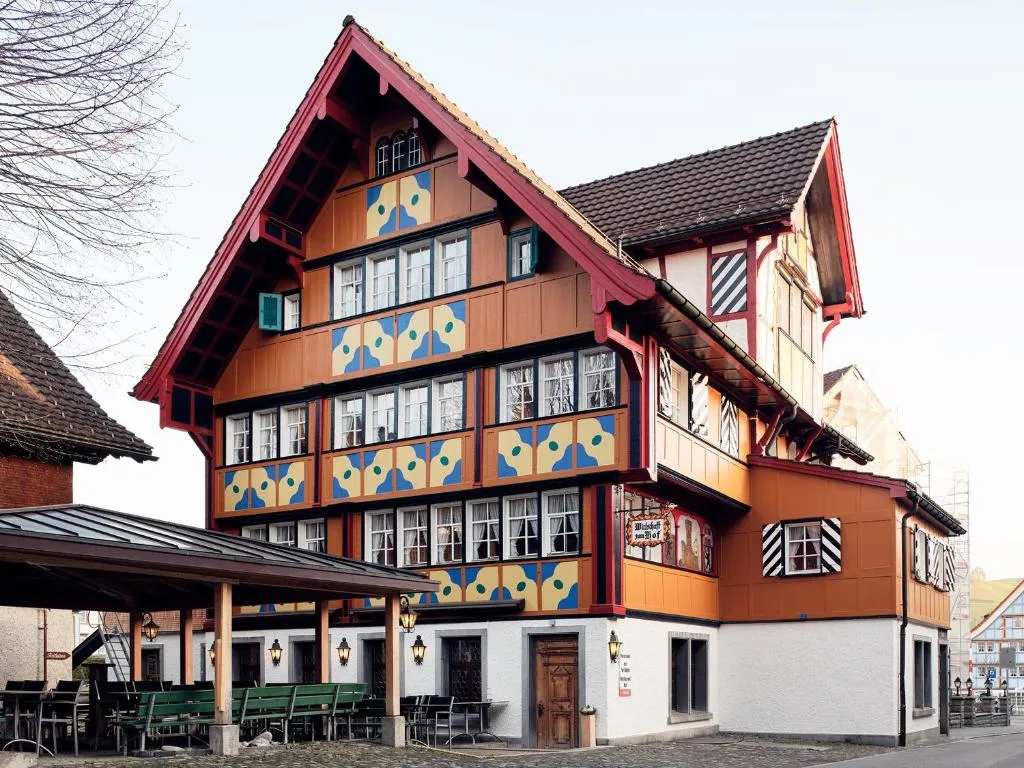 Budget Gasthaus Hof Simple, spotless rooms above a very good Rösti kitchen steps off Landsgemeindeplatz; the village's honest bargain. Check rates →
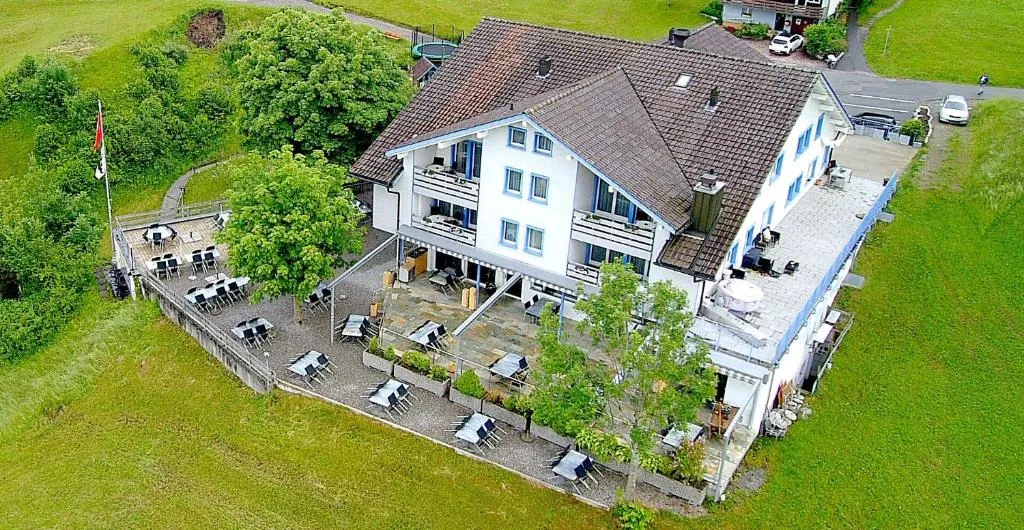 Budget Panorama Hotel Freudenberg A quiet hillside three-star whose balconies take in the whole Alpstein; the price of the view is a ten-minute uphill walk. Check rates →
Some links on this page are affiliate links. If you book through them we may earn a small commission, at no extra cost to you. It helps keep our guides free. We only recommend what we’d book ourselves.
The gateways: when should you sleep in Zurich, Geneva, Basel or Bern?
Sleep in a gateway city only when the timetable makes you: a flight that lands in the evening, a departure before about nine in the morning, or a city day you actively want. Zurich airport has its own station, ten minutes from Zurich main station, with direct trains to Lucerne in 1h10, Bern in 1h12 and Interlaken Ost in 2h13, and Basel about 1h10 away with one change; the sensible first night after a daytime landing is Lucerne or the Jungfrau, not the city. Geneva airport is seven minutes from Geneva station, with Lausanne in 49 minutes, Montreux in 1h14 and Zermatt in 3h55, so the Geneva-side first night is Montreux. Bern is the one gateway worth a half-day on purpose, and it is 52 to 55 minutes from Interlaken Ost, which makes it a stop on the way rather than a base. Basel is for arrivals from Germany and France and sits about 1h10 from Zurich airport with one change.
The rule: if you can reach your first real base by early evening, ride straight there. A city night in Switzerland costs an Alps night, and you will not get it back.
Which bases work together, and which waste a day?
Lucerne, the Jungfrau, Zermatt and Montreux link in legs of about two hours each; the Engadine from anywhere west of Chur, Lugano from the Valais or Geneva, and Verbier from anywhere but Zermatt or Lake Geneva each cost most of a day. The train times decide it, so here they are, from the places you would actually be leaving, read on 9 October 2026 for weekdays without engineering work on the leg (the closures are under the first table).
| From | To | How, and how long |
|---|---|---|
| Lucerne | Interlaken Ost | Luzern-Interlaken Express, direct, about 1h50 |
| Interlaken Ost | Zermatt | 2h10 with two changes (Spiez and Visp) |
| Lucerne | Zermatt | About 3h15 with two or three changes |
| Zermatt | Montreux | 2h42 with one change at Visp |
| Montreux | Interlaken Ost | About 2h20 with two changes, or the GoldenPass Express direct in 3h15 |
| Montreux | Gstaad | Direct train, 1h25 |
| Zermatt | Saas-Fee | About 2h15 by train to Stalden-Saas and the PostBus |
| Lucerne | Lugano | 1h40, direct or one change |
| Lucerne | Engelberg | Luzern-Engelberg Express, direct, 43 minutes |
| Zurich HB | Appenzell | 1h52 with one change |
| St. Moritz | Lugano | PostBus 631, about 3h30 |
| Davos | St. Moritz | 1h24 with one change |
| Zermatt | St. Moritz | Glacier Express around 8h with a reservation; the ordinary trains take about 6h40 with three or four changes |
| Interlaken Ost | St. Moritz | About 5h15 to 5h30 with two to four changes |
| Zermatt | Lugano | About 5h25 with two to four changes |
| Lucerne | St. Moritz | 4h03 with two changes |
| Lucerne | Appenzell | 2h51 with one change |
Pairings that cost almost nothing: Lucerne and the Jungfrau; the Jungfrau and Zermatt; Zermatt and Montreux; Montreux and Gstaad; Lucerne and Lugano; Lucerne and Engelberg or Stoos as day trips; Zurich and Appenzell as a day trip; Davos and St. Moritz.
Pairings that burn a day: Zermatt and St. Moritz, unless the Glacier Express is the day and you have booked it as such; the Jungfrau and St. Moritz, over five hours each way; Zermatt and Lugano, well over five hours; Geneva and anything east of Lucerne; Verbier and any base other than Zermatt or Lake Geneva.
Three sample plans
- 4 days (3 nights), one region. Fly into Zurich, ride direct to Interlaken Ost (2h13) and sleep in Lauterbrunnen or Wengen. Day two the Jungfraujoch or the Schilthorn, whichever the forecast favours; day three the Lauterbrunnen valley and the other summit if it clears; day four the lake and the train back. The town-versus-village choice is in the Jungfrau guide. If you want a city, do the same four days from Lucerne with Pilatus, Rigi and Stoos instead.
- 7 days (6 nights), two bases. Lucerne for two nights, then the Jungfrau for four, or the shape of our 7 days in the Swiss Alps by train: Lucerne, Grindelwald and Zermatt with two nights each, which is three bases in a week and works only because every leg is about two hours. If you take the three-base week, do not add a city night at either end.
- 10 days (9 nights), three bases and a lake night. Lucerne two nights, the Jungfrau three, Zermatt three, then Montreux for the last night and the 1h14 train to Geneva airport. Open-jaw tickets, Zurich in and Geneva out, and nothing ridden twice. For sun at the end, swap Zermatt for Lugano (1h40 from Lucerne, so reorder to Jungfrau, Lucerne, Lugano) and fly home from Zurich.
Car or train?
Train, more decisively than in any other Alpine country. Every base in this guide is reached by public transport, by train or by PostBus, lift or funicular from a station; Zermatt, Wengen, Mürren and Stoos are car-free by design and Saas-Fee parks you at the village entrance, so a rental spends most of a Swiss trip in a valley garage. The Swiss Travel Pass covers trains, buses and boats, includes the Rigi, the Stanserhorn and Stoos outright, discounts other mountain excursions by up to half, and admits you to more than 500 museums; whether it beats the Half Fare Card depends on how much you move, and is the Swiss Travel Pass worth it runs the arithmetic. The full case, and the few itineraries where a car still earns its keep, is in the Swiss Alps by train or car.
When should you go?
The bases do not change with the season, but their order does. In summer and early autumn start in the mountains and finish on a lake; in winter the Jungfrau, Zermatt, the Engadine and Verbier are ski bases and Lucerne, Montreux and Lugano are the low, mild bookends. With children, the best family ski resorts in Switzerland picks the resort by ski-school ages and child passes, and the best ski-in ski-out hotels in the Swiss Alps names the beds on the piste. The Glacier Express pauses from mid-October to early December and the Pilatus cog railway runs May to November, so an Engadine or Lucerne plan in late autumn needs checking. The best time to visit the Swiss Alps settles the month, and the Alps in September makes the case for the one we would pick.
The biggest mistake
Booking a base per famous name. People see the Matterhorn, the Jungfraujoch, the Glacier Express and Lake Geneva on one map and give each a night, which puts four to six hours on a train on the days that should have been the trip. Switzerland rewards the opposite: two or three regions, two nights minimum and three in the mountains, a route that runs one way across the country, and the far corners left for the next visit. The country is small, but the Alps are in the way, and the trains are only fast where the valleys let them be.
Our verdict
Still choosing a country? Where to stay in the Alps for the first time weighs Switzerland against its five neighbours, and the prettiest villages in the Swiss Alps is the list to read once the region is fixed. Journey times in this guide are the fastest regular connections on the Swiss public timetable, read on 9 October 2026 for weekdays without engineering work on the leg; the Zermatt, Jungfrau, Davos and Engelberg approaches all carry replacement buses for parts of October to December 2026, as noted under the first table. Altitudes, car-free rules and railway facts come from the resorts and operators themselves. Timetables change in December and seasonal lines pause, so confirm before you book.


