

There is a version of your first Alps trip where you spend it half-packed, changing hotels every night, watching the best valleys slide past a train window. And there's a version where you wake up in the same view for three mornings and actually feel like you were there.
The difference is almost entirely about where you choose to sleep. So let's make that decision well, starting with the country, then the region, then the town.
- Default country
- Switzerland
- Best all-rounder
- Grindelwald
- For couples
- Wengen
- Car needed
- No
Start with the country, not the town
First-timers tend to obsess over individual villages before they've chosen a country. Reverse that. The country sets the entire texture of the trip: how you get around, what you eat, what it costs, and how crowded it feels. The Alps run through six countries, and they are genuinely different trips.
| Country | Best first trip for | Get around by | Our first-timer verdict |
|---|---|---|---|
| Switzerland | Iconic peaks, car-free ease | Train | The safest, most rewarding first trip |
| Italy (Dolomites) | Drama + the best food | Car | Superb if you'll drive |
| Austria | Value, culture, lakes | Either | Easygoing, great value, fewer crowds |
| France | Mont Blanc + alpine lakes | Car (mostly) | Big-mountain thrills + Annecy charm |
| Germany (Bavaria) | Castles, easy logistics | Either | The gentlest intro, pairs with Munich |
| Slovenia | Uncrowded + great value | Car | The insider pick: Bled, Bohinj, Soča |
For a first trip, our default recommendation is Switzerland. It forgives mistakes: trains run on time, the best villages are car-free, and the scenery delivers even if your plan is rough. But the right answer is the one that fits how you like to travel. Here's the short version of each.
Switzerland, the default
The blueprint: car-free villages, the world's best scenic trains, and the most iconic peaks on Earth. It's expensive, but it's the easiest place to get the postcard without a logistics headache. Most first-timers split their time between the Jungfrau region (Lauterbrunnen, Grindelwald, Wengen, Mürren) and Zermatt under the Matterhorn. Start with the Jungfrau base guide; it's the single biggest base decision in the Swiss Alps.
The Italian Dolomites, drama and food
The Dolomites trade Swiss polish for sheer drama and extraordinary food, sawtooth peaks, South-Tyrolean cuisine, and the best light in the Alps. You'll want a car here. See where to stay in the Dolomites for the valley-by-valley breakdown, and weigh it against Switzerland in our Swiss Alps vs Dolomites comparison.
Austria, value and easygoing charm
Austria is the relaxed, great-value option: Tyrol's peaks, the lake-and-mountain Salzkammergut, and warm guesthouse hospitality, with smaller crowds than Switzerland and a gentler bill. It works well by train or car. Start with where to stay in the Austrian Alps, and if you're torn with its neighbors, see Bavarian Alps vs Austrian Alps and Swiss Alps vs Austrian Alps.
France, big mountains and lakeside towns
The French Alps pair the high-altitude theatre of Chamonix and Mont Blanc with the turquoise lake and old-town charm of Annecy. A car helps for most of it. See where to stay in the French Alps, and French Alps vs Swiss Alps if you're choosing between the two.
Bavaria, the gentlest introduction
Germany's Bavarian Alps are the softest landing: fairytale castles, easy logistics, and a short hop from Munich, so you can bolt a few alpine days onto a city trip. See where to stay in the Bavarian Alps and our take on Munich as a base.
Slovenia, the insider pick
Slovenia is the value play and the one your friends haven't done yet: storybook Lake Bled, wild Lake Bohinj, and the emerald Soča Valley, all uncrowded and affordable. Plan to drive. Start with where to stay in the Julian Alps, and if you're weighing it against the obvious, Slovenia vs Switzerland is an honest take.
Then pick your base town
Once the country is settled, the base town is where most of the trip's quality is won or lost. Within Switzerland, the choice usually comes down to three icons:
- Zermatt, the icon. Choose it if seeing the Matterhorn is non-negotiable and you have room in the budget.
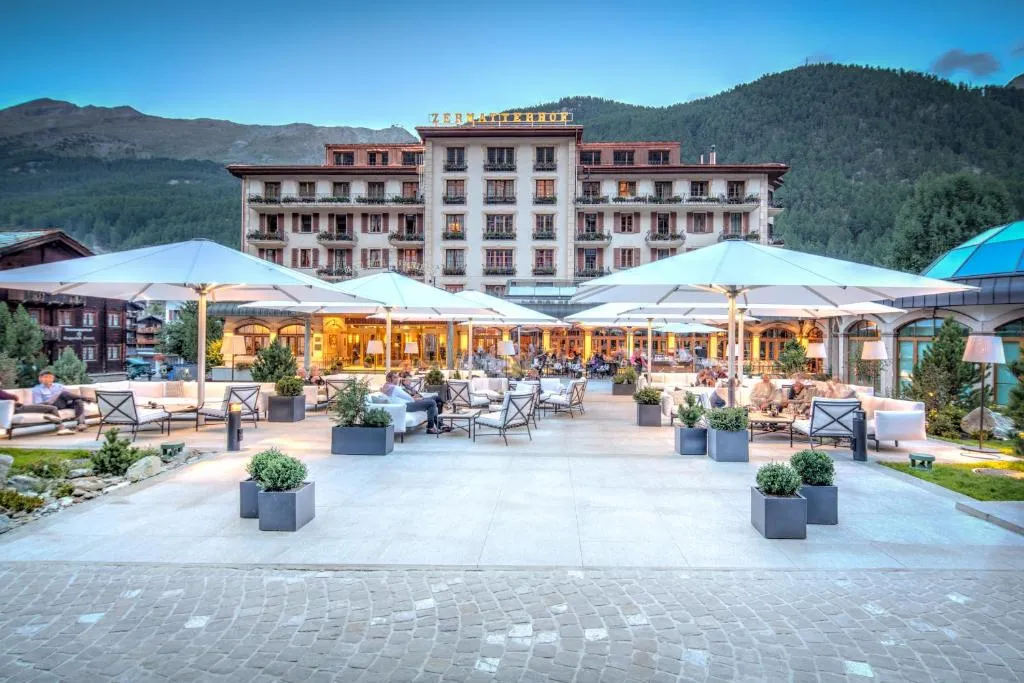 Found on Booking.comFrom CHF 600/night
Zermatt, Switzerland
Grand Hotel Zermatterhof
If Zermatt is the one splurge on your first Alps trip, this is the address that earns it. The Zermatterhof is the grand old hotel of the car-free village, a short walk from the station and the lift stations, with a spa, a heated pool, and a dining room turned toward the Matterhorn. Rooms lean classic rather than trendy, which suits a first visit built around the mountain, not the hotel. Book a Matterhorn-facing room; the courtyard-side ones save money but trade away the view that justified the splurge in the first place.
- Guest rating
- 9.5 / 10
- From
- CHF 600/night
- Best for
- Matterhorn splurge, first-timers
- Grindelwald, the all-rounder. Best for families and first-timers who want lifts, options, and a rainy-day backup.
- Wengen, the romantic. A hush-quiet, car-free balcony village for couples and slower travelers.
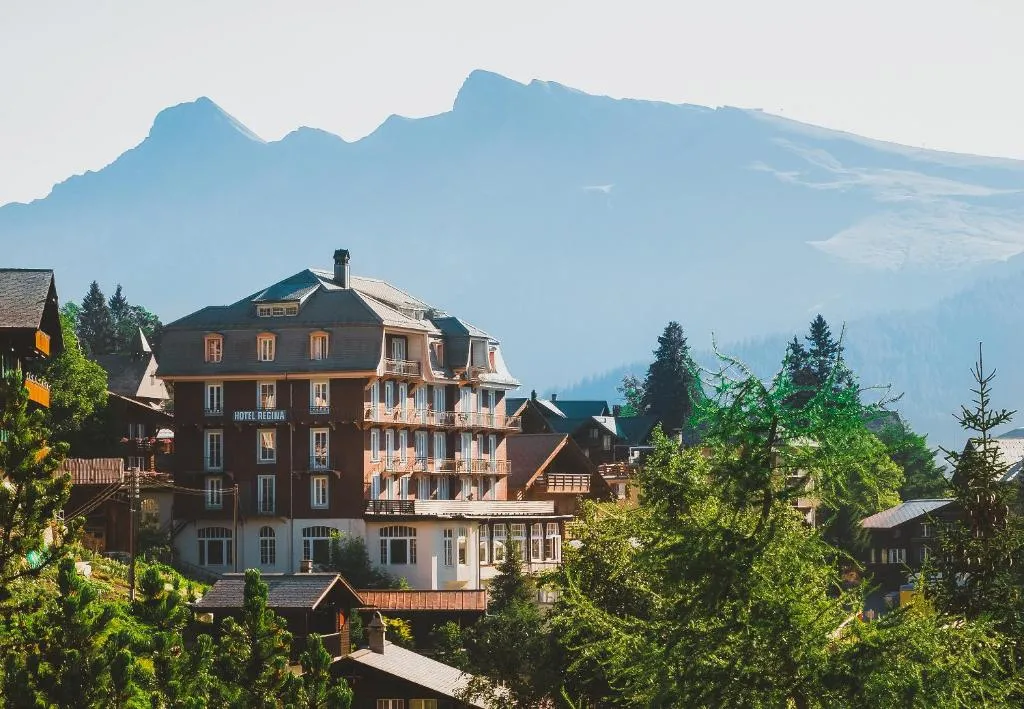 Found on Booking.com
Wengen, Switzerland
Hotel Regina
Wengen sells itself as the quiet, car-free village for couples, and Hotel Regina is the property that matches that promise. It's a grand, old-school hotel above the village with wraparound balcony views of the Jungfrau massif, a spa, and a dining room that leans formal without feeling stuffy. Half-board is the norm here, which suits the village's limited restaurant scene. It's a genuine splurge, and not the choice for anyone wanting nightlife or budget bunks, but for a slow, romantic few nights it is hard to beat.
- Best for
- romantic couples, quiet balcony views
Not sure between them? We wrote full breakdowns: Grindelwald vs Lauterbrunnen, Zermatt vs Wengen, and Zermatt vs Grindelwald for the choice between the two headline bases above. Every other country has its own equivalent decision, and the regional "where to stay" guides above walk through each one.
Some links on this page are affiliate links. If you book through them we may earn a small commission, at no extra cost to you. It helps keep our guides free. We only recommend what we’d book ourselves.
How many bases? (The pacing rule)
Here's the single most important planning decision after the country: pick two or three bases for a week, not five.
At three nights you learn the good bakery, you catch the mountain on a clear morning, you stop navigating and start being there. Two nights is the floor. One night anywhere is a transit stop, not a stay.
Car or train?
This is the quiet decision that shapes everything, and it's mostly decided by the country you chose:
- Switzerland: take the train. The rail network is the experience, and the best villages are car-free anyway. (If you're costing it out, read is the Swiss Travel Pass worth it.)
- The Dolomites, Slovenia, France, and rural Bavaria: take the car. The best trailheads and viewpoints simply aren't reachable otherwise.
For the full decision, including the hybrid trips where you do both, see do you need a car in the Alps.
What it costs, roughly
Budget varies more by country than by anything else. Switzerland is the most expensive of the six across the board, lodging, food, lifts, and rail. Austria and especially Slovenia stretch a budget furthest, with France and Italy in between. The biggest lever in your control isn't the country, though: it's fewer, longer stays (less transport, better weekly lodging rates) and traveling in shoulder season (May–June, September), when prices and crowds both drop. You can do any of these countries beautifully without the splurge, and Switzerland beautifully with one.
When to go
Briefly, because it deserves its own read: summer (late June–September) for hiking and reliable lift access, December for snow and Christmas markets, and May–June or September as the sweet spot of good weather, fewer crowds, and lower prices. The full picture is in the best time to visit the Alps.
The biggest first-timer mistake
Too many bases, too fast. Five towns in seven days means you're never anywhere long enough for the mountain to clear, the light to turn, or the place to imprint. Pick two or three bases and let the trip breathe. Everything good about an Alps trip happens when you slow down.
What we'd personally do
For a first week, we'd keep it simple and Swiss: two nights easing in around a lake city like Lucerne, two or three nights in the Jungfrau region, and two or three in Zermatt, all by train. It's the spine of our 7 Days in the Swiss Alps by Train itinerary, and it's the trip we'd send our own family on.
If you'd rather drive and eat well, we'd swap that for the Dolomites: a 7-day Dolomites loop based in two valleys. And if value and quiet matter most, 7 days in the Julian Alps through Slovenia is the trip almost nobody regrets.
When you're ready to pin down your base, the fastest way is to find your perfect Alps base, answer a few questions and we'll point you to the town that actually fits your trip.


